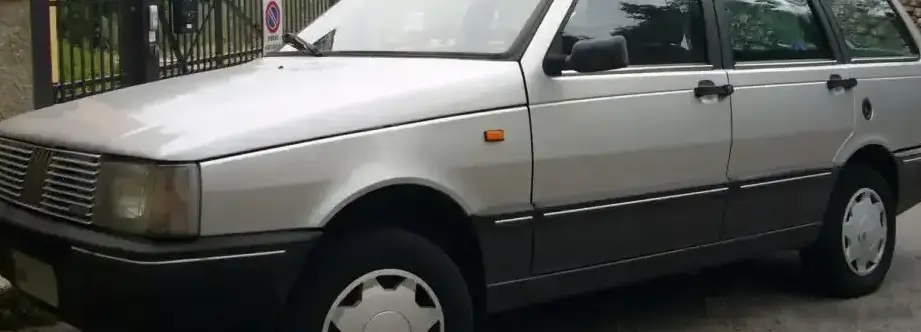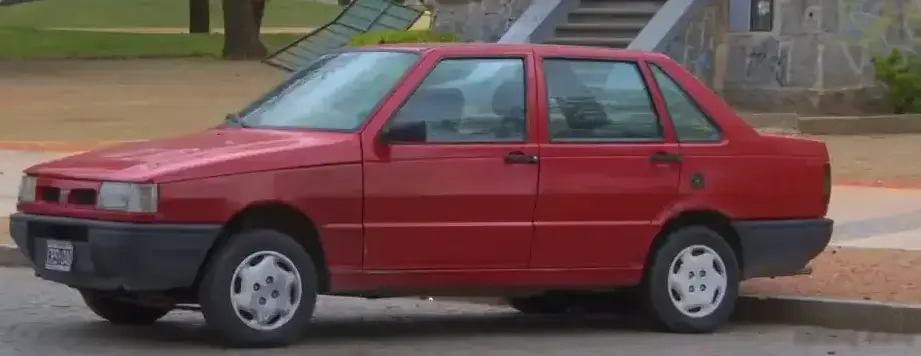
The Fiat Duna 60 1.1, produced between 1987 and 1991, represents an entry-level variant of the 146 B series, a subcompact sedan designed primarily for the South American market, particularly Brazil. Positioned as the most affordable option within the Duna range, it served as a practical and economical transportation solution. The Duna itself was a significant model for Fiat, representing a modernization of the older Uno platform and offering a more conventional sedan body style. This variant, with its modest 58 horsepower engine, aimed at buyers prioritizing fuel efficiency and low running costs over outright performance. It played a crucial role in establishing Fiat’s presence in a competitive segment, offering a budget-friendly alternative to other regional offerings.
Technical Specifications
| Brand | Fiat |
| Model | Duna |
| Generation | Duna (146 B) |
| Type (Engine) | 60 1.1 (58 Hp) |
| Start of Production | 1987 |
| End of Production | 1991 |
| Powertrain Architecture | Internal Combustion Engine |
| Body Type | Sedan |
| Fuel Type | Petrol (Gasoline) |
| Power | 58 Hp |
| Engine Model/Code | 146 A6.000 |
| Engine Aspiration | Naturally Aspirated |
| Engine Oil Capacity | 3.8 l / 4.02 US qt / 3.34 UK qt |
Powertrain & Engine Architecture
The Fiat Duna 60 1.1 is powered by the 146 A6.000 engine, a 1.1-liter inline-four cylinder gasoline engine. This engine is a naturally aspirated unit, meaning it doesn’t employ a turbocharger or supercharger. It features a single overhead camshaft (SOHC) valvetrain operating two valves per cylinder. Fuel delivery is managed by a basic carburetor system, typical for vehicles of this era and price point. The carburetor, while simple and reliable, is less efficient and precise than modern fuel injection systems. The engine’s design prioritizes durability and ease of maintenance over high performance. The engine block is constructed from cast iron, contributing to its robustness, while the cylinder head is made of aluminum alloy to reduce weight. The engine’s relatively low compression ratio (typically around 8.8:1) further contributes to its ability to run on lower-octane fuel, a significant consideration in many South American markets. The transmission paired with this engine is a four-speed manual, as an automatic transmission was not offered on this base model. The transmission is a conventional setup, designed for simplicity and reliability.
Driving Characteristics
The Duna 60 1.1’s driving experience is characterized by its modest performance. With only 58 horsepower, acceleration is slow, particularly when fully loaded or climbing hills. The four-speed manual transmission requires frequent shifting to maintain momentum. The gear ratios are relatively tall, geared towards fuel economy rather than spirited driving. The engine delivers its peak power relatively high in the rev range, meaning it needs to be revved to extract the most performance. Handling is adequate for everyday driving, but the suspension is tuned for comfort rather than sporty handling. The steering is light and easy to use, making it maneuverable in urban environments. Compared to higher-spec Duna models equipped with larger engines (like the 1.6-liter), the 1.1-liter version feels significantly underpowered. The 1.6 offered a much more responsive driving experience, but at a higher price point. The 1.1’s strength lies in its fuel efficiency, making it an economical choice for daily commuting.
Equipment & Trim Levels
The Duna 60 1.1 was the base trim level, and as such, it came with a minimal set of standard features. The interior typically featured simple cloth upholstery, often in a durable, patterned fabric. The dashboard was constructed from hard plastics, reflecting the vehicle’s budget-oriented nature. Standard equipment included basic instrumentation – a speedometer, fuel gauge, and temperature gauge. Power steering and air conditioning were not typically included as standard equipment on this trim level, though they may have been available as optional extras. The exterior featured steel wheels with hubcaps, and minimal chrome trim. Optional extras, when available, might have included a radio, upgraded upholstery, and a rear window defogger. The overall interior design prioritized functionality and durability over aesthetics.
Chassis & Braking
The Duna 60 1.1 utilizes a relatively simple chassis design. The suspension consists of independent front suspension with MacPherson struts and a twist-beam rear axle. This setup provides a comfortable ride, but doesn’t offer particularly sophisticated handling characteristics. The braking system features drum brakes on all four wheels, which was common for vehicles in this price range during the late 1980s and early 1990s. While adequate for normal driving conditions, the drum brakes offer less stopping power and fade resistance compared to disc brakes. The Duna 60 1.1 did not feature anti-lock braking system (ABS). The steering system is a recirculating ball type, providing a relatively indirect steering feel.
Market Reception & Comparison
The Fiat Duna 60 1.1 was generally well-received in its target market as an affordable and reliable means of transportation. Critics acknowledged its basic nature but praised its fuel efficiency and low running costs. Compared to other subcompact sedans available in South America at the time, such as the Volkswagen Gol and the Chevrolet Corsa, the Duna offered a competitive price point. However, the Gol and Corsa often offered more refined interiors and slightly better performance, particularly in their higher trim levels. The Duna’s carburetor-equipped engine was also seen as less modern than the fuel-injected engines offered in some competing models. Fuel economy was a key selling point, with the Duna 60 1.1 achieving respectable mileage for its class. Reliability was also a strong suit, with the simple engine design contributing to its durability.
Legacy
The Fiat Duna 60 1.1, while not a particularly groundbreaking vehicle, played an important role in Fiat’s success in the South American market. Its affordability and reliability made it a popular choice for budget-conscious buyers. Today, the Duna 60 1.1 is a relatively rare sight, but those that remain are often cherished by enthusiasts for their simplicity and nostalgic appeal. The 146 A6.000 engine is known for its durability, and well-maintained examples can still provide reliable transportation. Parts availability can be a challenge, but many components are interchangeable with other Fiat models of the era. The Duna 60 1.1 represents a snapshot of automotive engineering from a specific time and place, offering a glimpse into the practical and economical transportation needs of the late 1980s and early 1990s.