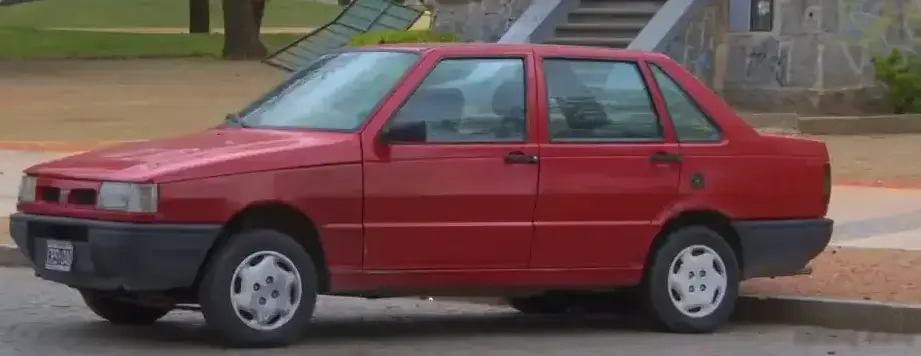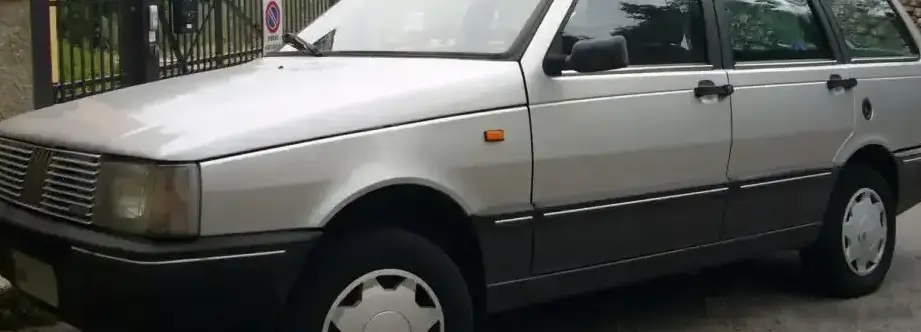
The Fiat Duna Weekend 70 1.3, produced between 1987 and 1991, represents a practical and affordable station wagon offering from the Italian automaker. Based on the Fiat Duna (Project 146), the Weekend variant extended the bodywork to create a more spacious and versatile vehicle, aimed at families and those requiring increased cargo capacity. This particular 70 1.3 version, equipped with a 67 horsepower 1.3-liter engine, served as an entry-level option within the Duna Weekend lineup, prioritizing economy and usability over outright performance. It was primarily sold in European and South American markets, offering a budget-friendly alternative to larger, more expensive estate cars.
Technical Specifications
| Brand | Fiat |
| Model | Duna |
| Generation | Duna Weekend (146 B) |
| Type (Engine) | 70 1.3 (67 Hp) |
| Start of Production | 1987 |
| End of Production | 1991 |
| Powertrain Architecture | Internal Combustion Engine |
| Body Type | Station Wagon (Estate) |
| Fuel Type | Petrol (Gasoline) |
| Power | 67 Hp |
| Engine Model/Code | 146 A5.000 |
| Engine Aspiration | Naturally Aspirated |
| Engine Oil Capacity | 3.8 l (4.02 US qt | 3.34 UK qt) |
| Coolant Capacity | 6 l (6.34 US qt | 5.28 UK qt) |
Powertrain & Engine Architecture
The Fiat Duna Weekend 70 1.3 utilizes the 146 A5.000 engine, a 1301cc inline-four cylinder petrol engine. This engine is a relatively simple design, featuring a single overhead camshaft (SOHC) operating two valves per cylinder. Fuel delivery is managed by a Weber 32 ADFA carburetor, a common setup for vehicles of this era aiming for cost-effectiveness. The engine’s modest power output of 67 horsepower at 6000 rpm and 86 Nm (63 lb-ft) of torque at 3600 rpm reflects its focus on fuel efficiency rather than high performance. The engine block is constructed from cast iron, providing durability, while the cylinder head is made of aluminum alloy to reduce weight. The transmission paired with this engine is a four-speed manual gearbox, although a three-speed automatic transmission was also available, albeit less common. The automatic transmission, while offering convenience, further reduced acceleration and increased fuel consumption.
Driving Characteristics
The Duna Weekend 70 1.3, particularly in its manual transmission guise, offered adequate, if uninspiring, performance. Acceleration from 0 to 60 mph was estimated to be around 14-15 seconds, and top speed was approximately 95 mph. The four-speed gearbox provided reasonable spacing, allowing the engine to operate within its optimal torque band for everyday driving. The automatic transmission version noticeably dulled performance, with slower acceleration and a tendency for the engine to feel strained during overtaking maneuvers. The suspension, consisting of independent front suspension with MacPherson struts and a torsion beam rear axle, provided a comfortable ride, prioritizing smoothness over sporty handling. Steering was relatively light, making it easy to maneuver in urban environments, but lacked significant feedback. The overall driving experience was geared towards practicality and ease of use, rather than driver engagement.
Equipment & Trim Levels
The Duna Weekend 70 1.3 was positioned as the entry-level trim within the Weekend range. Standard equipment was fairly basic, reflecting its affordable price point. Typically, it included cloth upholstery, vinyl floor covering, and a simple dashboard layout with basic instrumentation – speedometer, fuel gauge, and temperature gauge. Power steering and central locking were generally not standard features on this trim level, but could be added as optional extras. The exterior featured black plastic bumpers and relatively simple steel wheels with hubcaps. Optional equipment included a radio, upgraded upholstery, and occasionally, a sunroof. The interior space was a key selling point, offering a generous cargo area with the rear seats folded down, making it suitable for families or those needing to transport larger items.
Chassis & Braking
The Duna Weekend’s chassis was a monocoque construction, providing a reasonable level of rigidity. The front suspension utilized MacPherson struts with an anti-roll bar, while the rear suspension employed a torsion beam axle. This setup prioritized ride comfort and simplicity. Braking was typically accomplished with disc brakes on the front wheels and drum brakes on the rear wheels. The braking system was adequate for the vehicle’s weight and performance, but lacked the stopping power of more modern systems. Steering was a rack and pinion system, providing relatively light and precise control. The tires were typically narrow, reflecting the focus on fuel economy and affordability.
Market Reception & Comparison
The Fiat Duna Weekend 70 1.3 was generally well-received as a practical and affordable family car, particularly in markets where budget-friendly estate cars were in demand. Critics praised its spacious interior and reasonable fuel economy, but noted its lack of performance and relatively basic equipment levels. Compared to other trims in the Duna Weekend lineup, such as the 1.5-liter versions, the 70 1.3 offered significantly less power and acceleration. However, it also boasted better fuel economy and lower running costs. Competitors included the Renault 19 Estate, Peugeot 205 Estate, and various other small European estate cars. The Duna Weekend often undercut these rivals in price, making it an attractive option for budget-conscious buyers.
Legacy
The Fiat Duna Weekend 70 1.3, while not a particularly groundbreaking vehicle, holds a place in automotive history as a representative of affordable and practical family transportation from the late 1980s and early 1990s. The 146 A5.000 engine, while simple, proved to be relatively reliable, and many examples are still on the road today. In the used car market, the Duna Weekend 70 1.3 is valued for its simplicity, affordability, and ease of maintenance. Parts availability can be a challenge in some regions, but the engine and mechanical components are generally robust and long-lasting. It remains a popular choice for those seeking a classic, inexpensive, and practical estate car.