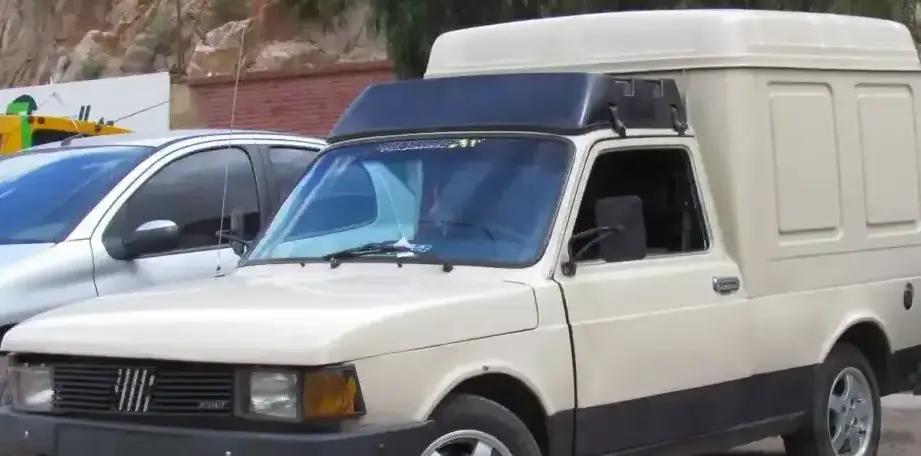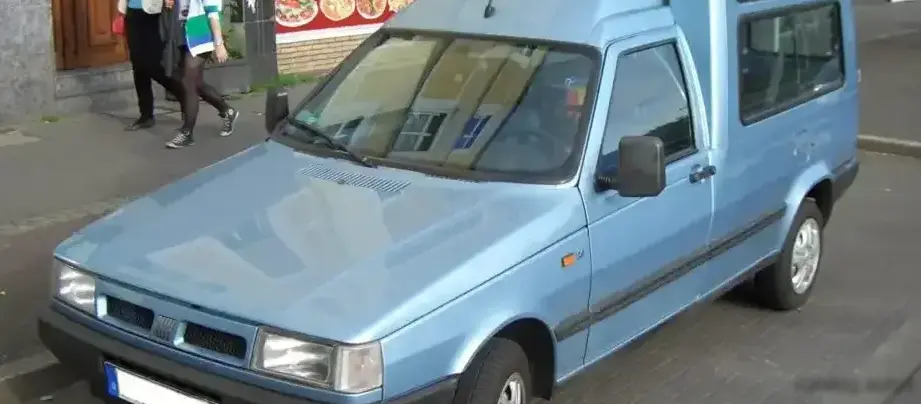
The Fiat Fiorino (147) 1.0, produced between 1980 and 1987, represents the entry-level variant of the first-generation Fiorino, a small commercial vehicle based on the Fiat 127 platform. This model, characterized by its diminutive size and economical engine, was primarily aimed at urban delivery services and small businesses seeking a practical and affordable transport solution. Within the Fiorino range, the 1.0-liter engine served as the base option, offering a balance between low running costs and sufficient, albeit modest, performance for its intended purpose. It was a key player in the burgeoning European microvan market, competing with vehicles like the Renault Express and Citroën C15.
Technical Specifications
| Brand | Fiat |
| Model | Fiorino |
| Generation | Fiorino (147) |
| Type (Engine) | 1.0 (50 Hp) |
| Start of Production | 1980 |
| End of Production | 1987 |
| Powertrain Architecture | Internal Combustion Engine |
| Body Type | Minivan |
| Fuel Type | Petrol (Gasoline) |
| Power | 50 Hp |
| Engine Model/Code | 127A.046 |
| Engine Aspiration | Naturally Aspirated |
| Engine Oil Capacity | 3.7 l (3.91 US qt | 3.26 UK qt) |
| Coolant Capacity | 5 l (5.28 US qt | 4.4 UK qt) |
Powertrain & Engine Architecture
The heart of the Fiorino 1.0 is the Fiat 127A.046 engine, a 999 cc inline-four cylinder petrol engine. This engine is a naturally aspirated unit, meaning it doesn’t employ a turbocharger or supercharger. It features a single overhead camshaft (SOHC) operating two valves per cylinder. The engine utilizes a basic carburetor fuel system, common for vehicles of this era, providing fuel delivery. The 127A.046 engine is known for its simplicity and relative ease of maintenance. The engine’s modest output of 50 horsepower at approximately 6000 rpm and 65 Nm (48 lb-ft) of torque at 3600 rpm is delivered through a four-speed manual transmission, as an automatic transmission was not offered on this specific variant. The engine block is constructed from cast iron, contributing to its durability, while the cylinder head is made of aluminum alloy to reduce weight. The compression ratio is 9.0:1, a typical value for engines of this period.
Driving Characteristics
The driving experience in the Fiorino 1.0 is characterized by its utilitarian nature. Acceleration is slow, with a 0-60 mph time estimated to be well over 15 seconds. The four-speed manual transmission requires frequent shifting to maintain momentum, particularly when loaded. However, the engine is relatively responsive at lower speeds, making it suitable for city driving and short-distance deliveries. The Fiorino’s light weight – typically around 780-850 kg (1720-1874 lbs) depending on the configuration – helps to mitigate the effects of the low horsepower. The gear ratios are geared towards maximizing fuel economy rather than outright performance. Compared to potential future, more powerful variants of the Fiorino, the 1.0-liter model feels significantly underpowered, especially when carrying a full load. The suspension, while basic, provides a reasonably comfortable ride on smooth surfaces, but can become unsettled on rough roads.
Equipment & Trim Levels
The Fiorino 1.0 was offered with a very basic level of equipment, reflecting its commercial vehicle focus. Standard features typically included vinyl upholstery, a simple dashboard with basic instrumentation (speedometer, fuel gauge, and temperature gauge), and manually operated windows and door locks. Power steering and air conditioning were not available on this trim level. The interior was designed for practicality and durability, with minimal attention paid to aesthetics. Optional extras were limited, but could include a radio, upgraded seating, and protective cargo area linings. The exterior trim was equally spartan, with black plastic bumpers and steel wheels being standard. Paint options were typically limited to a small range of solid colors.
Chassis & Braking
The Fiorino 1.0 utilizes a front-engine, front-wheel-drive layout. The suspension consists of independent front suspension with MacPherson struts and a twist-beam rear axle. The braking system features drum brakes on all four wheels, which was typical for vehicles in this price range during the 1980s. Steering is a recirculating ball system, providing a relatively direct but unrefined feel. The Fiorino’s relatively narrow track and short wheelbase contribute to its maneuverability in tight urban environments. Stabilizer bars were not typically fitted to the base 1.0-liter model, further emphasizing its focus on cost-effectiveness over handling performance.
Market Reception & Comparison
The Fiat Fiorino 1.0 was generally well-received in its target market as a cost-effective and reliable workhorse. Critics praised its fuel economy and ease of maintenance, but noted its lack of power and refinement. Compared to the higher-specification Fiorino variants, such as those equipped with the 1.3-liter or 1.5-liter engines, the 1.0-liter model offered significantly less performance but at a lower purchase price. The 1.0-liter engine was particularly popular with businesses operating in urban areas where low running costs and maneuverability were prioritized over speed and carrying capacity. Fuel economy was a key selling point, with the Fiorino 1.0 achieving around 45-50 mpg in typical driving conditions. Reliability was generally good, although the carburetor fuel system required periodic maintenance.
Legacy
The Fiat Fiorino (147) 1.0, while not a performance icon, holds a significant place in automotive history as a representative of the practical and economical commercial vehicles that dominated the European market in the 1980s. The 127A.046 engine, while simple, proved to be remarkably durable and is still found in many surviving examples today. In the used car market, the Fiorino 1.0 remains an affordable and relatively easy-to-maintain option for those seeking a classic commercial vehicle. Its simplicity and robust construction make it a popular choice for restoration projects and as a quirky alternative to more modern vans. The enduring appeal of the Fiorino 1.0 lies in its honest and unpretentious character, a testament to its original design brief as a no-nonsense workhorse.