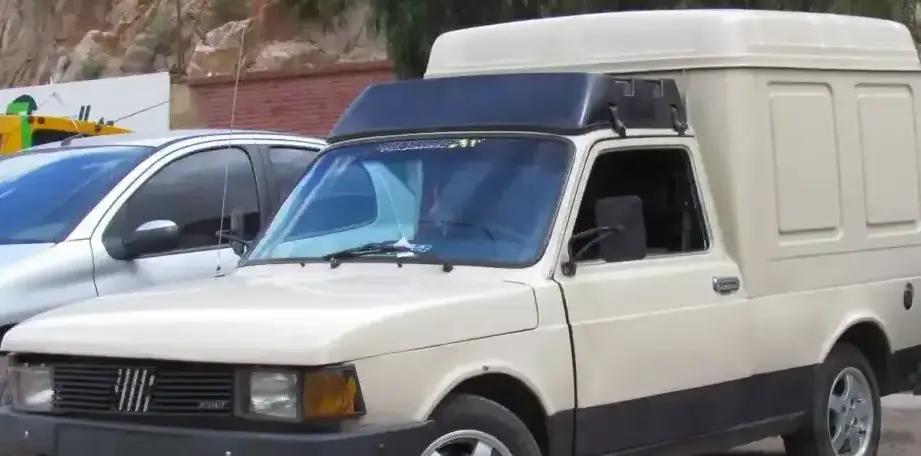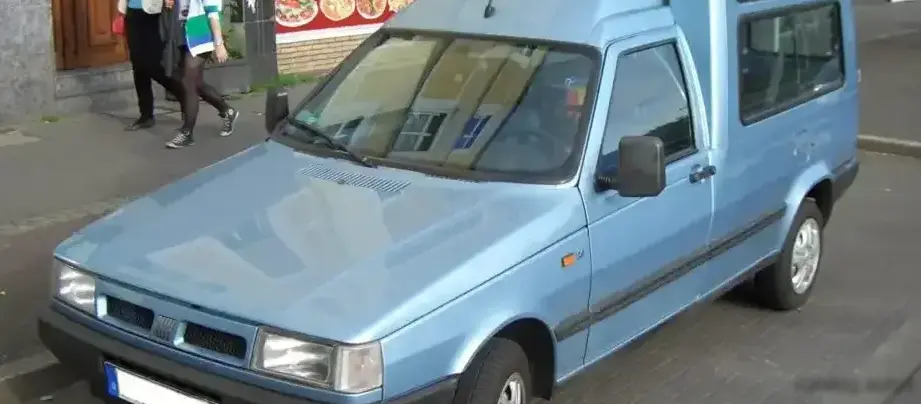
The Fiat Fiorino (147) 1.0, produced between 1986 and 1988, represents the entry-level variant of the first-generation Fiorino, a small commercial vehicle based on the Fiat 127 platform. This model, characterized by its diminutive size and utilitarian focus, was primarily aimed at urban delivery services and small businesses seeking an economical and maneuverable vehicle. The 1.0-liter engine and basic trim level positioned it as the most affordable option in the Fiorino range, catering to a price-sensitive market. While not known for blistering performance, the 1.0L Fiorino offered a practical and reliable solution for short-distance commercial transport, particularly in densely populated European cities.
Technical Specifications
| Brand | Fiat |
| Model | Fiorino |
| Generation | Fiorino (147) |
| Type (Engine) | 1.0 (56 Hp) |
| Start of production | 1986 |
| End of production | 1988 |
| Powertrain Architecture | Internal Combustion engine |
| Body type | Minivan |
| Fuel Type | Petrol (Gasoline) |
| Power | 56 Hp |
| Engine Model/Code | 156 A.000 |
| Engine aspiration | Naturally aspirated engine |
| Engine oil capacity | 3.5 l (3.7 US qt | 3.08 UK qt) |
| Coolant capacity | 5.5 l (5.81 US qt | 4.84 UK qt) |
Powertrain & Engine Architecture
The heart of the Fiorino 1.0 is the Fiat 156 A.000 engine, a 999 cc inline-four cylinder petrol engine. This engine is a naturally aspirated unit, meaning it doesn’t employ a turbocharger or supercharger. It features a single overhead camshaft (SOHC) operating two valves per cylinder. The engine utilizes a basic carburetor fuel system, common for vehicles of this era, rather than fuel injection. This carburetor setup, while simple and relatively inexpensive to maintain, contributes to the engine’s lower power output and less refined operation compared to later fuel-injected engines. The 156 A.000 engine is known for its robustness and simplicity, making it relatively easy to repair and maintain, even by amateur mechanics. The Fiorino 1.0 was exclusively offered with a four-speed manual transmission, designed to maximize fuel efficiency and provide adequate, though not sporty, performance. The transmission’s gear ratios are geared towards low-end torque, prioritizing usability in urban environments over high-speed cruising.
Driving Characteristics
The driving experience in the Fiorino 1.0 is decidedly utilitarian. With only 56 horsepower on tap, acceleration is slow, and overtaking requires careful planning. The four-speed manual transmission, while simple, necessitates frequent shifting to maintain momentum, especially when loaded. The vehicle’s light weight – approximately 780 kg (1720 lbs) – helps to mitigate the lack of power to some extent. The Fiorino 1.0 excels in stop-and-go city traffic, where its compact size and nimble handling are advantageous. However, on highways or when carrying a full load, the engine struggles, and maintaining a consistent speed requires significant effort. Compared to the slightly more powerful 1.1-liter version of the Fiorino, the 1.0L feels noticeably underpowered. The 1.1L offered a modest increase in horsepower and torque, resulting in improved acceleration and overall drivability. The suspension, while basic, provides a reasonably comfortable ride on smooth surfaces, but can become harsh on rough roads, particularly when the vehicle is loaded.
Equipment & Trim Levels
The Fiorino 1.0 was offered with a very basic level of equipment, reflecting its position as the entry-level model. Standard features typically included black plastic bumpers, steel wheels with hubcaps, and simple cloth upholstery. The interior was spartan, with minimal sound insulation and a functional dashboard layout. Amenities such as a radio, power windows, or central locking were generally not available on the base model, though they could be added as optional extras. The dashboard typically featured a basic instrument cluster with a speedometer, fuel gauge, and warning lights. The seats were typically flat and offered limited support, prioritizing durability over comfort. The cargo area was the primary focus of the Fiorino, offering a practical and accessible space for transporting goods. The rear seats, if fitted, were typically foldable or removable to maximize cargo capacity.
Chassis & Braking
The Fiorino 147 utilizes a front-engine, front-wheel-drive layout, based on the Fiat 127’s chassis. The suspension consists of independent front suspension with MacPherson struts and a twist-beam rear axle. This setup provides a reasonable balance between ride comfort and handling, although it is not designed for sporty driving. The braking system is relatively simple, featuring drum brakes on all four wheels. While adequate for the vehicle’s weight and performance, the drum brakes lack the stopping power and fade resistance of disc brakes. Steering is accomplished via a rack and pinion system, providing reasonably precise and responsive control. The Fiorino 1.0’s relatively light weight contributes to its nimble handling and ease of maneuverability in tight spaces.
Market Reception & Comparison
The Fiat Fiorino 1.0 was generally well-received as an affordable and practical commercial vehicle. Critics praised its compact size, fuel efficiency, and ease of maintenance. However, the engine’s lack of power was a common criticism. Compared to other small commercial vehicles of the era, such as the Renault Express or the Citroën C15, the Fiorino 1.0 offered a competitive price point but lagged behind in terms of performance. The 1.1-liter Fiorino offered a noticeable improvement in performance and was often considered a more desirable option for those who required more power. Fuel economy for the 1.0L Fiorino was typically around 45-50 mpg, making it an economical choice for businesses operating in urban areas. Reliability was generally good, thanks to the engine’s simple design and robust construction.
Legacy
The Fiat Fiorino 147 1.0, while not a performance icon, holds a significant place in the history of small commercial vehicles. Its simple design, affordability, and practicality made it a popular choice for small businesses and delivery services throughout Europe. The 156 A.000 engine, while basic, proved to be remarkably durable and reliable, and many examples are still on the road today. In the used car market, the Fiorino 1.0 is often sought after by enthusiasts and collectors who appreciate its retro charm and simplicity. Parts availability can be a challenge, but the engine’s widespread use in other Fiat models ensures that many components are still readily available. The Fiorino 147 laid the foundation for subsequent generations of the Fiorino, which have continued to evolve and adapt to the changing needs of the commercial vehicle market.