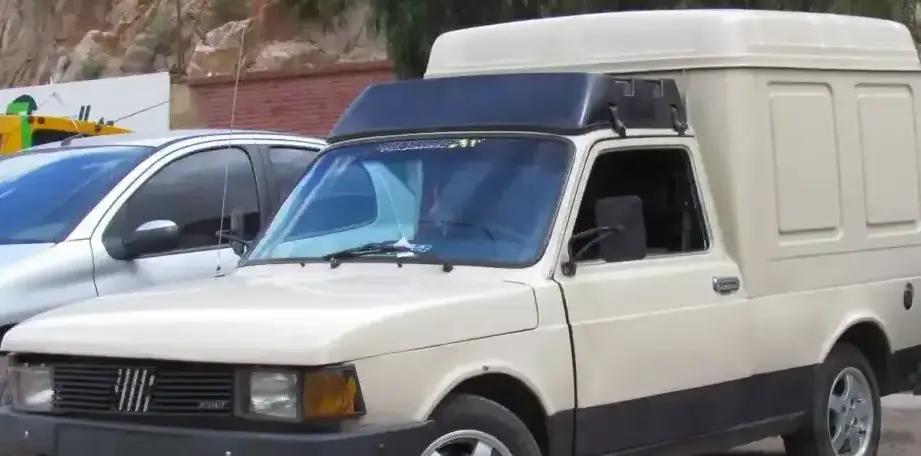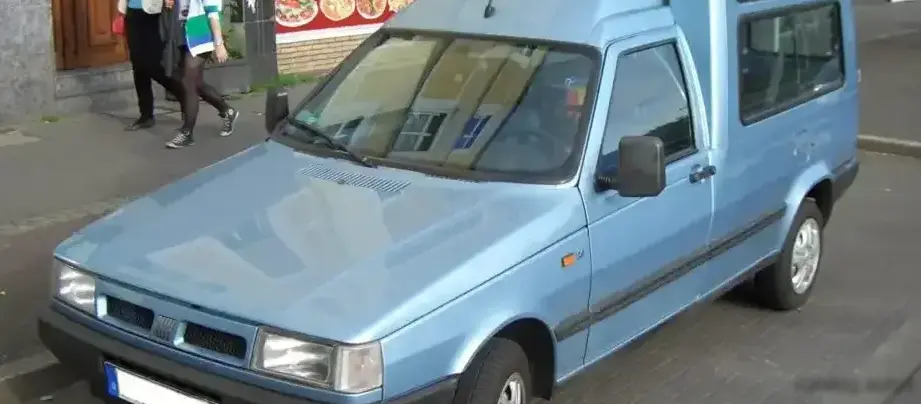
The Fiat Fiorino (147) 1.1, produced between 1986 and 1988, represents the entry-level variant of the first-generation Fiorino, a small commercial vehicle based on the Fiat 127 platform. This model was specifically designed for urban delivery and light commercial use, offering an economical and practical solution for businesses and individuals needing a compact cargo carrier. The 147 series Fiorino, and particularly the 1.1-liter version, played a significant role in establishing the Fiorino as a popular choice in the European microvan segment, competing with vehicles like the Renault Express and Citroën C15. Its simple design and robust construction contributed to its longevity and widespread adoption, especially in Southern European markets.
Technical Specifications
| Brand | Fiat |
| Model | Fiorino |
| Generation | Fiorino (147) |
| Type (Engine) | 1.1 (55 Hp) |
| Start of production | 1986 |
| End of production | 1988 |
| Powertrain Architecture | Internal Combustion engine |
| Body type | Minivan |
| Fuel Type | Petrol (Gasoline) |
| Power | 55 Hp |
| Engine Model/Code | 146 A9.000 |
| Engine aspiration | Naturally aspirated engine |
| Engine oil capacity | 3.5 l (3.7 US qt | 3.08 UK qt) |
| Coolant capacity | 5.5 l (5.81 US qt | 4.84 UK qt) |
Powertrain & Engine Architecture
The heart of the Fiorino 1.1 is the Fiat 146 A9.000 engine, a 1.049cc inline-four cylinder petrol engine. This engine is a naturally aspirated unit, meaning it doesn’t employ a turbocharger or supercharger. It features a single overhead camshaft (SOHC) operating two valves per cylinder. The engine utilizes a basic carburetor fuel system, common for vehicles of this era, providing fuel delivery. The 146 A9.000 engine is known for its simplicity and relatively low maintenance requirements. The engine’s modest output of 55 horsepower at approximately 5500 rpm and 65 Nm (48 lb-ft) of torque at 3000 rpm is delivered through a four-speed manual transmission, as an automatic transmission was not offered on this specific variant. The engine block is constructed from cast iron, contributing to its durability, while the cylinder head is made of aluminum alloy. The relatively small displacement and simple design prioritized fuel economy over outright performance.
Driving Characteristics
The driving experience in the Fiorino 1.1 is best described as utilitarian. With only 55 horsepower propelling a vehicle designed for carrying loads, acceleration is slow and deliberate. The four-speed manual transmission requires frequent shifting to maintain momentum, especially when loaded or traveling uphill. The gear ratios are geared towards maximizing fuel efficiency rather than providing spirited performance. The Fiorino 1.1 is not designed for highway cruising; its optimal operating environment is within urban and suburban settings where lower speeds and frequent stops are the norm. The suspension, while basic, is tuned to provide a comfortable ride even with a moderate load in the cargo area. Steering is light and relatively precise, making maneuvering in tight spaces easy. Compared to later, more powerful Fiorino variants (such as those with 1.4 or 1.6-liter engines), the 1.1 feels significantly underpowered, but it offers a noticeable advantage in fuel consumption.
Equipment & Trim Levels
The Fiorino 1.1 was offered with a very basic level of equipment, reflecting its positioning as an affordable commercial vehicle. Standard features typically included black plastic bumpers, steel wheels with hubcaps, and simple cloth upholstery. The interior was functional and spartan, with a basic dashboard layout featuring minimal instrumentation – a speedometer, fuel gauge, and temperature gauge were standard. Power steering and air conditioning were not available on this base model. Optional extras were limited, but could include a radio, upgraded seat upholstery, and occasionally, a sliding rear window. The cargo area was typically left bare, with the option of adding a protective rubber floor liner. The focus was on providing a durable and practical work vehicle, rather than luxury or comfort.
Chassis & Braking
The Fiorino 147 utilizes a front-engine, front-wheel-drive layout. The chassis is based on the Fiat 127, employing a monocoque construction. The front suspension consists of independent McPherson struts, while the rear suspension utilizes a twist-beam axle with trailing arms. Braking is provided by disc brakes on the front wheels and drum brakes on the rear wheels. The braking system is hydraulically operated, but lacks power assistance. The relatively lightweight construction of the Fiorino, combined with the modest engine output, means that the braking performance is adequate for its intended use. Stabilizer bars were not typically fitted to the base 1.1 model, contributing to a slightly more pronounced body roll during cornering.
Market Reception & Comparison
The Fiat Fiorino 1.1 was well-received in its target market as a cost-effective and reliable small commercial vehicle. Critics praised its fuel efficiency and ease of maintenance, but noted its lack of power and limited features. Compared to the slightly more expensive 1.4-liter Fiorino, the 1.1 offered a lower purchase price and better fuel economy, making it attractive to budget-conscious buyers. However, the 1.4-liter version provided significantly improved performance and was better suited for carrying heavier loads or traveling on hilly terrain. The 1.1’s simplicity also meant lower repair costs, a significant advantage for businesses operating on tight margins. Its main competitors, such as the Renault Express and Citroën C15, offered similar levels of practicality and affordability, but the Fiorino’s Italian design and reputation for reliability gave it a competitive edge in certain markets.
Legacy
The Fiat Fiorino 147 1.1, while not a performance icon, holds a significant place in the history of small commercial vehicles. Its robust engine and simple design contributed to its longevity, and many examples remain on the road today, often serving as affordable and reliable workhorses. The 146 A9.000 engine, while basic, proved to be remarkably durable and relatively easy to repair. In the used car market, these Fiorinos are valued for their affordability and low running costs. However, potential buyers should be aware of the age-related issues common to vehicles of this era, such as rust and wear and tear on suspension components. The Fiorino 1.1 laid the foundation for the continued success of the Fiorino model line, which remains a popular choice for small businesses and urban delivery services to this day.