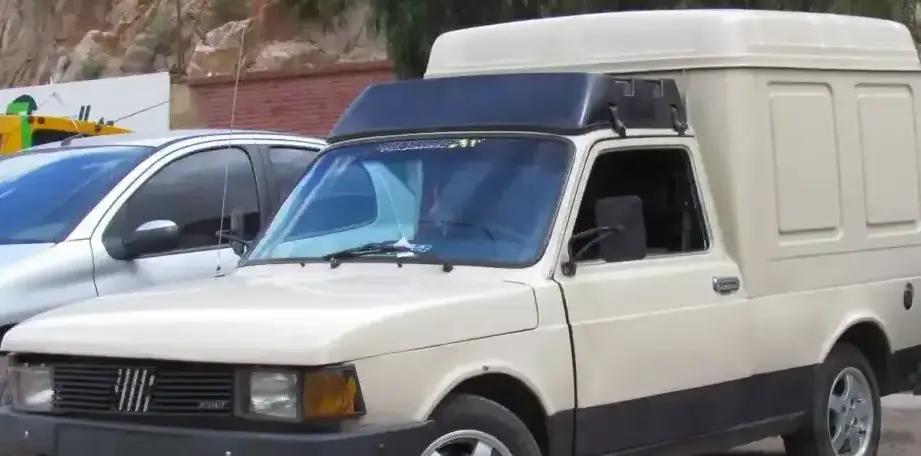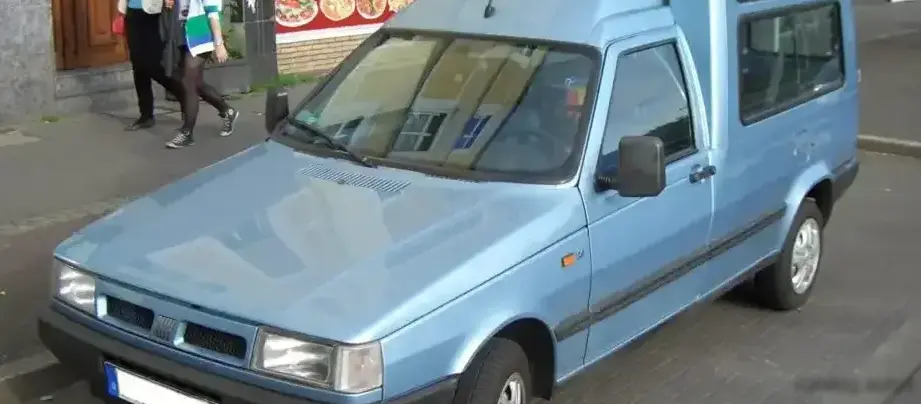
The Fiat Fiorino (147) 1.3, produced between 1987 and 1993, represents the entry-level variant of the first-generation Fiorino, a small commercial vehicle based on the Fiat Panda platform. This model, powered by a 67 horsepower 1.3-liter engine, was primarily aimed at businesses and individuals requiring a practical, economical, and compact vehicle for urban deliveries and light commercial tasks. It served as a crucial part of Fiat’s light commercial vehicle lineup in Europe, offering a more affordable alternative to larger vans and pickup trucks. The 147 series Fiorino, and specifically this 1.3L variant, played a significant role in establishing the Fiorino as a popular choice in its segment.
Technical Specifications
| Brand | Fiat |
| Model | Fiorino |
| Generation | Fiorino (147) |
| Type (Engine) | 1.3 (67 Hp) |
| Start of production | 1987 |
| End of production | 1993 |
| Powertrain Architecture | Internal Combustion engine |
| Body type | Minivan |
| Fuel Type | Petrol (Gasoline) |
| Power | 67 Hp |
| Engine Model/Code | 146 A5.000 |
| Engine aspiration | Naturally aspirated engine |
| Engine oil capacity | 3.4 l (3.59 US qt | 2.99 UK qt) |
| Coolant capacity | 5 l (5.28 US qt | 4.4 UK qt) |
Powertrain & Engine Architecture
The heart of the Fiorino 1.3 is the Fiat 146 A5.000 engine, a 1301cc inline-four cylinder petrol engine. This engine is a naturally aspirated unit, meaning it doesn’t employ a turbocharger or supercharger. It features a single overhead camshaft (SOHC) valvetrain operating two valves per cylinder. Fuel delivery is managed by a Weber 32/36 DGEV carburetor, a common setup for vehicles of this era, prioritizing simplicity and cost-effectiveness over advanced fuel injection systems. The engine’s relatively low compression ratio (typically around 8.8:1) contributes to its ability to run on lower octane fuels, a practical consideration for many European markets. The engine is paired with a four-speed manual transmission as standard, although a three-speed automatic transmission was offered as an option, albeit less commonly selected due to its impact on fuel economy and performance. The automatic transmission was a simple hydraulic unit, designed for durability rather than sporty responsiveness.
Driving Characteristics
The 1.3-liter engine in the Fiorino 147 delivers modest performance. With 67 horsepower, acceleration is best described as adequate for urban driving and light loads. The vehicle’s light weight (around 840 kg or 1850 lbs) helps mitigate the engine’s limited power, but overtaking maneuvers on highways require careful planning. The four-speed manual transmission allows drivers to keep the engine in its optimal power band, while the optional three-speed automatic results in a more relaxed, but less efficient, driving experience. Gear ratios are geared towards maximizing fuel economy and providing sufficient torque for low-speed maneuvering. Compared to the later 1.4-liter versions of the Fiorino, the 1.3L feels noticeably less powerful, especially when fully loaded. The suspension, while simple, provides a reasonably comfortable ride, absorbing bumps and imperfections in the road surface effectively. However, handling is not a strong point, with noticeable body roll in corners.
Equipment & Trim Levels
The Fiorino 1.3 was typically offered in a very basic trim level, reflecting its commercial vehicle focus. Standard equipment included black plastic bumpers, steel wheels with hubcaps, and a simple interior with vinyl upholstery. The dashboard is functional and utilitarian, featuring basic instrumentation such as a speedometer, fuel gauge, and temperature gauge. Power steering and central locking were generally not available on this base model. Options were limited but could include a radio, upgraded seat upholstery, and occasionally, a sunroof. The cargo area is the defining feature of the Fiorino, offering a practical and versatile space for carrying goods. The rear seats, if fitted, could be folded or removed to maximize cargo capacity. The overall interior ambiance is spartan, prioritizing durability and ease of cleaning over luxury or refinement.
Chassis & Braking
The Fiorino 147 utilizes a simple, yet robust, chassis design. It features a front-engine, front-wheel-drive layout. The suspension consists of independent front suspension with MacPherson struts and a twist-beam rear axle. Braking is typically accomplished with front disc brakes and rear drum brakes. The braking system is adequate for the vehicle’s weight and performance, but lacks the sophistication of more modern systems. Steering is a recirculating ball type, providing a direct but somewhat unrefined feel. The Fiorino’s relatively narrow track and short wheelbase contribute to its maneuverability in tight urban environments, but also limit its stability at higher speeds. Stabilizer bars were not typically fitted to the base 1.3L model, further emphasizing its focus on practicality over sporty handling.
Market Reception & Comparison
The Fiat Fiorino 1.3 was well-received in its target market as a cost-effective and reliable light commercial vehicle. Critics praised its practicality, fuel efficiency, and ease of maintenance. However, its limited power and basic equipment levels were also noted. Compared to other small vans of the era, such as the Renault Express and Citroën C15, the Fiorino offered a competitive price point and a relatively spacious cargo area. The 1.4-liter versions of the Fiorino, introduced later in the production run, offered improved performance but came at a higher cost. The automatic transmission version of the 1.3L Fiorino was less popular due to its lower fuel economy and slower acceleration compared to the manual transmission model. Reliability was generally good, with the 146 A5.000 engine proving to be a durable and long-lasting unit.
Legacy
The Fiat Fiorino 147 1.3 remains a relatively common sight on European roads today, particularly in countries where it was widely used as a commercial vehicle. Its simple mechanical design and readily available parts make it relatively easy and inexpensive to maintain. The 146 A5.000 engine is known for its robustness and longevity, and many examples are still running reliably after decades of service. In the used car market, the Fiorino 1.3 is valued for its practicality and affordability. While not a collector’s item, it represents a significant piece of Fiat’s history and a testament to the enduring appeal of simple, functional vehicles. The success of the first-generation Fiorino paved the way for subsequent generations, establishing the Fiorino as a mainstay in the European light commercial vehicle segment.