Technical Specifications
| Brand | Fiat |
| Model | Fiorino |
| Generation | Fiorino (147) |
| Type (Engine) | 1.4 (67 Hp) |
| Start of production | 1994 |
| End of production | 2000 |
| Powertrain Architecture | Internal Combustion engine |
| Body type | Minivan |
| Seats | 5 |
| Doors | 3 |
| Fuel consumption (urban) | 10.8 l/100 km (21.8 US mpg) |
| Fuel consumption (extra urban) | 6.9 l/100 km (34.1 US mpg) |
| Fuel consumption (combined) | 8.4 l/100 km (28 US mpg) |
| Fuel Type | Petrol (Gasoline) |
| Acceleration 0 – 100 km/h | 22.5 sec |
| Acceleration 0 – 62 mph | 22.5 sec |
| Acceleration 0 – 60 mph | 21.4 sec |
| Maximum speed | 140 km/h (86.99 mph) |
| Weight-to-power ratio | 16.4 kg/Hp |
| Power | 67 Hp |
| Power per litre | 48.8 Hp/l |
| Engine layout | Front, Transverse |
| Engine Model/Code | 146 D5.000 |
| Engine displacement | 1372 cm3 (83.72 cu. in.) |
| Number of cylinders | 4 |
| Engine configuration | Inline |
| Cylinder Bore | 80.5 mm (3.17 in.) |
| Piston Stroke | 67.4 mm (2.65 in.) |
| Compression ratio | 9.2:1 |
| Number of valves per cylinder | 2 |
| Engine aspiration | Naturally aspirated |
| Valvetrain | OHC |
| Engine oil capacity | 3.4 l (3.59 US qt | 2.99 UK qt) |
| Coolant capacity | 6.5 l (6.87 US qt | 5.72 UK qt) |
| Kerb Weight | 1098 kg (2420.68 lbs.) |
| Max. weight | 1660 kg (3659.67 lbs.) |
| Max load | 562 kg (1239 lbs.) |
| Fuel tank capacity | 64 l (16.91 US gal | 14.08 UK gal) |
| Length | 4159 mm (163.74 in.) |
| Width | 1622 mm (63.86 in.) |
| Height | 1904 mm (74.96 in.) |
| Wheelbase | 2581 mm (101.61 in.) |
| Drivetrain | Front wheel drive |
| Number of gears | 5 |
| Gearbox type | Manual transmission |
| Tires size | 165/70 R13 83R |
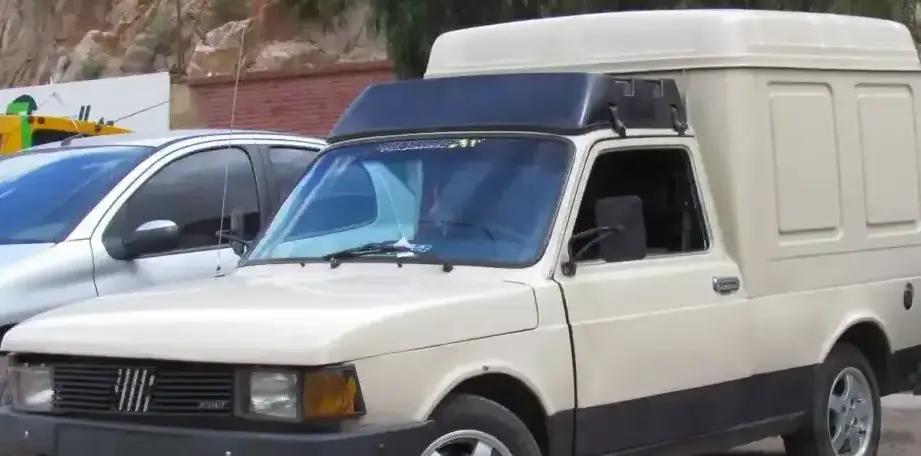
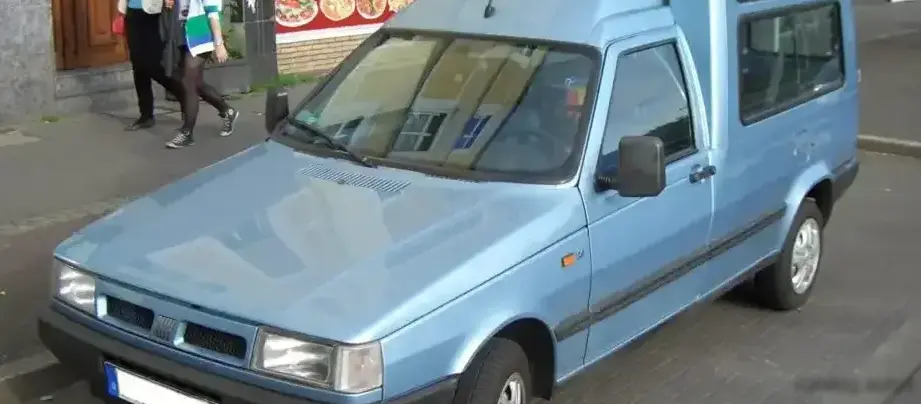
The Fiat Fiorino (147) 1.4, producing 67 horsepower, was a popular entry-level commercial vehicle and small passenger car sold primarily in Europe from 1994 to 2000. Based on the Fiat Uno platform, the Fiorino (147) represented a practical and affordable option for businesses and individuals needing a compact, versatile vehicle. This particular 1.4-liter variant occupied the base trim level, offering a balance of economy and functionality. It was positioned below more powerful versions, and served as a cost-effective alternative for buyers prioritizing practicality over performance. The Fiorino, alongside the Peugeot Partner and Citroën Berlingo, helped define the small van segment in Europe, offering a more car-like driving experience than traditional larger vans.
Powertrain & Engine Architecture
The Fiorino 1.4 was powered by the Fiat 146 D5.000 engine, a 1.4-liter inline-four cylinder gasoline engine. This engine featured a single overhead camshaft (OHC) valvetrain with two valves per cylinder. Fuel delivery was managed by a multi-point fuel injection system, a relatively modern feature for its time, contributing to improved fuel efficiency and reduced emissions compared to carbureted engines. The engine’s 9.2:1 compression ratio was typical for naturally aspirated engines of this era. The engine was transversely mounted at the front of the vehicle, driving the front wheels. The five-speed manual transmission was a standard feature, providing a reasonable spread of gears for both urban and highway driving. The engine was known for its simplicity and relative ease of maintenance, a characteristic common to Fiat engines of the period. The engine block itself was constructed from cast iron, contributing to its durability.
Driving Characteristics
The 67 horsepower output of the 1.4-liter engine resulted in modest performance. Acceleration was slow, with a 0-60 mph time of approximately 21.4 seconds. Top speed was limited to around 87 mph. The Fiorino 1.4 was not designed for rapid acceleration or high-speed cruising. Instead, it prioritized fuel economy and ease of driving in urban environments. The five-speed manual transmission allowed drivers to keep the engine in its optimal power band, but the limited torque meant frequent downshifting was often necessary, especially when carrying a load or driving uphill. Compared to potential higher-output versions (which were not widely available in all markets), the 1.4 offered a more economical and less demanding driving experience. The steering was light, making it easy to maneuver in tight spaces, a key benefit for city driving and deliveries. The suspension, while basic, provided a reasonably comfortable ride, even when the vehicle was loaded.
Equipment & Trim Levels
The 1.4-liter Fiorino typically came with a basic level of equipment. Standard features included cloth upholstery, a simple dashboard layout, and manual windows and door locks. Power steering was not always standard, and air conditioning was typically an optional extra. The interior was designed with practicality in mind, featuring durable materials and a focus on maximizing cargo space. Optional extras could include upgraded audio systems, different seat configurations, and protective trim for the cargo area. The overall trim level was geared towards commercial users and budget-conscious buyers. The dashboard was constructed from hard-wearing plastics, designed to withstand the rigors of commercial use. The seats were generally simple in design, prioritizing durability over luxury.
Chassis & Braking
The Fiorino (147) utilized a relatively simple chassis design based on the Fiat Uno. The front suspension consisted of independent coil springs and MacPherson struts, while the rear suspension employed a twist beam setup. Braking was typically accomplished with disc brakes at the front and drum brakes at the rear. The braking system was adequate for the vehicle’s weight and performance, but lacked the sophistication of more advanced systems. The relatively lightweight construction of the Fiorino helped to compensate for the modest engine output and braking capabilities. The steering was a recirculating ball system, providing a direct but not particularly precise feel. The chassis was designed to prioritize load-carrying capacity and durability over sporty handling.
Market Reception & Comparison
The Fiat Fiorino 1.4 was generally well-received as a practical and affordable commercial vehicle. Critics praised its fuel efficiency, compact size, and ease of maneuverability. However, the limited performance and basic equipment levels were often noted. Compared to other small vans and commercial vehicles of the time, such as the Renault Kangoo or Citroën Berlingo, the Fiorino offered a more budget-friendly option, but lacked some of the refinement and features of its competitors. Its fuel economy of around 28 US mpg combined was competitive for its class. Reliability was generally good, with the 1.4-liter engine proving to be durable and relatively trouble-free. The Fiorino’s lower price point made it an attractive option for small businesses and self-employed individuals.
Legacy
The Fiat Fiorino (147) 1.4 remains a relatively common sight on European roads today, particularly as a used vehicle. The 146 D5.000 engine is known for its longevity and relatively low maintenance costs. While not a performance vehicle, the Fiorino 1.4 provides a reliable and economical transportation solution for those needing a small, versatile van or car. Parts availability is generally good, and the simple mechanical design makes it relatively easy to repair. The Fiorino (147) laid the groundwork for subsequent generations of the Fiorino, which continue to be popular commercial vehicles in Europe. The enduring popularity of the Fiorino is a testament to its practicality and affordability, cementing its place as a significant vehicle in the European small van market.