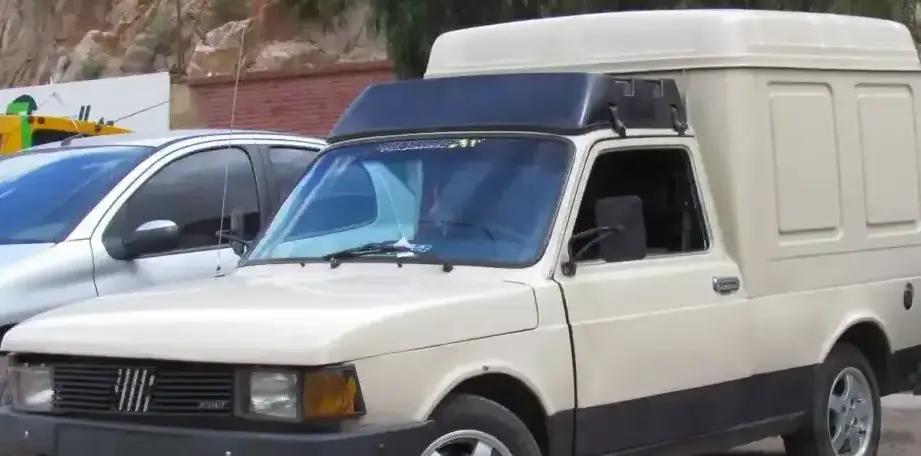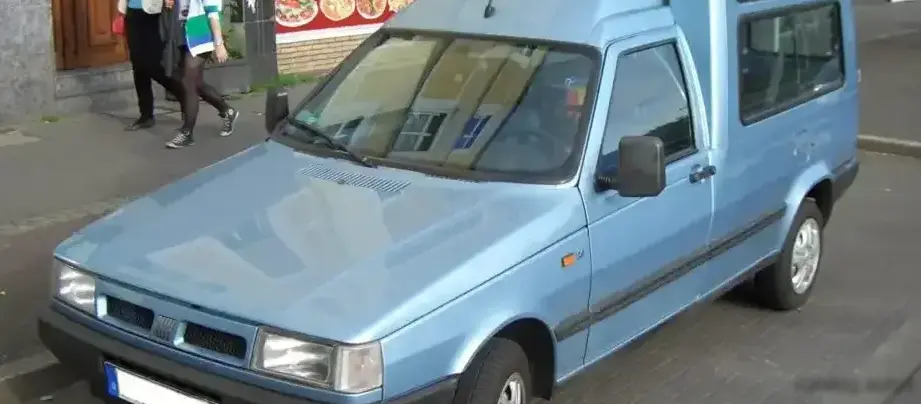
The Fiat Fiorino (147) 1.5 (75 hp) Cat, produced between 1988 and 1993, represents an entry-level variant of the first-generation Fiorino, a small commercial vehicle based on the Fiat Panda platform. This model served as a practical and economical solution for businesses and individuals needing a compact van for urban deliveries and light commercial tasks. Positioned at the base of the Fiorino lineup, it offered a cost-effective alternative to larger vans and more powerful engine options. The “Cat” designation indicates the inclusion of a catalytic converter, reflecting increasing environmental regulations in Europe during the late 1980s and early 1990s.
Technical Specifications
| Brand | Fiat |
| Model | Fiorino |
| Generation | Fiorino (147) |
| Type (Engine) | 1.5 (75 Hp) Cat |
| Start of Production | 1988 |
| End of Production | 1993 |
| Powertrain Architecture | Internal Combustion Engine |
| Body Type | Minivan |
| Fuel Type | Petrol (Gasoline) |
| Power | 75 Hp |
| Engine Model/Code | 149.C1.000 |
| Engine Aspiration | Naturally Aspirated |
| Engine Oil Capacity | 4.5 l (4.76 US qt | 3.96 UK qt) |
| Coolant Capacity | 7 l (7.4 US qt | 6.16 UK qt) |
Powertrain & Engine Architecture
The Fiorino 1.5 (75 hp) Cat utilizes the Fiat 149.C1.000 engine, a 1.5-liter inline-four cylinder petrol engine. This engine is a naturally aspirated, overhead valve (OHV) design, known for its simplicity and durability. The engine features a single overhead camshaft operating two valves per cylinder. Fuel delivery is managed by a single-point fuel injection system, a relatively basic setup for the time, but sufficient for the vehicle’s intended purpose. The catalytic converter, denoted by the “Cat” in the model name, was a crucial addition to meet increasingly stringent emissions standards. The engine’s modest power output of 75 horsepower (at approximately 5000 rpm) and 98 Nm (72 lb-ft) of torque is delivered to the front wheels. While Fiat offered a five-speed manual transmission with the Fiorino, the 1.5-liter engine was also paired with a four-speed automatic transmission, though this was less common. The automatic transmission was a conventional hydraulic unit, offering smooth but not particularly quick shifts.
Driving Characteristics
The driving experience in the Fiorino 1.5 (75 hp) with the automatic transmission is best described as utilitarian. Acceleration is modest, and the vehicle is not designed for speed. The four-speed automatic transmission, while providing convenience, contributes to a slower pace, with noticeable gear changes and a tendency to hunt for the right gear, especially under load. The gear ratios are optimized for fuel economy and low-speed maneuverability rather than outright performance. Compared to the manual transmission version, the automatic suffers a slight performance penalty, but offers ease of use, particularly in stop-and-go city traffic. The Fiorino’s light weight helps to mitigate the engine’s limited power, making it reasonably capable of carrying moderate loads. Handling is typical of a small van – stable enough for its intended purpose, but not particularly engaging. The suspension prioritizes ride comfort over sporty handling.
Equipment & Trim Levels
The Fiorino 1.5 (75 hp) Cat, being the entry-level model, was typically equipped with basic features. Standard equipment generally included cloth upholstery, a simple dashboard with basic instrumentation (speedometer, fuel gauge, temperature gauge), and manually operated windows and door locks. Power steering was not standard, though it could be specified as an optional extra. The interior was designed for practicality and durability, with hard-wearing materials used throughout. Optional extras included a radio, upgraded interior trim, and a rear wiper. The cargo area was the focal point of the Fiorino, offering a relatively spacious and versatile load bay. The rear seats, if fitted, were typically foldable or removable to maximize cargo capacity. Trim levels were minimal, with most variations stemming from optional equipment choices.
Chassis & Braking
The Fiorino (147) utilizes a front-wheel-drive layout with a relatively simple chassis design. The suspension consists of independent front suspension with MacPherson struts and a twist-beam rear axle. This setup provides a reasonable balance between ride comfort and handling. Braking on the base model typically consisted of disc brakes on the front wheels and drum brakes on the rear wheels. The braking system was adequate for the vehicle’s weight and intended use, but lacked the stopping power of more sophisticated setups. Steering is a recirculating ball system, providing a direct but not particularly precise feel. The Fiorino’s relatively small size and light weight contribute to its maneuverability in tight urban environments.
Market Reception & Comparison
The Fiat Fiorino 1.5 (75 hp) Cat was generally well-received as a practical and affordable commercial vehicle. Critics praised its fuel efficiency and low running costs, but noted its limited performance and basic interior. Compared to other small vans of the era, such as the Renault Express and the Citroën C15, the Fiorino offered a competitive price point and a relatively spacious cargo area. The 1.5-liter engine, while adequate for most tasks, was noticeably less powerful than the larger engines offered in some competing models. The automatic transmission, while convenient, further reduced performance and increased fuel consumption compared to the manual version. However, for businesses and individuals prioritizing economy and practicality over performance, the Fiorino 1.5 (75 hp) Cat represented a compelling option.
Legacy
The Fiat Fiorino (147) 1.5 (75 hp) Cat, while not a performance icon, holds a significant place in the history of small commercial vehicles. Its simple and robust powertrain proved to be relatively reliable, and many examples remain on the road today. The 149.C1.000 engine is known for its durability, though regular maintenance is essential to prevent issues such as oil leaks and valve wear. In the used car market, these Fiorinos are valued for their affordability and practicality. They are often sought after by small businesses and individuals needing a basic and reliable van for local deliveries or light commercial work. The inclusion of a catalytic converter also makes them slightly more desirable in areas with strict emissions regulations. The Fiorino (147) laid the foundation for subsequent generations of the Fiorino, which continue to be popular choices in the small commercial vehicle segment.