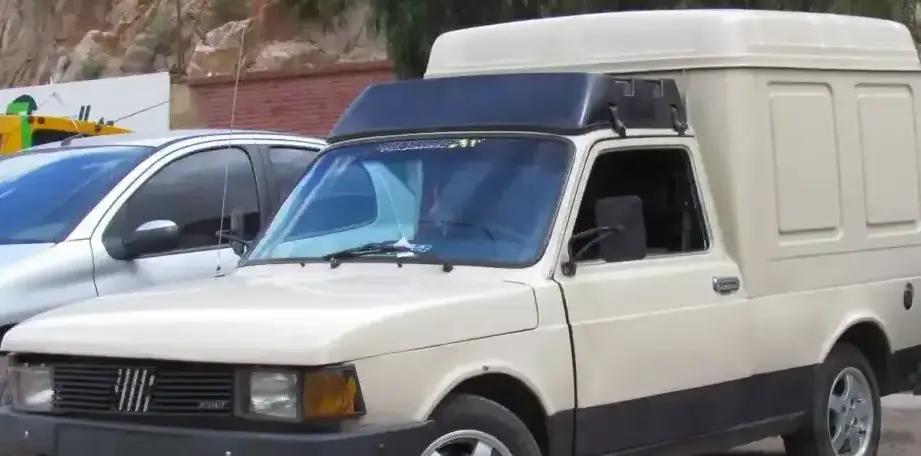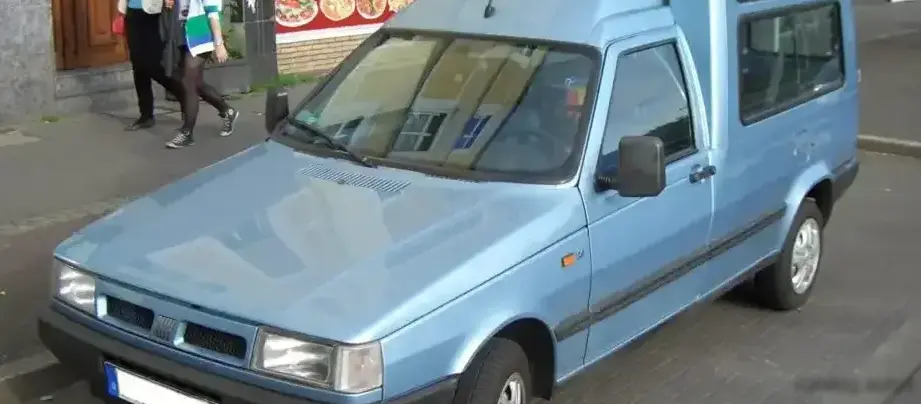
The Fiat Fiorino (147) 1.6 ie, producing 75 horsepower, was a popular choice in the European light commercial vehicle and small passenger car segment from 1994 to 1996. Positioned as an entry-level offering within the Fiorino range, it provided a practical and affordable transportation solution. The 147 series Fiorino, based on the Fiat Uno platform, was designed to be a versatile vehicle suitable for both commercial and family use, offering a compact footprint and relatively low running costs. This variant specifically targeted buyers seeking a basic, reliable vehicle for urban environments and light-duty tasks.
Technical Specifications
| Brand | Fiat |
| Model | Fiorino |
| Generation | Fiorino (147) |
| Type (Engine) | 1.6 ie (75 Hp) |
| Start of production | 1994 |
| End of production | 1996 |
| Powertrain Architecture | Internal Combustion engine |
| Body type | Minivan |
| Seats | 5 |
| Doors | 3 |
| Fuel Type | Petrol (Gasoline) |
| Acceleration 0 – 100 km/h | 14 sec |
| Acceleration 0 – 62 mph | 14 sec |
| Acceleration 0 – 60 mph | 13.3 sec |
| Maximum speed | 150 km/h (93.21 mph) |
| Weight-to-power ratio | 14.2 kg/Hp, 70.6 Hp/tonne |
| Weight-to-torque ratio | 8.5 kg/Nm, 117.6 Nm/tonne |
| Power | 75 Hp @ 6000 rpm |
| Power per litre | 47.4 Hp/l |
| Torque | 125 Nm @ 3000 rpm (92.2 lb.-ft. @ 3000 rpm) |
| Engine layout | Front, Transverse |
| Engine Model/Code | 146.C6.000 |
| Engine displacement | 1581 cm3 (96.48 cu. in.) |
| Number of cylinders | 4 |
| Engine configuration | Inline |
| Cylinder Bore | 86.4 mm (3.4 in.) |
| Piston Stroke | 67.4 mm (2.65 in.) |
| Compression ratio | 9.2:1 |
| Number of valves per cylinder | 2 |
| Fuel injection system | Single-point injection |
| Engine aspiration | Naturally aspirated engine |
| Valvetrain | OHC |
| Engine oil capacity | 3.4 l (3.59 US qt | 2.99 UK qt) |
| Coolant | 6.5 l (6.87 US qt | 5.72 UK qt) |
| Kerb Weight | 1063 kg (2343.51 lbs) |
| Max. weight | 1650 kg (3637.63 lbs) |
| Max load | 587 kg (1294.11 lbs) |
| Fuel tank capacity | 64 l (16.91 US gal | 14.08 UK gal) |
| Length | 4159 mm (163.74 in) |
| Width | 1622 mm (63.86 in) |
| Height | 1904 mm (74.96 in) |
| Wheelbase | 2581 mm (101.61 in) |
| Drivetrain Architecture | The Internal combustion engine (ICE) drives the front wheels of the vehicle. |
| Drive wheel | Front wheel drive |
| Number of gears and type of gearbox | 5 gears, manual transmission |
| Tires size | 165/70 R13 83R |
Powertrain & Engine Architecture
The heart of the Fiorino 1.6 ie was the 146.C6.000 engine, a 1.6-liter inline-four cylinder gasoline engine. This engine was a relatively simple design, utilizing a single overhead camshaft (OHC) valvetrain with two valves per cylinder. Fuel delivery was handled by a single-point injection system, which, while less sophisticated than multi-point injection, contributed to the engine’s affordability and ease of maintenance. The engine produced 75 horsepower at 6000 rpm and 125 Nm (92.2 lb-ft) of torque at 3000 rpm. The engine’s design prioritized reliability and fuel economy over outright performance. The Fiorino utilized a traditional five-speed manual transmission, delivering power to the front wheels.
Driving Characteristics
The 1.6-liter engine, paired with the five-speed manual gearbox, provided adequate, though not exhilarating, performance. Acceleration from 0 to 60 mph took approximately 13.3 seconds, and the top speed was around 93 mph. The engine felt somewhat strained when fully loaded or climbing hills, requiring frequent gear changes to maintain momentum. The gear ratios were tuned for economy rather than sporty driving, with a relatively tall final drive. Compared to potential higher-performance variants (had they been offered), the 1.6 ie prioritized usability and fuel efficiency. The light weight of the Fiorino helped to mitigate the engine’s modest power output, making it reasonably nimble in urban traffic.
Equipment & Trim Levels
The Fiorino 1.6 ie was typically equipped with basic, functional features. Standard equipment generally included cloth upholstery, a simple dashboard layout, and manual windows and door locks. Power steering was not always standard, and air conditioning was typically an optional extra. The interior was designed for practicality and durability, with hard-wearing materials used throughout. Optional extras could include a radio/cassette player, upgraded seat fabrics, and a rear wiper. The trim level was generally considered the base model, focusing on providing essential transportation at a low cost.
Chassis & Braking
The Fiorino 147 utilized a simple, yet effective, chassis design. It featured independent front suspension with MacPherson struts and a twist-beam rear axle. Braking was typically accomplished with disc brakes on the front wheels and drum brakes on the rear. The suspension setup was tuned for comfort and ride quality, rather than sporty handling. The Fiorino’s relatively light weight contributed to its manageable braking performance. Stabilizer bars were not always standard equipment, further emphasizing the vehicle’s focus on practicality over performance.
Market Reception & Comparison
The Fiat Fiorino 1.6 ie was generally well-received as an affordable and practical light commercial vehicle and small passenger car. Critics praised its compact size, fuel efficiency, and low running costs. However, the engine’s modest power output and basic interior were often noted as drawbacks. Compared to other vehicles in its class, such as the Renault Kangoo or Citroën Berlingo, the Fiorino offered a more basic package, but at a lower price point. Its fuel economy was competitive, and its reliability was generally considered good, making it a popular choice for small businesses and individuals seeking a cost-effective transportation solution.
Legacy
The Fiat Fiorino (147) 1.6 ie has proven to be a relatively durable and reliable vehicle. Many examples are still on the road today, testament to the robustness of its simple design. The 146.C6.000 engine is known for its longevity, provided it is properly maintained. In the used car market, these Fiorinos are often sought after as affordable and practical work vehicles or as classic city cars. While not a performance icon, the 1.6 ie variant represents a significant part of Fiat’s history and a practical solution for everyday transportation needs during its production run.