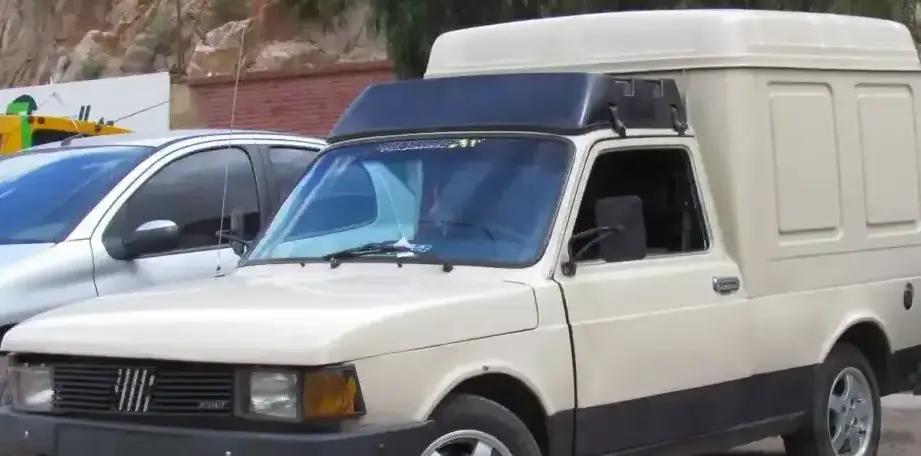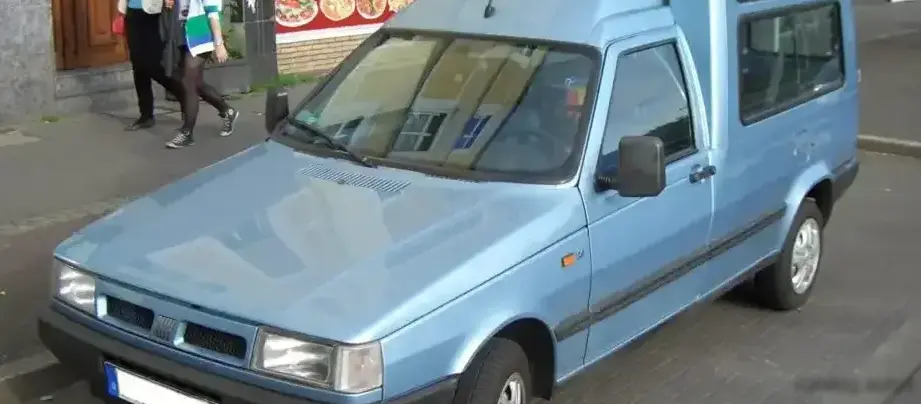
The Fiat Fiorino (147) 1.7 Diesel, produced between 1987 and 1990, represents an entry-level variant of the first-generation Fiorino, a small commercial vehicle based on the Fiat 127 platform. This model was primarily aimed at the European market, offering a utilitarian and economical solution for small businesses and individuals needing a compact cargo carrier. The 1.7 Diesel version, with its modest 60 horsepower output, occupied the base trim level, prioritizing fuel efficiency and low running costs over outright performance. It served as a workhorse, competing with similar small vans like the Renault Express and Citroën C15.
Technical Specifications
| Brand | Fiat |
| Model | Fiorino |
| Generation | Fiorino (147) |
| Type (Engine) | 1.7 Diesel (60 Hp) |
| Start of production | 1987 |
| End of production | 1990 |
| Powertrain Architecture | Internal Combustion engine |
| Body type | Minivan |
| Fuel Type | Diesel |
| Power | 60 Hp |
| Engine Model/Code | 149 B3.000 |
| Engine aspiration | Naturally aspirated engine |
| Engine oil capacity | 4.2 l / 4.44 US qt / 3.7 UK qt |
Powertrain & Engine Architecture
The heart of the Fiorino 1.7 Diesel is the 149 B3.000 engine, a 1.7-liter inline-four diesel engine. This engine is a naturally aspirated, indirect injection diesel, a common design for the period. Indirect injection, utilizing a pre-chamber, offered quieter operation and smoother combustion compared to direct injection systems of the time, albeit at the cost of some efficiency. The engine features a simple, robust design, prioritizing durability and ease of maintenance. It employs a mechanical fuel injection pump, delivering fuel to the pre-chambers where it mixes with air before entering the main combustion chamber. The engine utilizes a single overhead camshaft (SOHC) operating the valves. The 149 B3.000 engine is known for its relatively slow revving nature, with peak power delivered at lower engine speeds. The transmission paired with this engine was typically a four-speed manual gearbox, although a three-speed automatic transmission was also available, albeit less common. The automatic transmission was a conventional hydraulic unit, offering smooth but not particularly quick shifts. The automatic version further reduced performance, but increased ease of use for urban driving.
Driving Characteristics
The 1.7 Diesel Fiorino, particularly in its 60 horsepower guise, was not designed for speed. Acceleration was modest, and highway cruising required careful planning, especially when laden with cargo. The four-speed manual transmission allowed drivers to maximize the engine’s limited power, keeping it within its optimal torque band. The automatic transmission, while convenient, noticeably dulled performance. Gear ratios were geared towards maximizing fuel economy and providing sufficient torque for hauling light loads. The suspension, consisting of independent front suspension with torsion bars and a rigid rear axle with leaf springs, provided a comfortable, if somewhat bouncy, ride when unladen. When loaded, the rear suspension effectively absorbed weight, but the ride became firmer. Steering was relatively light, making maneuvering in tight urban environments easy, but lacked significant feedback at higher speeds. Braking was adequate, utilizing front disc brakes and rear drum brakes. The overall driving experience was utilitarian and focused on practicality rather than driver enjoyment.
Equipment & Trim Levels
The Fiorino 1.7 Diesel, as the base model, was sparsely equipped. Standard features typically included a basic dashboard with essential gauges (speedometer, fuel level, temperature), vinyl upholstery, and a simple two-spoke steering wheel. The interior was designed for durability and ease of cleaning, reflecting its commercial vehicle origins. Optional extras were limited but could include a radio, upgraded seats, and tinted windows. The cargo area was the primary focus, offering a practical and accessible space for carrying goods. A sliding side door was standard, providing convenient access to the cargo area. The exterior featured minimal trim, with black plastic bumpers and steel wheels being common. The paint options were typically limited to a few basic colors, prioritizing cost-effectiveness.
Chassis & Braking
The Fiorino (147) utilized a unibody construction, providing a relatively lightweight and rigid chassis. The front suspension employed independent wishbones with torsion bars, offering a reasonable level of ride comfort and handling. The rear suspension featured a rigid axle with leaf springs, a cost-effective and durable solution for carrying loads. Braking was handled by front disc brakes and rear drum brakes. The braking system was adequate for the vehicle’s weight and performance, but lacked the sophistication of more modern systems. Steering was a recirculating ball system, providing light steering effort but limited feedback. The Fiorino’s chassis was designed to prioritize practicality and durability over sporty handling characteristics.
Market Reception & Comparison
The Fiat Fiorino 1.7 Diesel was well-received in the European market as an affordable and economical small van. Critics praised its fuel efficiency and low running costs, making it an attractive option for small businesses and individuals. However, its limited power and basic equipment levels were also noted. Compared to other small vans of the time, such as the Renault Express and Citroën C15, the Fiorino offered a similar level of practicality and economy. The Renault Express often boasted slightly more refined interiors, while the Citroën C15 offered a larger cargo capacity. The 1.7 Diesel engine was considered reliable, but required regular maintenance to ensure optimal performance. Fuel economy was a key selling point, typically achieving around 45-50 mpg in real-world driving conditions. The automatic transmission version suffered a noticeable fuel economy penalty.
Legacy
The Fiat Fiorino (147) 1.7 Diesel, while not a performance icon, established the Fiorino as a practical and economical small van. The 149 B3.000 engine proved to be a durable and reliable unit, with many examples still running today. In the used car market, these Fiorinos are sought after by enthusiasts and those needing a simple, low-cost work vehicle. Maintenance is relatively straightforward, and parts availability is generally good. However, potential buyers should be aware of the age-related issues common to vehicles of this era, such as rust and wear and tear on rubber components. The 1.7 Diesel Fiorino represents a significant chapter in Fiat’s history, demonstrating the company’s commitment to providing practical and affordable transportation solutions.