Technical Specifications
| Brand | Fiat |
| Model | Fiorino |
| Generation | Fiorino (147) |
| Type (Engine) | 1.7 Diesel (63 Hp) |
| Start of production | 1997 |
| End of production | 2000 |
| Powertrain Architecture | Internal Combustion engine |
| Body type | Minivan |
| Seats | 5 |
| Doors | 3 |
| Fuel consumption (urban) | 9.5 l/100 km (24.8 US mpg) |
| Fuel consumption (extra urban) | 6.3 l/100 km (37.3 US mpg) |
| Fuel consumption (combined) | 7.5 l/100 km (31.4 US mpg) |
| Fuel Type | Diesel |
| Weight-to-power ratio | 17.6 kg/Hp |
| Weight-to-torque ratio | 11.3 kg/Nm |
| Power | 63 Hp @ 4600 rpm |
| Power per litre | 37.1 Hp/l |
| Torque | 98 Nm @ 2900 rpm (72.28 lb.-ft. @ 2900 rpm) |
| Engine layout | Front, Transverse |
| Engine Model/Code | 146 D7.000 |
| Engine displacement | 1697 cm3 (103.56 cu. in.) |
| Number of cylinders | 4 |
| Engine configuration | Inline |
| Cylinder Bore | 82.6 mm (3.25 in.) |
| Piston Stroke | 79.2 mm (3.12 in.) |
| Compression ratio | 20.5:1 |
| Number of valves per cylinder | 2 |
| Fuel injection system | Precombustion chamber injection |
| Engine aspiration | Naturally aspirated |
| Valvetrain | OHC |
| Engine oil capacity | 4.9 l (5.18 US qt | 4.31 UK qt) |
| Coolant capacity | 7 l (7.4 US qt | 6.16 UK qt) |
| Kerb Weight | 1110 kg (2447.13 lbs.) |
| Max. weight | 1680 kg (3703.77 lbs.) |
| Max load | 570 kg (1256.63 lbs.) |
| Fuel tank capacity | 64 l (16.91 US gal | 14.08 UK gal) |
| Length | 4159 mm (163.74 in.) |
| Width | 1622 mm (63.86 in.) |
| Height | 1904 mm (74.96 in.) |
| Wheelbase | 2581 mm (101.61 in.) |
| Drivetrain Architecture | Front wheel drive |
| Number of gears | 5 |
| Gearbox type | Manual transmission |
| Tires size | 165/70 R14 |
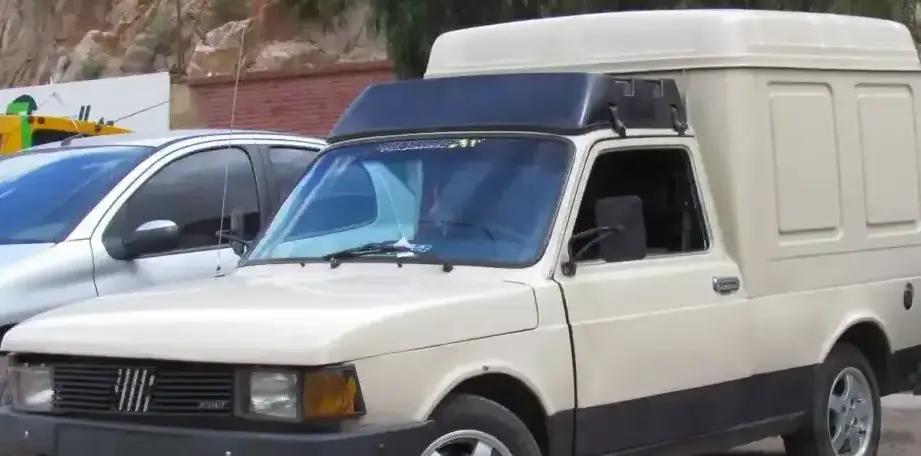
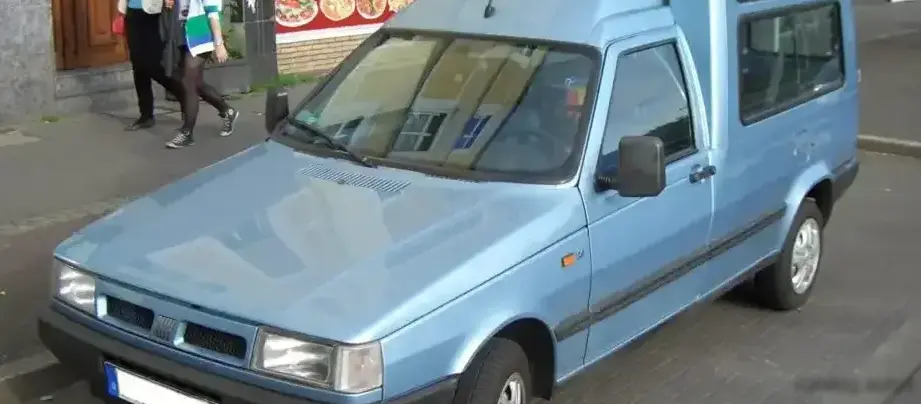
The Fiat Fiorino (147) 1.7 Diesel, producing 63 horsepower, was a utilitarian light commercial vehicle sold primarily in Europe from 1997 to 2000. Positioned as the entry-level offering in the Fiorino range, it catered to businesses and individuals needing a compact, affordable, and fuel-efficient vehicle for urban deliveries and light-duty tasks. The 147 series Fiorino represented the first generation of the model, built in collaboration with Peugeot and Citroën, sharing a common platform and many components. This collaborative effort aimed to reduce development costs and offer a competitive product in the burgeoning small van segment. The Fiorino, along with its French counterparts, filled a niche for a vehicle smaller and more economical than full-size vans, appealing to tradespeople and small businesses operating in congested city environments.
Powertrain & Engine Architecture
The heart of the Fiorino 1.7 Diesel was the 146 D7.000 engine, a 1.7-liter inline-four cylinder diesel. This engine utilized a precombustion chamber injection system, a common technology for diesel engines of the era. This system involved injecting fuel into a precombustion chamber connected to the main cylinder, promoting more complete combustion and reducing noise. The engine featured an overhead camshaft (OHC) valvetrain operating two valves per cylinder. The 63 horsepower output at 4600 rpm and 98 Nm (72.28 lb-ft) of torque at 2900 rpm were modest, but sufficient for the Fiorino’s intended purpose. The engine’s relatively high compression ratio of 20.5:1 was typical for indirect injection diesels, contributing to its fuel efficiency. The Fiorino 1.7 Diesel was exclusively offered with a five-speed manual transmission, prioritizing cost-effectiveness and simplicity over driver convenience. This transmission was a standard unit found in many Fiat vehicles of the period, known for its durability rather than sporty feel.
Driving Characteristics
The 1.7 Diesel-powered Fiorino was not designed for speed or spirited driving. Acceleration was slow, and the engine required frequent gear changes to maintain momentum, especially when loaded. The five-speed manual transmission, while providing some control, had relatively long throws. The gear ratios were optimized for fuel economy and low-speed torque, making it suitable for urban environments and deliveries. Compared to potential gasoline-powered variants (which were less common), the diesel offered significantly better fuel economy but lacked the refinement and responsiveness of a petrol engine. The unladen ride quality could be somewhat harsh, particularly on uneven surfaces, due to the vehicle’s light weight and utilitarian suspension setup. The engine’s torque curve was relatively flat, providing usable power across a narrow rev range, but it lacked the punch needed for quick overtaking maneuvers.
Equipment & Trim Levels
The Fiorino 1.7 Diesel was a no-frills vehicle, reflecting its commercial focus. Standard equipment was minimal, typically including basic steel wheels, vinyl or cloth upholstery, a simple dashboard with essential gauges, and manual windows and door locks. Power steering was not typically standard, and air conditioning was rarely fitted. Optional extras were limited, potentially including upgraded upholstery, a radio, and occasionally, power steering. The interior was designed for durability and ease of cleaning rather than luxury or comfort. The emphasis was on providing a functional and practical workspace for drivers. The lack of extensive sound deadening meant that engine noise was readily apparent in the cabin.
Chassis & Braking
The Fiorino 147 utilized a simple, robust chassis designed for durability and load-carrying capacity. The front suspension consisted of MacPherson struts, while the rear suspension employed a twist beam setup. Braking was typically accomplished with disc brakes on the front wheels and drum brakes on the rear. The braking system was adequate for the vehicle’s weight and performance, but lacked the sophistication of more modern systems. Stabilizer bars were often omitted to keep costs down, contributing to a slightly more pronounced body roll during cornering. The relatively narrow track width further contributed to the vehicle’s handling characteristics, prioritizing stability over agility.
Market Reception & Comparison
The Fiat Fiorino 1.7 Diesel was well-received in its target market as a cost-effective and reliable workhorse. Critics praised its fuel efficiency and low running costs, but noted its lack of refinement and limited performance. Compared to other small vans of the era, such as the Peugeot Partner and Citroën Berlingo (with which it shared many components), the Fiorino offered a similar level of practicality and affordability. The 1.7 Diesel engine was considered relatively durable, but required regular maintenance to ensure longevity. The manual transmission was favored by many for its simplicity and reliability. The Fiorino often undercut its French rivals in price, making it an attractive option for budget-conscious buyers.
Legacy
The Fiat Fiorino (147) 1.7 Diesel, while not a performance icon, established the Fiorino as a popular choice for small businesses and individuals needing a practical and economical light commercial vehicle. The 146 D7.000 engine, while superseded by more modern designs, proved to be a reasonably reliable unit when properly maintained. Today, these vehicles are relatively rare and often sought after by enthusiasts and collectors looking for a simple, affordable, and characterful classic van. The 1.7 Diesel variant, in particular, is valued for its fuel efficiency and straightforward mechanical design, making it a relatively easy vehicle to maintain and repair. Its enduring appeal lies in its honest simplicity and its ability to fulfill its intended purpose as a dependable workhorse. Finding parts can be a challenge, but the engine’s robust construction and the availability of aftermarket components ensure that these vans can remain on the road for years to come.