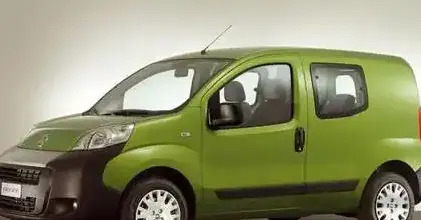
The Fiat Fiorino Combi 1.4 8V (73 hp) is a small commercial and passenger vehicle produced by Fiat from 2008 to 2016. Part of the Fiorino project developed in collaboration with Peugeot and Citroën, the Combi variant offered a more passenger-focused configuration compared to the cargo-oriented Fiorino. This particular engine and power output represented the entry-level option for the Fiorino Combi in many European markets, prioritizing affordability and fuel economy over outright performance. It was based on the Fiat Grande Punto platform, sharing many components and mechanicals with its passenger car sibling.
Technical Specifications
| Brand | Fiat |
| Model | Fiorino |
| Generation | Fiorino Combi |
| Type (Engine) | 1.4 8V (73 Hp) |
| Start of production | 2008 |
| End of production | 2016 |
| Powertrain Architecture | Internal Combustion engine |
| Body type | Minivan |
| Seats | 5 |
| Doors | 5 |
| Fuel Type | Petrol (Gasoline) |
| Power | 73 Hp @ 5200 rpm |
| Power per litre | 53.7 Hp/l |
| Torque | 118 Nm @ 3000 rpm (87.03 lb.-ft. @ 3000 rpm) |
| Engine layout | Front, Transverse |
| Engine Model/Code | KFV, KFT |
| Engine displacement | 1360 cm3 (82.99 cu. in.) |
| Number of cylinders | 4 |
| Engine configuration | Inline |
| Number of valves per cylinder | 2 |
| Fuel injection system | Multi-port manifold injection |
| Engine aspiration | Naturally aspirated engine |
| Valvetrain | OHC |
| Engine oil capacity | 3 l (3.17 US qt | 2.64 UK qt) |
| Coolant | 7.4 l (7.82 US qt | 6.51 UK qt) |
Powertrain & Engine Architecture
The Fiorino Combi 1.4 8V utilized Fiat’s KFV or KFT engine code, a 1.4-liter inline-four cylinder petrol engine. This engine was a relatively simple design, featuring a single overhead camshaft (OHC) operating two valves per cylinder. The fuel system employed multi-point sequential fuel injection, a common setup for engines of this era, providing reasonable fuel efficiency and emissions control. The engine was naturally aspirated, meaning it did not employ a turbocharger or supercharger. This contributed to its smooth, predictable power delivery, albeit at the expense of peak horsepower. The 8-valve configuration, while simpler than 16-valve designs, offered good low-end torque, which was beneficial for a vehicle intended for both urban driving and occasional light commercial use.
The engine was typically paired with a five-speed manual transmission, but a Dualogic automated manual transmission was also available as an option. The Dualogic system, while offering the convenience of automatic operation, was known for its somewhat jerky shifts compared to traditional torque-converter automatics. The transmission was front-wheel drive, as was standard for the Fiorino Combi.
Driving Characteristics
The 73 hp output of the 1.4 8V engine resulted in modest performance. Acceleration was adequate for city driving and light highway use, but overtaking maneuvers required careful planning. The engine’s peak torque of 118 Nm (87 lb-ft) was available at 3000 rpm, providing reasonable pulling power at lower speeds. The five-speed manual transmission allowed drivers to keep the engine in its optimal power band, while the Dualogic transmission, though convenient, often resulted in the engine operating at higher revs, impacting fuel economy. Compared to the more powerful 1.4 T-Jet engine offered in some markets, the 1.4 8V felt significantly less responsive. However, the 8V engine’s simplicity and lower stress levels generally translated to improved reliability.
Equipment & Trim Levels
The Fiorino Combi 1.4 8V typically served as the base trim level. Standard equipment generally included power steering, central locking, electric front windows, and a basic audio system. Safety features included driver and passenger airbags. The interior was functional and utilitarian, with durable plastic trim and cloth upholstery. Optional extras included air conditioning, a more advanced audio system, and alloy wheels. Higher trim levels, often paired with the more powerful engine options, offered additional features such as a trip computer, upgraded upholstery, and body-colored exterior trim.
Chassis & Braking
The Fiorino Combi utilized a simple yet effective chassis design. It featured independent front suspension with MacPherson struts and a twist-beam rear axle. This setup provided a comfortable ride quality, particularly on smoother roads. Braking was typically accomplished with disc brakes on the front wheels and drum brakes on the rear. Anti-lock Braking System (ABS) was often available as an option, enhancing braking performance and safety. The Fiorino Combi’s relatively light weight helped to compensate for the modest engine power and braking system.
Market Reception & Comparison
The Fiorino Combi 1.4 8V was generally well-received as an affordable and practical small van. Critics praised its fuel efficiency and ease of driving, but noted its lack of outright performance. Compared to other small vans in its class, such as the Renault Kangoo and Citroën Berlingo, the Fiorino Combi offered a competitive price point and a relatively spacious interior. The 1.4 8V engine was considered a good choice for drivers who prioritized economy over speed, while the more powerful engine options appealed to those who needed more performance or frequently carried heavy loads. Fuel economy was a strong point, typically achieving around 6.5-7.5 liters per 100 kilometers (36-40 mpg) in mixed driving conditions.
Legacy
The Fiat Fiorino Combi 1.4 8V has proven to be a relatively reliable vehicle, thanks to its simple engine design and robust construction. The 1.4 8V engine is known for its durability and relatively low maintenance costs. In the used car market, these Fiorino Combis are often sought after by small businesses and families looking for an affordable and practical vehicle. While not known for its speed or luxury, the Fiorino Combi 1.4 8V remains a popular choice for those who value functionality and economy. Parts availability is generally good, and the vehicle’s simple mechanics make it relatively easy to repair.