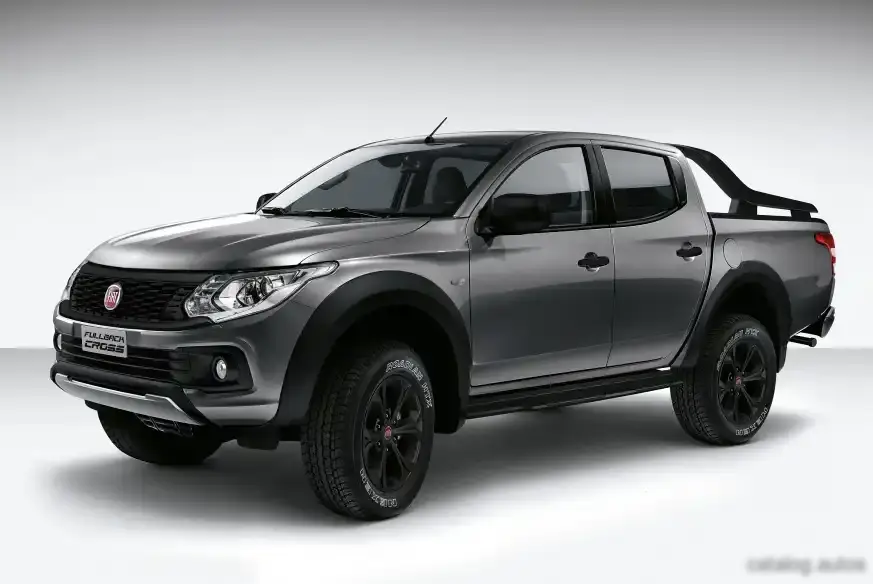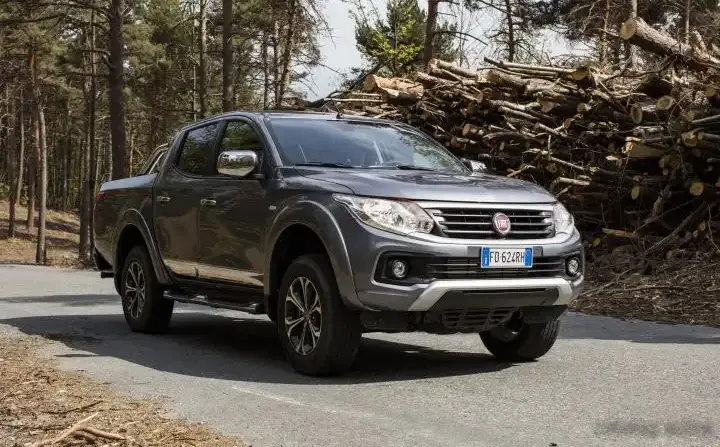
The Fiat Fullback Double Cab LX 2.4d AWD, launched in 2017, represents Fiat’s entry into the one-tonne pickup truck segment. Developed in collaboration with Mitsubishi Motors, the Fullback is essentially a rebadged Mitsubishi Triton, tailored for markets outside of Australia and New Zealand where the Triton was already well-established. The Double Cab LX 2.4d, positioned as a mid-range offering, aimed to provide a balance of practicality, capability, and affordability for both commercial and personal use. It was primarily sold in Europe, South America, and parts of Africa, offering an alternative to established players like the Toyota Hilux and Ford Ranger. This variant specifically featured a 2.4-liter diesel engine producing 181 horsepower, paired with a six-speed manual transmission and an all-wheel-drive system.
Technical Specifications
| Brand | Fiat |
| Model | Fullback |
| Generation | Fullback Double Cab |
| Type (Engine) | LX 2.4d (181 Hp) AWD |
| Start of production | 2017 |
| Powertrain Architecture | Internal Combustion engine |
| Body type | Pick-up |
| Seats | 5 |
| Doors | 4 |
| Fuel consumption (combined) | 6.9 l/100 km (34.1 US mpg, 40.9 UK mpg, 14.5 km/l) |
| CO2 emissions | 180 g/km |
| Fuel Type | Diesel |
| Maximum speed | 179 km/h (111.23 mph) |
| Emission standard | Euro 6 |
| Weight-to-power ratio | 10.4 kg/Hp, 96.5 Hp/tonne |
| Weight-to-torque ratio | 4.4 kg/Nm, 229.3 Nm/tonne |
| Power | 181 Hp @ 3500 rpm |
| Power per litre | 74.1 Hp/l |
| Torque | 430 Nm @ 2500 rpm (317.15 lb.-ft. @ 2500 rpm) |
| Engine layout | Front, Transverse |
| Engine Model/Code | 4N15 |
| Engine displacement | 2442 cm3 (149.02 cu. in.) |
| Engine configuration | Inline |
| Fuel injection system | Diesel Commonrail |
| Engine aspiration | Turbocharger, Intercooler |
| Engine oil capacity | 8.3 l (8.77 US qt | 7.3 UK qt) |
| Coolant capacity | 7.7 l (8.14 US qt | 6.78 UK qt) |
| Kerb Weight | 1875 kg (4133.67 lbs.) |
| Max. weight | 2905 kg (6404.43 lbs.) |
| Max load | 1030 kg (2270.76 lbs.) |
| Fuel tank capacity | 75 l (19.81 US gal | 16.5 UK gal) |
| Permitted trailer load (braked) | 3100 kg (6834.33 lbs.) |
| Permitted trailer load (unbraked) | 750 kg (1653.47 lbs.) |
| Permitted towbar download | 75 kg (165.35 lbs.) |
| Length | 5305 mm (208.86 in.) |
| Width | 1815 mm (71.46 in.) |
| Height | 1780 mm (70.08 in.) |
| Wheelbase | 3000 mm (118.11 in.) |
| Front track | 1520 mm (59.84 in.) |
| Rear track | 1515 mm (59.65 in.) |
| Minimum turning circle | 11.8 m (38.71 ft.) |
| Drive wheel | All wheel drive (4×4) |
| Number of gears | 6 gears, manual transmission |
| Front suspension | Double wishbone |
| Rear suspension | Torsion |
| Front brakes | Ventilated discs |
| Rear brakes | Drum |
| Steering type | Steering rack and pinion |
| Power steering | Electric |
| Tires size | 245/70 R16; 245/65 R17 |
| Wheel rims size | 16; 17 |
Powertrain & Engine Architecture
The heart of the Fullback LX 2.4d is the Mitsubishi-sourced 4N15 2.4-liter inline-four diesel engine. This engine utilizes a common-rail direct injection system, delivering fuel at extremely high pressure for improved combustion efficiency and reduced emissions. A turbocharger with an intercooler further enhances performance, providing increased power and torque. The engine produces 181 horsepower at 3500 rpm and a substantial 430 Nm (317 lb-ft) of torque at 2500 rpm. This torque output is particularly important for a pickup truck, providing strong pulling power and load-carrying capability. The six-speed manual transmission was the standard offering for this trim, providing drivers with full control over gear selection. The transmission’s gear ratios were tuned to balance fuel efficiency with the need for robust low-end torque for hauling and off-road driving.
Driving Characteristics
The Fullback 2.4d, with its 181 hp and manual transmission, offered a competent but not particularly sporty driving experience. Acceleration was adequate for everyday driving and hauling moderate loads, but it wasn’t as quick as some of its competitors with higher-output engines. The manual transmission allowed for precise control, and the clutch was relatively light, making it manageable in traffic. The all-wheel-drive system provided enhanced traction on slippery surfaces, making it suitable for both on-road and light off-road use. Compared to potential higher-output variants (had they been offered in all markets), the 2.4d prioritized fuel economy and durability over outright performance. The gear ratios were optimized for towing and carrying loads, meaning that highway cruising at higher speeds could feel somewhat strained.
Equipment & Trim Levels
The LX trim level of the Fullback Double Cab offered a reasonable level of standard equipment. Typically included were features such as air conditioning, power windows, power door locks, a basic audio system with USB connectivity, and steel wheels. Safety features included ABS brakes, electronic brakeforce distribution (EBD), and dual front airbags. Optional extras could include alloy wheels, a more advanced audio system with Bluetooth connectivity, a reversing camera, and a limited-slip differential for improved off-road capability. The interior was functional and durable, with hard-wearing plastics and cloth upholstery. The dashboard layout was straightforward and easy to use, prioritizing practicality over aesthetics.
Chassis & Braking
The Fullback Double Cab utilized a body-on-frame construction, providing a robust and durable platform for carrying heavy loads and tackling rough terrain. The front suspension featured a double wishbone setup, while the rear suspension employed a torsion bar spring arrangement. This combination provided a reasonable balance of ride comfort and load-carrying capacity. The braking system consisted of ventilated discs on the front wheels and drum brakes on the rear. While adequate for most driving situations, the rear drum brakes were a cost-saving measure and didn’t offer the same stopping power as disc brakes. The steering was a rack-and-pinion system with electric power assistance, providing a light and responsive feel.
Market Reception & Comparison
The Fiat Fullback received mixed reviews from automotive critics. It was generally praised for its practicality, durability, and competitive pricing. However, it was often criticized for its relatively basic interior, unrefined engine, and lack of advanced features compared to some of its rivals. Fuel economy was generally considered to be good for a pickup truck of its size and capability, averaging around 6.9 l/100 km (34.1 US mpg). Compared to other trims in the Fullback lineup (if available in specific markets), the 2.4d LX offered the best balance of affordability and capability for buyers who didn’t require the extra power of a higher-output engine. It was a sensible choice for those who primarily used their pickup for work or occasional hauling.
Legacy
The Fiat Fullback, while not a long-term success for Fiat, provided a viable option for buyers seeking a relatively affordable and capable pickup truck. The 2.4-liter diesel engine, while not known for being particularly refined, proved to be reasonably reliable. On the used car market, Fullbacks are generally available at competitive prices, making them an attractive option for budget-conscious buyers. However, potential buyers should be aware of the vehicle’s relatively basic features and the limitations of the rear drum brakes. The Fullback’s legacy lies in its role as Fiat’s attempt to enter the competitive pickup truck market, leveraging the expertise of Mitsubishi Motors to offer a practical and durable vehicle.