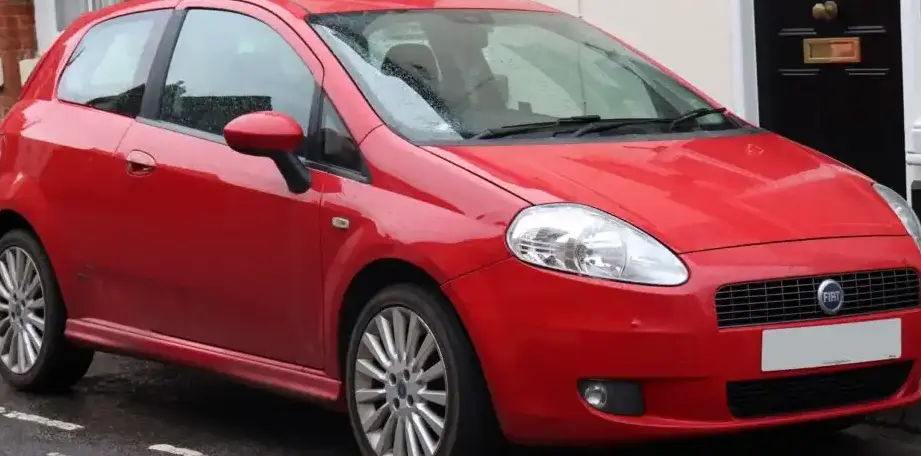
The Fiat Grande Punto 1.2 (65 hp) was a popular entry-level variant of the Grande Punto (Type 199) model, produced between 2005 and 2009. Positioned as the most affordable option in the range, it aimed to provide economical transportation for first-time car buyers and those seeking a practical city car. The Grande Punto itself represented a significant step forward for Fiat, replacing the Punto Mk2 and offering a more modern design, improved safety features, and a more refined driving experience. This 1.2-liter version, while not known for its performance, played a crucial role in establishing the Grande Punto as a strong competitor in the European supermini segment.
Technical Specifications
| Brand | Fiat |
| Model | Punto |
| Generation | Grande Punto (199) |
| Type (Engine) | 1.2 (65 Hp) |
| Start of production | 2005 |
| End of production | 2009 |
| Powertrain Architecture | Internal Combustion engine |
| Body type | Hatchback |
| Seats | 5 |
| Doors | 3-5 |
| Fuel consumption (urban) | 7.5 l/100 km (31.4 US mpg) |
| Fuel consumption (extra urban) | 4.9 l/100 km (48 US mpg) |
| Fuel consumption (combined) | 5.9 l/100 km (39.9 US mpg) |
| Fuel Type | Petrol (Gasoline) |
| Acceleration 0 – 100 km/h | 14.5 sec |
| Acceleration 0 – 62 mph | 14.5 sec |
| Acceleration 0 – 60 mph | 13.8 sec |
| Maximum speed | 155 km/h (96.31 mph) |
| Emission standard | Euro 4 |
| Weight-to-power ratio | 15.6 kg/Hp |
| Weight-to-torque ratio | 10 kg/Nm |
| Power | 65 Hp @ 5500 rpm |
| Torque | 102 Nm @ 3000 rpm (75.23 lb.-ft. @ 3000 rpm) |
| Engine layout | Front, Transverse |
| Engine Model/Code | 199A4000 |
| Engine displacement | 1242 cm3 (75.79 cu. in.) |
| Number of cylinders | 4 |
| Engine configuration | Inline |
| Cylinder Bore | 70.8 mm (2.79 in.) |
| Piston Stroke | 78.9 mm (3.11 in.) |
| Compression ratio | 11:1 |
| Number of valves per cylinder | 2 |
| Fuel injection system | Multi-port manifold injection |
| Engine aspiration | Naturally aspirated |
| Engine oil capacity | 2.6 l (2.75 US qt | 2.29 UK qt) |
| Coolant capacity | 5.3 l (5.6 US qt | 4.66 UK qt) |
| Kerb Weight | 1015 kg (2237.69 lbs.) |
| Max. weight | 1575 kg (3472.28 lbs.) |
| Max load | 560 kg (1234.59 lbs.) |
| Trunk (boot) space – minimum | 275 l (9.71 cu. ft.) |
| Trunk (boot) space – maximum | 1020 l (36.02 cu. ft.) |
| Fuel tank capacity | 45 l (11.89 US gal | 9.9 UK gal) |
| Length | 4030 mm (158.66 in.) |
| Width | 1687 mm (66.42 in.) |
| Height | 1490 mm (58.66 in.) |
| Wheelbase | 2510 mm (98.82 in.) |
| Front track | 1473 mm (57.99 in.) |
| Rear track | 1466 mm (57.72 in.) |
| Drag coefficient (Cd) | 0.34 |
| Minimum turning circle | 10.1 m (33.14 ft.) |
| Drivetrain | Front wheel drive |
| Number of gears | 5 |
| Gearbox type | Manual transmission |
| Front suspension | Independent, McPherson with coil spring and anti-roll bar |
| Rear suspension | Semi-dependent beam with stabilizer |
| Front brakes | Disc |
| Rear brakes | Drum |
| Assisting systems | ABS (Anti-lock braking system) |
| Steering type | Steering rack and pinion |
| Power steering | Electric |
| Tires size | 175/65 R15 H; 185/65 R15 H |
| Wheel rims size | 15 |
Introduction
The Fiat Grande Punto 1.2 (65 hp) was introduced in 2005 as part of the 199 series, representing the successor to the popular Fiat Punto Mk2. Built on the Fiat Small Wide Platform (shared with other models like the Alfa Romeo MiTo), the Grande Punto aimed for a more sophisticated and modern appeal. The 1.2-liter engine variant was specifically targeted at buyers prioritizing fuel efficiency and affordability. It served as the entry point into the Grande Punto range, available in both 3-door and 5-door body styles. This engine option was particularly popular in European markets where smaller displacement engines were favored due to tax incentives and lower running costs.
Powertrain & Engine Architecture
The heart of the Grande Punto 1.2 is the 199A4000 engine, a 1242cc inline-four cylinder petrol engine. This engine utilizes a naturally aspirated configuration with two valves per cylinder and a multi-point fuel injection system. The 1.2-liter engine produced 65 horsepower at 5500 rpm and 102 Nm (75.23 lb-ft) of torque at 3000 rpm. The engine featured a compression ratio of 11:1. The Grande Punto 1.2 was typically paired with a five-speed manual transmission, although an automated Dualogic transmission was also available as an option, albeit less common. The Dualogic system was a single clutch automated manual, offering some of the convenience of an automatic without the efficiency loss of a traditional torque converter automatic.
Driving Characteristics
The driving experience in the Grande Punto 1.2 was characterized by its focus on practicality and economy rather than outright performance. Acceleration from 0 to 60 mph took around 13.8 seconds, and the top speed was approximately 96 mph. The engine felt somewhat strained when pushed hard, particularly when fully loaded or on inclines. The five-speed manual transmission was well-matched to the engine’s characteristics, allowing drivers to keep the engine in its optimal power band. Compared to the more powerful 1.4-liter or diesel variants, the 1.2 felt noticeably slower, but it offered a smoother and more relaxed driving experience in urban environments. The Dualogic transmission, while offering convenience, could sometimes exhibit jerky shifts, especially at lower speeds.
Equipment & Trim Levels
The Grande Punto 1.2 typically came with a relatively basic level of equipment, reflecting its position as the entry-level model. Standard features generally included power steering, central locking, front airbags, and an adjustable steering column. Higher trim levels, such as Active and Dynamic, added features like air conditioning, electric front windows, a radio/CD player, and alloy wheels. Interior upholstery was typically cloth, with a functional and durable design. Optional extras included rear electric windows, a sunroof, and upgraded audio systems.
Chassis & Braking
The Grande Punto 1.2 featured a McPherson strut front suspension and a semi-independent torsion beam rear suspension. This setup provided a reasonable balance between ride comfort and handling. The front brakes were ventilated discs, while the rear brakes were drums. ABS (Anti-lock Braking System) was standard equipment. The steering was electrically assisted, providing light and easy steering feel, particularly useful for maneuvering in tight city streets. The suspension was tuned for comfort, resulting in a slightly softer ride compared to the sportier variants.
Market Reception & Comparison
The Grande Punto 1.2 was well-received by critics as a practical and affordable city car. Its fuel efficiency was a major selling point, and it was praised for its comfortable ride and relatively spacious interior. However, its lack of performance was often noted, and some reviewers found the engine to be underpowered, especially when carrying passengers or luggage. Compared to competitors like the Renault Clio and Volkswagen Polo, the Grande Punto 1.2 offered a competitive price point and a stylish design. The 1.4-liter versions of the Grande Punto offered significantly more performance, but at a higher price and with slightly reduced fuel economy. The diesel variants provided even better fuel economy but came with a higher initial cost.
Legacy
The Fiat Grande Punto 1.2 remains a popular choice in the used car market, particularly for those seeking an affordable and economical runabout. The 199A4000 engine is generally considered to be reliable, although regular maintenance is essential. Common issues include occasional sensor failures and oil leaks. The availability of spare parts is good, and the relatively simple engine design makes it relatively easy to repair. While not a performance car, the Grande Punto 1.2 offers a practical and dependable solution for everyday transportation, and its fuel efficiency continues to make it an attractive option for budget-conscious buyers.