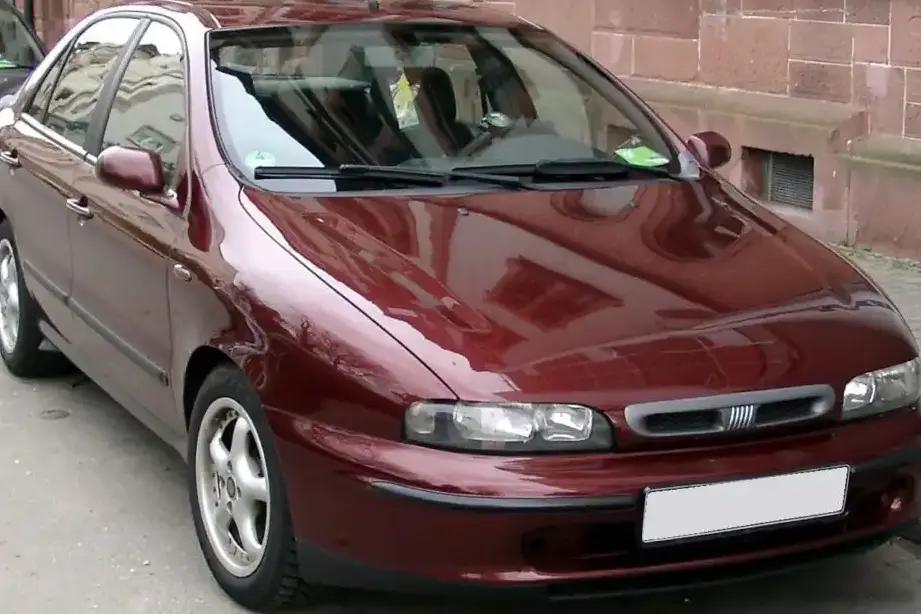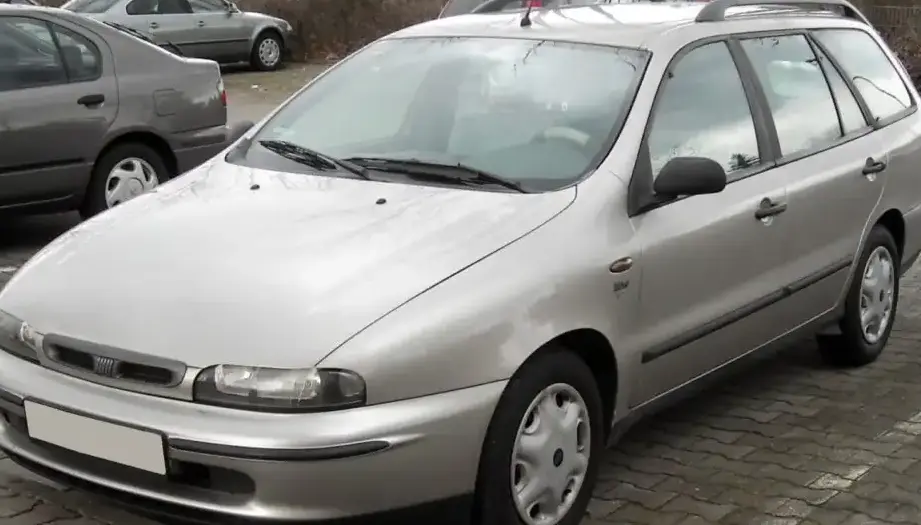
The Fiat Marea Weekend 1.6 100 16V, produced between 1996 and 2000, was a popular station wagon variant within the Marea range. Positioned as a mid-range offering, it aimed to provide a balance of practicality, fuel efficiency, and reasonable performance for family buyers. The Marea (Type 185) itself represented Fiat’s attempt to compete in the increasingly competitive mid-size segment, offering a more modern and spacious alternative to the aging Tipo. The Weekend body style, specifically, targeted buyers needing the versatility of a wagon without the expense of the higher-performance or luxury-equipped models.
Technical Specifications
| Brand | Fiat |
| Model | Marea |
| Generation | Marea Weekend (185) |
| Type (Engine) | 1.6 100 16V (103 Hp) |
| Start of production | 1996 |
| End of production | 2000 |
| Powertrain Architecture | Internal Combustion engine |
| Body type | Station wagon (estate) |
| Seats | 5 |
| Doors | 5 |
| Fuel consumption (urban) | 11.3 l/100 km (20.8 US mpg) |
| Fuel consumption (extra urban) | 6.5 l/100 km (36.2 US mpg) |
| Fuel Type | Petrol (Gasoline) |
| Acceleration 0 – 100 km/h | 11.1 sec |
| Acceleration 0 – 62 mph | 11.1 sec |
| Acceleration 0 – 60 mph | 10.5 sec |
| Maximum speed | 185 km/h (114.95 mph) |
| Weight-to-power ratio | 11.4 kg/Hp |
| Weight-to-torque ratio | 8.1 kg/Nm |
| Power | 103 Hp @ 5750 rpm |
| Torque | 145 Nm @ 4000 rpm (106.95 lb.-ft. @ 4000 rpm) |
| Engine layout | Front, Transverse |
| Engine Model/Code | 182A4000 |
| Engine displacement | 1596 cm3 (97.39 cu. in.) |
| Number of cylinders | 4 |
| Engine configuration | Inline |
| Cylinder Bore | 80.5 mm (3.17 in.) |
| Piston Stroke | 78.4 mm (3.09 in.) |
| Compression ratio | 10.5:1 |
| Number of valves per cylinder | 4 |
| Fuel injection system | Multi-port manifold injection |
| Engine aspiration | Naturally aspirated |
| Valvetrain | DOHC |
| Engine oil capacity | 4.5 l (4.76 US qt | 3.96 UK qt) |
| Coolant capacity | 6.4 l (6.76 US qt | 5.63 UK qt) |
| Kerb Weight | 1175 kg (2590.43 lbs.) |
| Max. weight | 1895 kg (4177.76 lbs.) |
| Max load | 720 kg (1587.33 lbs.) |
| Trunk (boot) space – minimum | 500 l (17.66 cu. ft.) |
| Trunk (boot) space – maximum | 1550 l (54.74 cu. ft.) |
| Fuel tank capacity | 63 l (16.64 US gal | 13.86 UK gal) |
| Length | 4485 mm (176.57 in.) |
| Width | 1740 mm (68.5 in.) |
| Height | 1510 mm (59.45 in.) |
| Wheelbase | 2540 mm (100 in.) |
| Front track | 1470 mm (57.87 in.) |
| Rear track | 1440 mm (56.69 in.) |
| Drivetrain Architecture | Front wheel drive |
| Number of gears | 5 |
| Gearbox type | Manual transmission |
Powertrain & Engine Architecture
The heart of the Marea Weekend 1.6 100 16V was the 182A4.000 engine, a 1.6-liter inline-four cylinder gasoline engine. This engine featured a double overhead camshaft (DOHC) valvetrain operating four valves per cylinder, contributing to its relatively high output for its displacement. It utilized a multi-port fuel injection system, a common setup for the era, providing precise fuel delivery for improved efficiency and performance. The engine produced 103 horsepower at 5750 rpm and 145 Nm (107 lb-ft) of torque at 4000 rpm. The five-speed manual transmission was the standard offering, providing a reasonable spread of gears for both city and highway driving. The engine was known for its relatively smooth operation and acceptable reliability, though it wasn’t a powerhouse by any means.
Driving Characteristics
The 1.6-liter engine, paired with the five-speed manual, delivered adequate, but not exhilarating, performance. Acceleration from 0 to 60 mph took around 10.5 seconds, and top speed was approximately 115 mph. The engine felt somewhat strained when pushed hard, particularly when fully loaded with passengers and cargo. The gear ratios were tuned for a balance of fuel economy and usability, with a relatively long fifth gear for comfortable highway cruising. Compared to the more powerful 2.0-liter versions of the Marea, the 1.6 felt noticeably slower, especially in overtaking situations. However, the lighter engine weight contributed to slightly better handling and a more nimble feel. The manual transmission offered precise shifts, enhancing driver engagement.
Equipment & Trim Levels
The Marea Weekend 1.6 100 16V typically came equipped with a reasonable level of standard features. These included power steering, central locking, electric front windows, and an adjustable steering column. Interior upholstery was typically cloth, with a functional, if somewhat basic, dashboard layout. Optional extras included air conditioning, alloy wheels, a sunroof, and upgraded audio systems. The trim level sat in the middle of the Marea range, offering more features than the base models but lacking the luxury appointments of the higher-spec versions. Safety features were relatively basic for the time, typically including ABS brakes as standard equipment.
Chassis & Braking
The Marea Weekend featured independent suspension at the front, utilizing MacPherson struts and a transverse stabilizer bar. The rear suspension employed a semi-independent twist beam setup with coil springs. This configuration provided a comfortable ride quality, although it wasn’t particularly sporty. Brakes were disc brakes all around, providing adequate stopping power for the vehicle’s weight and performance. The ABS system helped to maintain steering control during hard braking. The steering was rack and pinion, offering reasonably precise steering feel.
Market Reception & Comparison
The Marea Weekend 1.6 100 16V was generally well-received as a practical and affordable family car. Critics praised its spacious interior, large cargo capacity, and comfortable ride. However, the engine was often criticized for being underpowered, particularly when compared to competitors like the Ford Focus or Volkswagen Golf. Fuel economy was considered reasonable for the time, averaging around 36 mpg on the highway. Compared to the higher-output 2.0-liter Marea variants, the 1.6 offered better fuel economy but significantly less performance. The 1.9 TDI diesel version provided even better fuel economy and more torque, but at the expense of refinement and initial purchase price.
Legacy
The Fiat Marea Weekend 1.6 100 16V has become a relatively affordable and readily available used car. The 182A4 engine is generally considered reliable, although regular maintenance is essential to prevent issues. Common problems include oil leaks and wear on the timing belt. The car’s simple mechanical design makes it relatively easy to repair and maintain. Today, it represents a practical and spacious option for those seeking an affordable station wagon, though its age means finding well-maintained examples can be challenging. It remains a testament to Fiat’s attempt to create a competitive mid-size offering in a crowded market.