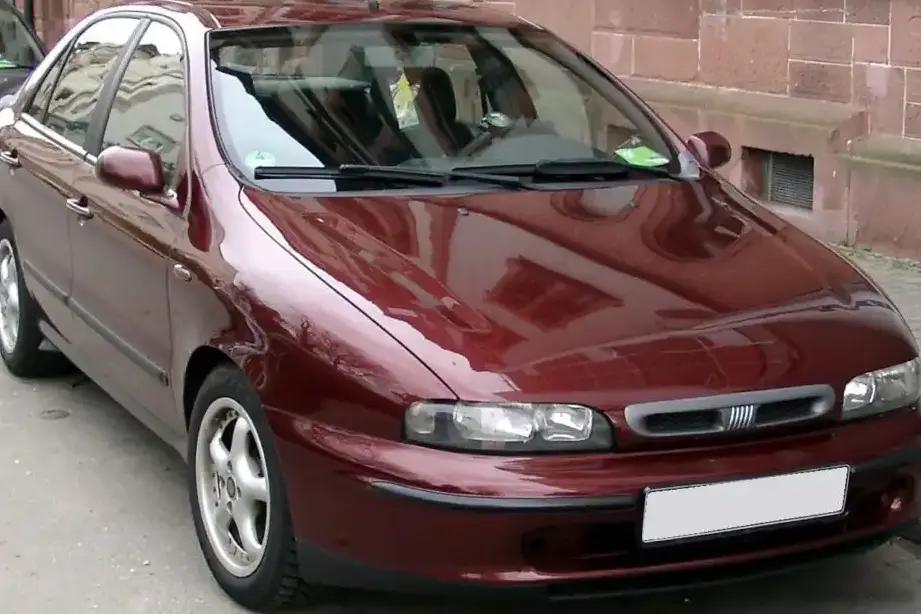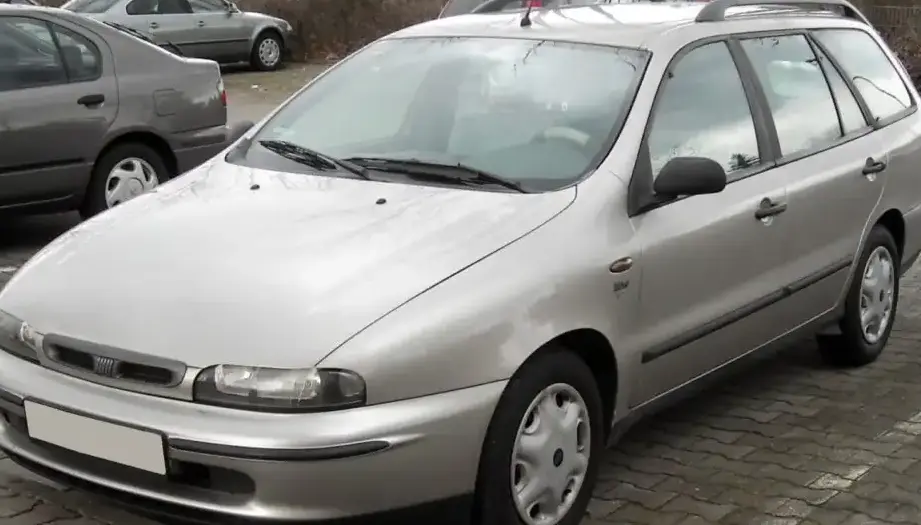
The Fiat Marea Weekend 1.9 TD 100, produced between 1996 and 1999, was a popular station wagon variant within the Marea (Type 185) range. Positioned as a practical and fuel-efficient option, it catered to families and those requiring ample cargo space. The Marea itself was a significant model for Fiat, representing a move upmarket in terms of design and technology compared to its predecessors. The Weekend body style, specifically, aimed to compete with other European estate cars, offering a blend of comfort, practicality, and a relatively affordable price point. This particular 1.9 TD 100 configuration represented a mid-range offering within the Marea Weekend lineup, slotting between the lower-powered petrol engines and the more expensive, higher-specification diesel models.
Technical Specifications
| Brand | Fiat |
| Model | Marea |
| Generation | Marea Weekend (185) |
| Type (Engine) | 1.9 TD 100 (100 Hp) |
| Start of production | 1996 |
| End of production | 1999 |
| Powertrain Architecture | Internal Combustion engine |
| Body type | Station wagon (estate) |
| Seats | 5 |
| Doors | 5 |
| Fuel consumption (urban) | 8.9 l/100 km (26.4 US mpg, 31.7 UK mpg, 11.2 km/l) |
| Fuel consumption (extra urban) | 5.5 l/100 km (42.8 US mpg, 51.4 UK mpg, 18.2 km/l) |
| Fuel consumption (combined) | 7.1 l/100 km (33.1 US mpg, 39.8 UK mpg, 14.1 km/l) |
| Fuel Type | Diesel |
| Acceleration 0 – 100 km/h | 11.5 sec |
| Acceleration 0 – 62 mph | 11.5 sec |
| Acceleration 0 – 60 mph | 10.9 sec |
| Maximum speed | 180 km/h (111.85 mph) |
| Weight-to-power ratio | 12.5 kg/Hp |
| Weight-to-torque ratio | 6.3 kg/Nm |
| Power | 100 Hp @ 4200 rpm |
| Power per litre | 52.4 Hp/l |
| Torque | 200 Nm @ 2250 rpm (147.51 lb.-ft. @ 2250 rpm) |
| Engine layout | Front, Transverse |
| Engine Model/Code | 182A7000 |
| Engine displacement | 1910 cm3 (116.56 cu. in.) |
| Number of cylinders | 4 |
| Engine configuration | Inline |
| Cylinder Bore | 82 mm (3.23 in.) |
| Piston Stroke | 90.4 mm (3.56 in.) |
| Compression ratio | 20.7:1 |
| Number of valves per cylinder | 2 |
| Fuel injection system | Precombustion chamber injection |
| Engine aspiration | Turbocharger |
| Valvetrain | OHC |
| Engine oil capacity | 4.5 l (4.76 US qt, 3.96 UK qt) |
| Coolant capacity | 6.3 l (6.66 US qt, 5.54 UK qt) |
| Kerb Weight | 1250 kg (2755.78 lbs.) |
| Max. weight | 1845 kg (4067.53 lbs.) |
| Max load | 595 kg (1311.75 lbs.) |
| Trunk (boot) space – minimum | 500 l (17.66 cu. ft.) |
| Trunk (boot) space – maximum | 1500 l (52.97 cu. ft.) |
| Fuel tank capacity | 63 l (16.64 US gal, 13.86 UK gal) |
| Length | 4484 mm (176.54 in.) |
| Width | 1741 mm (68.54 in.) |
| Height | 1500 mm (59.06 in.) |
| Wheelbase | 2540 mm (100 in.) |
| Front track | 1473 mm (57.99 in.) |
| Rear track | 1444 mm (56.85 in.) |
| Drivetrain Architecture | Front wheel drive |
| Number of gears | 5 |
| Gearbox type | Manual transmission |
| Front suspension | Wishbone |
| Rear suspension | Coil spring |
| Front brakes | Ventilated discs |
| Rear brakes | Drum |
| Assisting systems | ABS (Anti-lock braking system) |
| Steering type | Steering rack and pinion |
| Power steering | Hydraulic |
| Tires size | 175/70 R14 |
Powertrain & Engine Architecture
The heart of the Marea Weekend 1.9 TD 100 was the 182A7000 engine, a 1.9-liter inline-four cylinder diesel. This engine utilized a precombustion chamber injection system, a common technology for diesel engines of the era, designed to improve combustion efficiency and reduce noise. The engine was turbocharged, which significantly boosted power output compared to naturally aspirated diesel engines. The turbocharger provided 100 horsepower at 4200 rpm and 200 Nm (147.51 lb-ft) of torque at 2250 rpm. This torque figure was particularly important for a diesel engine, providing strong pulling power at lower engine speeds. The engine featured an overhead camshaft (OHC) valvetrain with two valves per cylinder. The five-speed manual transmission was the standard offering for this variant, providing a good balance between fuel economy and performance.
Driving Characteristics
The 1.9 TD 100 offered a practical and economical driving experience. While not particularly fast, with a 0-60 mph time of around 10.9 seconds, it provided sufficient power for everyday driving and long-distance journeys. The turbocharger did introduce a degree of turbo lag, meaning there was a slight delay between pressing the accelerator and feeling the full power delivery. However, once the turbo spooled up, the engine provided a strong and consistent surge of power. The five-speed manual transmission allowed drivers to keep the engine in its optimal power band. Compared to the petrol versions of the Marea, the 1.9 TD 100 offered significantly better fuel economy and a more relaxed driving experience, albeit with less outright performance.
Equipment & Trim Levels
The Marea Weekend 1.9 TD 100 typically came equipped with features such as power steering, central locking, electric front windows, and an adjustable steering column. Interior upholstery was generally cloth, with a functional and durable design. Optional extras included air conditioning, alloy wheels, and a radio/cassette player. The trim level was generally considered mid-range, offering a good balance of features and affordability. Higher-specification Marea Weekend models offered more luxurious interior appointments and additional features like leather seats and a sunroof.
Chassis & Braking
The Marea Weekend featured a front-wheel-drive layout with independent wishbone suspension at the front and a coil spring rear suspension. This setup provided a comfortable ride and decent handling characteristics. The front brakes were ventilated discs, offering good stopping power, while the rear brakes were drums. Anti-lock Braking System (ABS) was standard, enhancing safety by preventing wheel lockup during hard braking. The steering was a rack and pinion system with hydraulic power assistance, providing precise and responsive steering feel.
Market Reception & Comparison
The Fiat Marea Weekend 1.9 TD 100 was well-received in European markets as a practical and fuel-efficient estate car. Critics praised its spacious interior, comfortable ride, and strong diesel engine. However, some noted the somewhat dated interior design and the presence of turbo lag. Compared to other diesel estate cars of the time, such as the Ford Mondeo Estate and the Volkswagen Passat Estate, the Marea offered a competitive price point and a good level of equipment. Its fuel economy was generally comparable to its rivals, and its reliability was considered to be average.
Legacy
The Fiat Marea Weekend 1.9 TD 100 has become a relatively sought-after classic car among enthusiasts. The 182A7000 diesel engine is known for its durability and relatively simple mechanical design, making it easier to maintain than more modern diesel engines. While finding parts can sometimes be a challenge, the engine’s robust construction means that well-maintained examples can still provide reliable service today. The Marea Weekend’s spacious interior and practical design continue to appeal to those seeking a classic estate car with a blend of comfort, economy, and character.