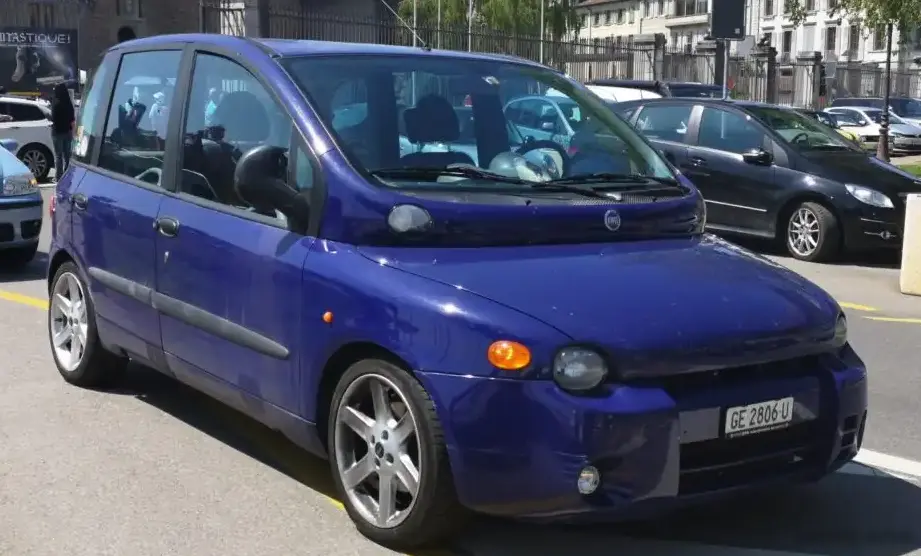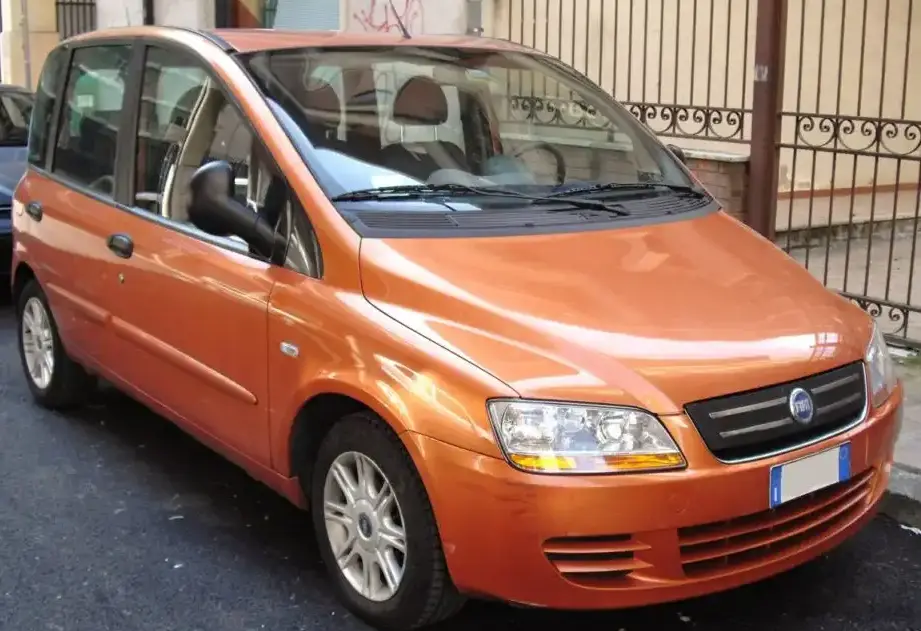
The Fiat Multipla 1.9 MultiJet (120 hp) DPF, produced from 2006 to 2010, represents a later iteration of the distinctive second-generation Multipla (Project 186), following the 2004 facelift. This variant aimed to balance practicality with improved efficiency and reduced emissions, catering to European markets seeking a spacious, family-oriented vehicle. Positioned as a mid-range offering within the Multipla lineup, it slotted between the lower-powered petrol engines and the more expensive, fully-equipped diesel models. The Multipla, known for its unconventional six-seat layout and generous interior space, remained a niche vehicle, but the 1.9 MultiJet offered a compelling combination of performance and economy for those needing a large people carrier.
Technical Specifications
| Brand | Fiat |
| Model | Multipla |
| Generation | Multipla (186, facelift 2004) |
| Type (Engine) | 1.9 MultiJet (120 Hp) DPF |
| Start of production | 2006 |
| End of production | 2010 |
| Powertrain Architecture | Internal Combustion engine |
| Body type | MPV |
| Seats | 6 |
| Doors | 5 |
| Fuel consumption (urban) | 8.2 l/100 km (28.7 US mpg, 34.4 UK mpg, 12.2 km/l) |
| Fuel consumption (extra urban) | 5.6 l/100 km (42 US mpg, 50.4 UK mpg, 17.9 km/l) |
| Fuel consumption (combined) | 6.5 l/100 km (36.2 US mpg, 43.5 UK mpg, 15.4 km/l) |
| CO2 emissions | 173 g/km |
| Fuel Type | Diesel |
| Maximum speed | 179 km/h (111.23 mph) |
| Emission standard | Euro 4 |
| Weight-to-power ratio | 11.4 kg/Hp, 87.6 Hp/tonne |
| Weight-to-torque ratio | 6.5 kg/Nm, 153.3 Nm/tonne |
| Power | 120 Hp @ 4000 rpm |
| Power per litre | 62.8 Hp/l |
| Torque | 210 Nm @ 3000 rpm (154.89 lb.-ft. @ 3000 rpm) |
| Engine layout | Front, Transverse |
| Engine Model/Code | 186A9000 |
| Engine displacement | 1910 cm3 (116.56 cu. in.) |
| Number of cylinders | 4 |
| Engine configuration | Inline |
| Cylinder Bore | 82 mm (3.23 in.) |
| Piston Stroke | 90.4 mm (3.56 in.) |
| Compression ratio | 18:1 |
| Number of valves per cylinder | 4 |
| Fuel injection system | Diesel Commonrail |
| Engine aspiration | Turbocharger, Intercooler |
| Valvetrain | SOHC |
| Engine oil capacity | 4.5 l (4.76 US qt | 3.96 UK qt) |
| Coolant | 6.3 l (6.66 US qt | 5.54 UK qt) |
| Kerb Weight | 1370 kg (3020.33 lbs.) |
| Trunk (boot) space – minimum | 430 l (15.19 cu. ft.) |
| Trunk (boot) space – maximum | 1900 l (67.1 cu. ft.) |
| Fuel tank capacity | 63 l (16.64 US gal | 13.86 UK gal) |
| Permitted trailer load with brakes (12%) | 1300 kg (2866.01 lbs.) |
| Permitted trailer load without brakes | 560 kg (1234.59 lbs.) |
| Length | 4090 mm (161.02 in.) |
| Width | 1870 mm (73.62 in.) |
| Height | 1690 mm (66.54 in.) |
| Wheelbase | 2666 mm (104.96 in.) |
| Front track | 1515 mm (59.65 in.) |
| Rear (Back) track | 1520 mm (59.84 in.) |
| Front overhang | 837 mm (32.95 in.) |
| Rear overhang | 586 mm (23.07 in.) |
| Minimum turning circle (turning diameter) | 11 m (36.09 ft.) |
| Drivetrain Architecture | The Internal combustion engine (ICE) drives the front wheels of the vehicle. |
| Drive wheel | Front wheel drive |
| Number of gears and type of gearbox | 5 gears, manual transmission |
| Front suspension | Independent, type McPherson with coil spring and anti-roll bar |
| Rear suspension | Leaf spring |
| Front brakes | Ventilated discs, 284 mm |
| Rear brakes | Drum, 228 mm |
| Steering type | Steering rack and pinion |
| Power steering | Electric Steering |
| Tires size | 185/65 R15 |
| Wheel rims size | 15 |
Powertrain & Engine Architecture
The heart of this Multipla variant is the 1.9-liter, four-cylinder diesel engine, designated as the 186A9000. This engine belongs to Fiat’s second-generation JTD (Jet Diesel Technology) family, utilizing a common rail direct injection system. The 120 hp output was achieved through a turbocharger with an intercooler, optimizing air intake for increased power and efficiency. The engine features a single overhead camshaft (SOHC) valvetrain with four valves per cylinder, contributing to improved breathing and combustion. The engine’s 18:1 compression ratio is typical for direct injection diesels, maximizing energy extraction from the fuel. The 1.9 MultiJet was paired with a five-speed manual transmission, delivering power to the front wheels. While an automatic transmission was offered on some Multipla models, it was not typically paired with this specific engine and power output.
Driving Characteristics
The 1.9 MultiJet engine provided a noticeable improvement in performance over the smaller petrol engines available in the Multipla range. While not a sports car by any means, the 120 hp and 210 Nm of torque offered adequate power for everyday driving and even when fully loaded with passengers and luggage. The turbocharger provided a boost in mid-range acceleration, making overtaking on highways manageable. The five-speed manual transmission allowed drivers to keep the engine in its optimal power band. Compared to the higher-output 1.9 JTD variants, this 120 hp version felt less strained, particularly on long journeys. The gear ratios were tuned for fuel efficiency rather than outright performance, resulting in a relaxed cruising experience. However, it lacked the urgency of the more powerful engines when accelerating from a standstill or climbing steep hills.
Equipment & Trim Levels
The 1.9 MultiJet typically came equipped with a reasonable level of standard features. These included power steering, central locking, electric front windows, and an air conditioning system. Interior upholstery was generally cloth, with a functional and durable design. Optional extras included alloy wheels, a CD stereo system, rear parking sensors, and upgraded interior trim. The Multipla’s interior was renowned for its modularity, with individual seats that could be folded, removed, or rotated to create various seating configurations. Safety features included ABS brakes and driver and passenger airbags.
Chassis & Braking
The Multipla’s chassis featured an independent McPherson strut suspension at the front, providing a comfortable ride and decent handling. The rear suspension utilized a leaf spring setup, a cost-effective solution that prioritized load-carrying capacity over sophisticated handling. The front brakes were ventilated discs, offering good stopping power, while the rear brakes were drum brakes. This combination was adequate for the vehicle’s weight and intended use. The electric power steering provided light and easy steering, making it maneuverable in urban environments. Stabilizer bars were fitted to both the front and rear axles to reduce body roll during cornering.
Market Reception & Comparison
The Fiat Multipla 1.9 MultiJet was generally well-received by critics as a practical and efficient people carrier. The diesel engine offered significantly better fuel economy than the petrol alternatives, making it an attractive option for high-mileage drivers. However, the Multipla’s unconventional styling remained a polarizing factor, limiting its mainstream appeal. Compared to other MPVs on the market, such as the Renault Scenic or Citroën Picasso, the Multipla offered a unique combination of space, practicality, and affordability. The 1.9 MultiJet provided a good balance between performance and economy, making it a sensible choice for families needing a versatile vehicle.
Legacy
The 1.9 MultiJet engine proved to be a reliable and durable unit, capable of covering high mileages with proper maintenance. The Multipla, despite its quirky appearance, developed a loyal following among those who appreciated its practicality and spaciousness. On the used car market, the 1.9 MultiJet variants are generally sought after due to their fuel efficiency and relatively low running costs. However, potential buyers should be aware of the typical wear and tear associated with any used vehicle, including checking for signs of turbocharger issues and ensuring the diesel particulate filter (DPF) is functioning correctly. The Multipla remains a distinctive and memorable vehicle, representing a bold and innovative approach to people-carrying.