
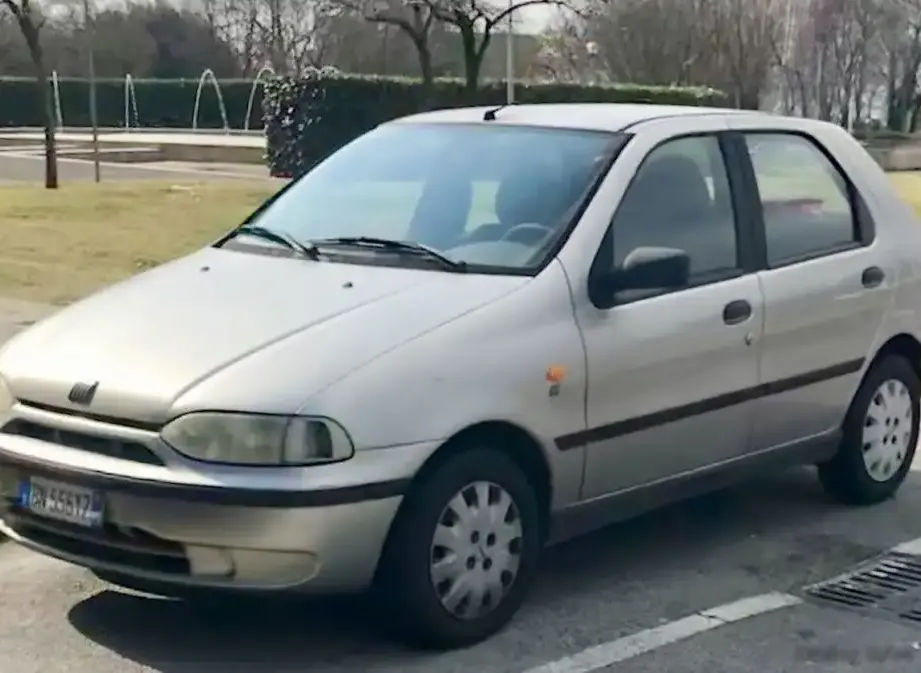
The Fiat Palio 1.0 i (61 hp) was a popular entry-level variant of the Palio (178) model, produced between 1996 and 2002. Positioned as the most affordable option in the Palio range, it served as a crucial model for Fiat, particularly in emerging markets where fuel efficiency and low running costs were paramount. The Palio itself was a significant vehicle for Fiat, representing a move towards a more modern and globally competitive small car. It was built on Fiat’s 178 project platform, which also underpinned the Siena sedan. The 1.0 i model, with its modest power output and typically basic specification, was aimed at first-time car buyers and those seeking economical transportation.
Technical Specifications
| Brand | Fiat |
| Model | Palio |
| Generation | Palio (178) |
| Type (Engine) | 1.0 i (61 Hp) |
| Start of production | 1996 |
| End of production | 2002 |
| Powertrain Architecture | Internal Combustion engine |
| Body type | Hatchback |
| Seats | 5 |
| Doors | 3-5 |
| Fuel consumption (urban) | 7.8 l/100 km (30.2 US mpg) |
| Fuel consumption (extra urban) | 5.9 l/100 km (39.9 US mpg) |
| Fuel Type | Petrol (Gasoline) |
| Acceleration 0 – 100 km/h | 16.3 sec |
| Acceleration 0 – 62 mph | 16.3 sec |
| Acceleration 0 – 60 mph | 15.5 sec |
| Maximum speed | 152 km/h (94.45 mph) |
| Weight-to-power ratio | 14.6 kg/Hp |
| Weight-to-torque ratio | 11.3 kg/Nm |
| Power | 61 Hp @ 6000 rpm |
| Torque | 79 Nm @ 3000 rpm (58.27 lb.-ft. @ 3000 rpm) |
| Engine layout | Front, Transverse |
| Engine Model/Code | 178 A1.000 |
| Engine displacement | 994 cm3 (60.66 cu. in.) |
| Number of cylinders | 4 |
| Engine configuration | Inline |
| Cylinder Bore | 76 mm (2.99 in.) |
| Piston Stroke | 54.8 mm (2.16 in.) |
| Compression ratio | 9.5:1 |
| Number of valves per cylinder | 2 |
| Fuel injection system | Single-point injection |
| Engine aspiration | Naturally aspirated |
| Engine oil capacity | 3.75 l (3.96 US qt | 3.3 UK qt) |
| Coolant capacity | 6.7 l (7.08 US qt | 5.9 UK qt) |
| Kerb Weight | 890 kg (1962.11 lbs.) |
| Max. weight | 1305 kg (2877.03 lbs.) |
| Max load | 415 kg (914.92 lbs.) |
| Trunk (boot) space – minimum | 280 l (9.89 cu. ft.) |
| Trunk (boot) space – maximum | 920 l (32.49 cu. ft.) |
| Fuel tank capacity | 50 l (13.21 US gal | 11 UK gal) |
| Length | 3735 mm (147.05 in.) |
| Width | 1614 mm (63.54 in.) |
| Height | 1445 mm (56.89 in.) |
| Wheelbase | 2360 mm (92.91 in.) |
| Front track | 1388 mm (54.65 in.) |
| Rear track | 1378 mm (54.25 in.) |
| Drivetrain | Front wheel drive |
| Number of gears | 5 |
| Gearbox type | Manual transmission |
Powertrain & Engine Architecture
The heart of the Palio 1.0 i was the 178 A1.000 engine, a 994cc inline-four cylinder petrol engine. This engine utilized a single-point fuel injection system, a relatively simple and cost-effective technology for the time. The engine featured a two-valve per cylinder configuration and a compression ratio of 9.5:1. The engine’s design prioritized fuel economy and reliability over outright performance. The 5-speed manual transmission was the standard offering, chosen for its efficiency and affordability. The transmission’s gear ratios were geared towards maximizing fuel economy, with a relatively tall final drive.
Driving Characteristics
The Palio 1.0 i offered modest performance. With 61 horsepower, acceleration was leisurely, taking approximately 16.3 seconds to reach 62 mph (100 km/h). In real-world driving, the engine felt strained when fully loaded or attempting to overtake at higher speeds. The 5-speed manual transmission helped to keep the engine in its optimal power band, but the lack of torque meant frequent gear changes were necessary, especially on inclines. Compared to higher-spec Palio models equipped with larger engines (like the 1.6L), the 1.0 i felt significantly underpowered. However, its light weight and nimble handling made it enjoyable to drive in urban environments.
Equipment & Trim Levels
The 1.0 i trim level was typically the base model, featuring a relatively sparse equipment list. Standard features generally included basic steel wheels, manual windows and door locks, and a simple dashboard layout. Interior upholstery was typically cloth, and air conditioning was often an optional extra. Higher trim levels of the Palio offered features like power windows, central locking, alloy wheels, and upgraded interior trim. The 1.0 i was often seen as a blank canvas for buyers who prioritized affordability and were willing to forego luxury features.
Chassis & Braking
The Palio 1.0 i utilized a relatively simple chassis design. Front suspension consisted of MacPherson struts, while the rear suspension employed a trailing arm setup. Braking was typically comprised of disc brakes on the front wheels and drum brakes on the rear. The braking system was adequate for the car’s performance, but lacked the stopping power of higher-spec models with all-round disc brakes. The relatively light weight of the 1.0 i helped to compensate for the less powerful braking system.
Market Reception & Comparison
The Palio 1.0 i was well-received in markets where affordability was a key consideration. Critics praised its fuel efficiency and low running costs, but noted its lack of performance. Compared to other small cars in its class, such as the Renault Clio and Peugeot 206, the Palio 1.0 i offered a more basic driving experience but was often more affordable to purchase and maintain. The 1.6L Palio models offered significantly more performance but came at a higher price point, appealing to a different segment of the market. The 1.9D diesel variant provided excellent fuel economy but lacked the refinement of the petrol engines.
Legacy
The Fiat Palio 1.0 i, while not known for its performance, proved to be a reliable and economical vehicle. The 178 A1.000 engine, despite its simplicity, was generally durable and capable of withstanding high mileage with proper maintenance. In the used car market, the Palio 1.0 i remains a popular choice for budget-conscious buyers seeking a practical and affordable mode of transportation. Its simplicity makes it relatively easy and inexpensive to repair, and parts availability remains good in many regions. While it may not offer the excitement of more powerful variants, the Palio 1.0 i represents a solid and dependable entry point into Fiat ownership.
