
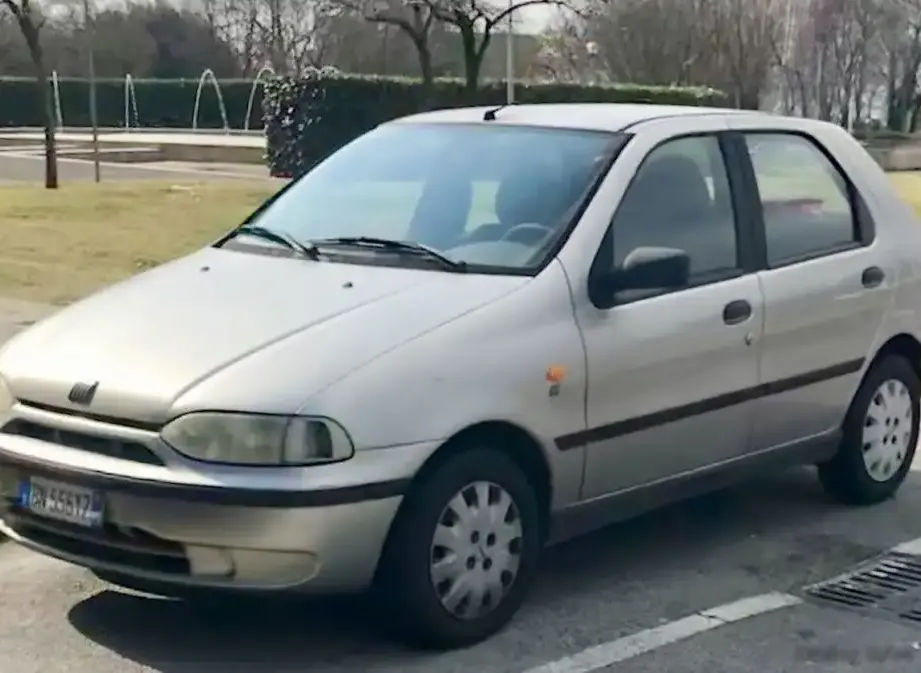
The Fiat Palio 1.2 i 16V (80 hp) was a popular subcompact hatchback produced between 1997 and 2002 as part of the 178 series. Introduced as a modern replacement for the aging Fiat Uno, the Palio aimed to offer a more spacious and refined experience in the competitive European small car segment. This particular 1.2-liter, 16-valve variant, often paired with a four-speed automatic transmission, served as an entry-level option within the Palio range, prioritizing affordability and ease of use over outright performance. It was primarily marketed towards urban drivers and those seeking a practical and economical vehicle.
Technical Specifications
| Brand | Fiat |
| Model | Palio |
| Generation | Palio (178) |
| Type (Engine) | 1.2 i 16V (80 Hp) |
| Start of production | 1997 |
| End of production | 2002 |
| Powertrain Architecture | Internal Combustion engine |
| Body type | Hatchback |
| Seats | 5 |
| Doors | 3-5 |
| Fuel consumption (urban) | 9.1 l/100 km (25.8 US mpg, 31 UK mpg, 11 km/l) |
| Fuel consumption (extra urban) | 5.5 l/100 km (42.8 US mpg, 51.4 UK mpg, 18.2 km/l) |
| Fuel consumption (combined) | 6.8 l/100 km (34.6 US mpg, 41.5 UK mpg, 14.7 km/l) |
| Fuel Type | Petrol (Gasoline) |
| Acceleration 0 – 100 km/h | 12.2 sec |
| Acceleration 0 – 62 mph | 12.2 sec |
| Acceleration 0 – 60 mph | 11.6 sec |
| Maximum speed | 168 km/h (104.39 mph) |
| Weight-to-power ratio | 12.1 kg/Hp, 82.5 Hp/tonne |
| Weight-to-torque ratio | 8.5 kg/Nm, 117.5 Nm/tonne |
| Power | 80 Hp @ 5000 rpm |
| Power per litre | 64.4 Hp/l |
| Torque | 114 Nm @ 4000 rpm (84.08 lb.-ft. @ 4000 rpm) |
| Engine layout | Front, Transverse |
| Engine Model/Code | 178 D6.011 |
| Engine displacement | 1242 cm3 (75.79 cu. in.) |
| Number of cylinders | 4 |
| Engine configuration | Inline |
| Cylinder Bore | 70.8 mm (2.79 in.) |
| Piston Stroke | 78.86 mm (3.1 in.) |
| Compression ratio | 10.6:1 |
| Number of valves per cylinder | 4 |
| Fuel injection system | Multi-port manifold injection |
| Engine aspiration | Naturally aspirated engine |
| Valvetrain | OHC |
| Engine oil capacity | 2.8 l (2.96 US qt | 2.46 UK qt) |
| Coolant capacity | 6 l (6.34 US qt | 5.28 UK qt) |
| Kerb Weight | 970 kg (2138.48 lbs.) |
| Max. weight | 1370 kg (3020.33 lbs.) |
| Max load | 400 kg (881.85 lbs.) |
| Trunk (boot) space – minimum | 280 l (9.89 cu. ft.) |
| Trunk (boot) space – maximum | 920 l (32.49 cu. ft.) |
| Fuel tank capacity | 48 l (12.68 US gal | 10.56 UK gal) |
| Length | 3740 mm (147.24 in.) |
| Width | 1614 mm (63.54 in.) |
| Height | 1445 mm (56.89 in.) |
| Wheelbase | 2360 mm (92.91 in.) |
| Front track | 1388 mm (54.65 in.) |
| Rear track | 1378 mm (54.25 in.) |
| Drivetrain Architecture | Front wheel drive |
| Number of gears | 5 |
| Gearbox type | Manual transmission |
| Front suspension | Spring Strut |
| Rear suspension | Trailing arm |
| Front brakes | Ventilated discs |
| Rear brakes | Drum |
| Steering type | Steering rack and pinion |
| Power steering | Hydraulic Steering |
| Tires size | 165/70 R13 |
Powertrain & Engine Architecture
The heart of the Palio 1.2 i 16V is the 178 D6.011 engine, a 1.242-liter inline-four cylinder gasoline engine. This engine featured a single overhead camshaft (OHC) design operating four valves per cylinder (16V), contributing to improved breathing and a slightly higher power output compared to simpler two-valve configurations. Fuel delivery was managed by a multi-port fuel injection system, providing precise fuel metering for optimal combustion. The engine’s 80 horsepower peak was achieved at 5000 rpm, while its 114 Nm (84 lb-ft) of torque was available at 4000 rpm. The automatic transmission offered with this variant was typically a four-speed unit, designed for smooth and convenient operation, though it did impact acceleration and fuel economy compared to the available five-speed manual.
Driving Characteristics
The Palio 1.2 i 16V with the automatic transmission offered a comfortable, if not particularly exhilarating, driving experience. Acceleration from 0 to 60 mph took around 11.6 to 12.2 seconds, and top speed was limited to approximately 104 mph. The automatic gearbox, while user-friendly, resulted in noticeable power loss and a less responsive feel compared to the manual transmission versions. Gear ratios were optimized for fuel efficiency and everyday drivability rather than sporty performance. The engine felt adequate for city driving and light highway cruising, but struggled when fully loaded or tackling steep inclines.
Equipment & Trim Levels
The 1.2 i 16V automatic typically represented an entry-level or mid-range trim within the Palio lineup. Standard equipment generally included power steering, central locking, and basic instrumentation. Interior upholstery was usually cloth, and the dashboard featured a functional, if somewhat basic, design. Optional extras could include air conditioning, power windows, and an upgraded audio system. Higher trim levels offered features like alloy wheels, body-colored bumpers, and more luxurious interior appointments.
Chassis & Braking
The Palio 178 series utilized a relatively simple chassis design. Front suspension consisted of MacPherson strut springs, while the rear employed a trailing arm setup. This configuration provided a reasonable balance between ride comfort and handling. Braking was accomplished via ventilated discs on the front wheels and drum brakes on the rear. The hydraulic power steering system offered light and easy steering, making it well-suited for urban environments. The relatively light weight of the vehicle (around 970 kg or 2138 lbs) helped to mitigate the limitations of the braking system.
Market Reception & Comparison
The Palio 1.2 i 16V automatic was generally well-received as an affordable and practical city car. Critics praised its spacious interior, comfortable ride, and relatively low running costs. However, the automatic transmission was often criticized for its sluggish performance and impact on fuel economy. Compared to the manual transmission versions and higher-powered Palio variants (like those equipped with a 1.6-liter engine), the 1.2 i 16V automatic offered less dynamic driving experience. It competed directly with other subcompact hatchbacks like the Renault Clio, Peugeot 206, and Volkswagen Polo.
Legacy
The Fiat Palio 1.2 i 16V, while not a performance icon, proved to be a reliable and durable vehicle. The 178 D6.011 engine, when properly maintained, is known for its longevity. Today, these Palios are relatively affordable on the used car market, making them attractive options for budget-conscious buyers. While finding parts may become increasingly challenging as the vehicle ages, the Palio’s simple mechanical design makes it relatively easy to repair for those with some mechanical aptitude. The 1.2L automatic variant remains a testament to Fiat’s commitment to providing accessible and practical transportation to a wide range of consumers.
