
Technical Specifications
| Brand | Fiat |
| Model | Palio |
| Generation | Palio (178) |
| Type (Engine) | 1.2 i (68 Hp) |
| Start of production | 1996 |
| End of production | 2002 |
| Powertrain Architecture | Internal Combustion engine |
| Body type | Hatchback |
| Seats | 5 |
| Doors | 3-5 |
| Fuel consumption (urban) | 9.1 l/100 km (25.8 US mpg, 31 UK mpg, 11 km/l) |
| Fuel consumption (extra urban) | 5.5 l/100 km (42.8 US mpg, 51.4 UK mpg, 18.2 km/l) |
| Fuel Type | Petrol (Gasoline) |
| Acceleration 0 – 100 km/h | 12.9 sec |
| Acceleration 0 – 62 mph | 12.9 sec |
| Acceleration 0 – 60 mph | 12.3 sec |
| Maximum speed | 160 km/h (99.42 mph) |
| Weight-to-power ratio | 13.5 kg/Hp |
| Weight-to-torque ratio | 8.8 kg/Nm |
| Power | 68 Hp @ 6000 rpm |
| Power per litre | 54.8 Hp/l |
| Torque | 104 Nm @ 3000 rpm (76.71 lb.-ft. @ 3000 rpm) |
| Engine layout | Front, Transverse |
| Engine Model/Code | 178 E2.000 |
| Engine displacement | 1242 cm3 (75.79 cu. in.) |
| Number of cylinders | 4 |
| Engine configuration | Inline |
| Cylinder Bore | 70.8 mm (2.79 in.) |
| Piston Stroke | 78.8 mm (3.1 in.) |
| Compression ratio | 9.8:1 |
| Number of valves per cylinder | 2 |
| Fuel injection system | Multi-port manifold injection |
| Engine aspiration | Naturally aspirated |
| Engine oil capacity | 3.74 l (3.95 US qt, 3.29 UK qt) |
| Coolant capacity | 5.8 l (6.13 US qt, 5.1 UK qt) |
| Kerb Weight | 920 kg (2028.25 lbs.) |
| Max. weight | 1320 kg (2910.1 lbs.) |
| Max load | 400 kg (881.85 lbs.) |
| Trunk (boot) space – minimum | 280 l (9.89 cu. ft.) |
| Trunk (boot) space – maximum | 1100 l (38.85 cu. ft.) |
| Fuel tank capacity | 47 l (12.42 US gal, 10.34 UK gal) |
| Length | 3735 mm (147.05 in.) |
| Width | 1626 mm (64.02 in.) |
| Height | 1446 mm (56.93 in.) |
| Wheelbase | 2360 mm (92.91 in.) |
| Front track | 1388 mm (54.65 in.) |
| Rear track | 1378 mm (54.25 in.) |
| Drivetrain | Front wheel drive |
| Number of gears | 5 |
| Gearbox type | Manual transmission |
| Front suspension | Spring Strut |
| Rear suspension | Wishbone |
| Front brakes | Disc |
| Rear brakes | Drum |
| Steering type | Steering rack and pinion |
| Power steering | Hydraulic |
| Tires size | 175/65 R14 |
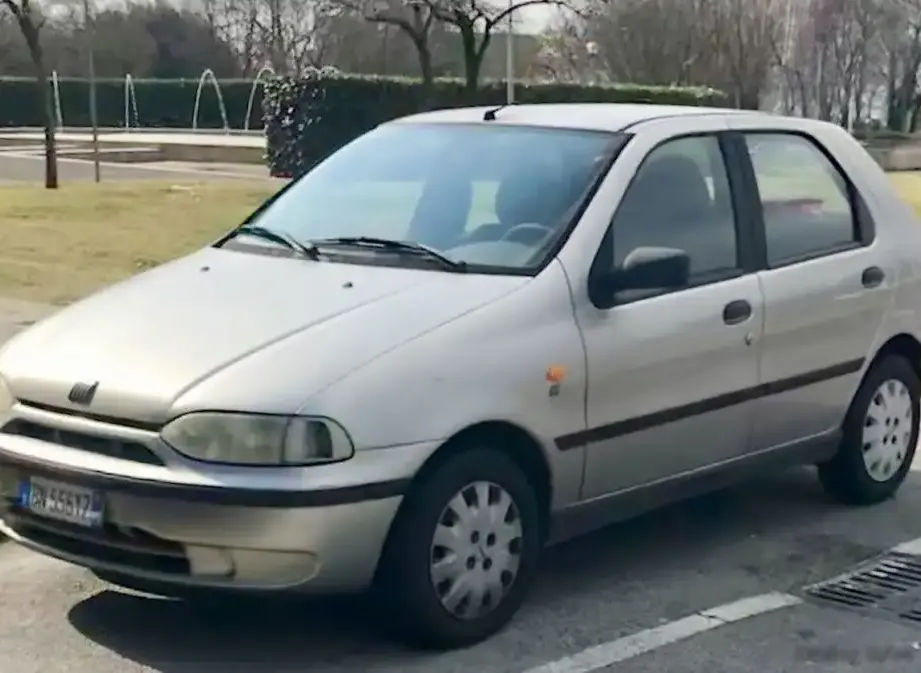
The Fiat Palio 1.2 i, produced from 1996 to 2002, was a pivotal model in Fiat’s effort to deliver a modern and affordable supermini to the European market. Developed under the 178 project (shared with the Siena), the Palio was intended to supersede the aging Uno and provide a competitive alternative to popular rivals such as the Peugeot 206, Renault Clio, and Volkswagen Polo. The 1.2-liter engine variant served as the entry point into the Palio range, prioritizing affordability and fuel efficiency for budget-conscious buyers. Offered in both three and five-door body styles, the Palio 1.2 i became a common sight on roads throughout Europe, particularly in Southern European countries and Latin America.
Powertrain & Engine Architecture
At the core of the Palio 1.2 i lies the 178 E2.000 engine, a 1242cc inline-four cylinder gasoline engine. This engine employs a single overhead camshaft (SOHC) configuration with two valves per cylinder. Fuel delivery is managed by a multi-point fuel injection system, striking a balance between efficiency and performance. The engine’s relatively uncomplicated design contributed to its inherent reliability and ease of maintenance. The 1.2-liter engine generates 68 horsepower at 6000 rpm and 104 Nm (77 lb-ft) of torque at 3000 rpm. The most prevalent transmission pairing was a five-speed manual, offering a reasonably direct driving experience. The gear ratios were optimized for fuel economy, featuring a relatively long final drive. While an automatic transmission was available in select markets, it was less common and generally perceived as less responsive than the manual counterpart.
Driving Characteristics
The Palio 1.2 i provided a predictable, though not particularly exhilarating, driving experience. With 68 horsepower on tap, acceleration was modest, requiring approximately 12.9 seconds to reach 62 mph (100 km/h). The engine performed best in urban environments and on slower country roads, where its torque proved adequate for everyday driving tasks. The five-speed manual transmission allowed drivers to maintain the engine within its optimal power band, but frequent downshifts were often necessary when overtaking or navigating inclines. Compared to higher-specification Palio models equipped with larger engines (such as the 1.6-liter), the 1.2 i felt noticeably slower. However, the lighter engine weight contributed to nimble handling and reduced body roll. The steering was light and user-friendly, making it well-suited for city driving conditions.
Equipment & Trim Levels
The Palio 1.2 i typically came equipped with a basic level of standard features, reflecting its position as the entry-level model in the lineup. Common standard inclusions were power steering, central locking, and a basic audio system. Interior upholstery was generally cloth, and the dashboard layout was simple and functional. Optional extras included air conditioning, electric windows, and alloy wheels. Higher trim levels, such as the ‘ELX’ or ‘S’, offered a more comprehensive feature set, but the base 1.2 i prioritized essential transportation at an accessible price point. Safety features were relatively basic for the era, typically consisting of a driver’s airbag and seatbelts.
Chassis & Braking
The Palio 1.2 i utilized a relatively straightforward chassis design. The front suspension consisted of MacPherson strut coil springs, while the rear employed a torsion beam axle. This configuration delivered a comfortable ride quality, although it wasn’t particularly focused on sporty handling. Braking duties were handled by disc brakes on the front wheels and drum brakes on the rear. The braking system was adequate for the car’s weight and performance characteristics, but lacked the stopping power of more advanced systems. The Palio 1.2 i’s relatively light weight (approximately 920 kg or 2028 lbs) helped to mitigate the limitations of the braking system.
Market Reception & Comparison
The Fiat Palio 1.2 i was generally well-received as an affordable and practical supermini. Automotive critics lauded its fuel efficiency and low running costs, but acknowledged its performance deficit compared to some competitors. Compared to the higher-spec Palio models, the 1.2 i offered a more economical option, albeit at the expense of driving excitement. The 1.6-liter Palio, for instance, provided significantly more power and a more engaging driving experience, but came with a higher purchase price and increased fuel consumption. The Palio 1.2 i directly competed with models like the Peugeot 206 1.1, Renault Clio 1.2, and Volkswagen Polo 1.0, offering a comparable level of equipment and performance at a competitive price.
Legacy
The Fiat Palio 1.2 i has proven to be a remarkably reliable and durable vehicle, with a significant number of examples still in operation today. The 178 E2.000 engine is renowned for its simplicity and robustness, making it relatively easy and inexpensive to maintain. However, as with any older vehicle, the Palio 1.2 i is susceptible to age-related issues, such as corrosion and wear and tear on suspension components. In the current used car market, the Palio 1.2 i remains an affordable option for buyers seeking a basic and economical city car. Its low running costs and straightforward mechanicals make it a popular choice for first-time drivers or those operating on a limited budget.
