
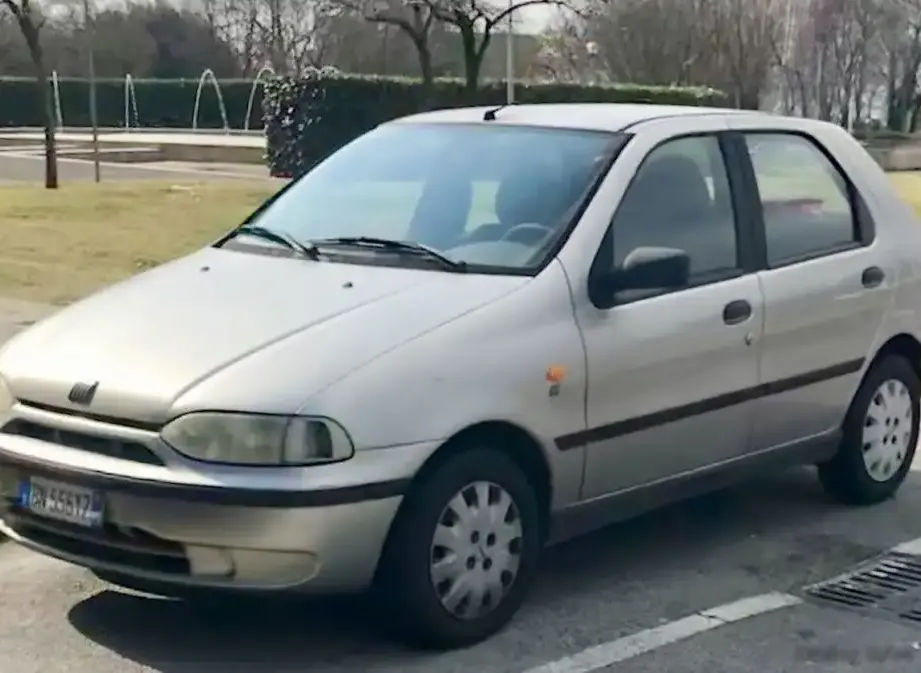
The Fiat Palio 1.6 i 16V (Type 178) was a popular subcompact hatchback produced by the Italian manufacturer Fiat between 1996 and 2002. Positioned as a mid-range offering within the Palio lineup, it aimed to provide a balance between performance, fuel efficiency, and affordability. The Palio, as a whole, was designed as a modern replacement for the aging Fiat Uno, targeting a broader European and South American market. The 1.6 i 16V variant, with its 103 horsepower engine, represented a step up from the base models, offering a more spirited driving experience. It was available in both 3-door and 5-door body styles, catering to different consumer preferences.
Technical Specifications
| Brand | Fiat |
| Model | Palio |
| Generation | Palio (178) |
| Type (Engine) | 1.6 i 16V (103 Hp) |
| Start of production | 1996 |
| End of production | 2002 |
| Powertrain Architecture | Internal Combustion engine |
| Body type | Hatchback |
| Seats | 5 |
| Doors | 3-5 |
| Fuel Type | Petrol (Gasoline) |
| Acceleration 0 – 100 km/h | 9.5 sec |
| Acceleration 0 – 62 mph | 9.5 sec |
| Acceleration 0 – 60 mph | 9 sec |
| Maximum speed | 186 km/h (115.58 mph) |
| Weight-to-power ratio | 9.3 kg/Hp, 107.3 Hp/tonne |
| Weight-to-torque ratio | 6.9 kg/Nm, 145.8 Nm/tonne |
| Power | 103 Hp @ 5500 rpm |
| Power per litre | 65.1 Hp/l |
| Torque | 140 Nm @ 4500 rpm (103.26 lb.-ft. @ 4500 rpm) |
| Engine layout | Front, Transverse |
| Engine Model/Code | 178B3000 |
| Engine displacement | 1581 cm3 (96.48 cu. in.) |
| Number of cylinders | 4 |
| Engine configuration | Inline |
| Cylinder Bore | 86.4 mm (3.4 in.) |
| Piston Stroke | 67.4 mm (2.65 in.) |
| Compression ratio | 9.3:1 |
| Number of valves per cylinder | 4 |
| Fuel injection system | Multi-port manifold injection |
| Engine aspiration | Naturally aspirated engine |
| Engine oil capacity | 3.8 l (4.02 US qt | 3.34 UK qt) |
| Coolant | 7.3 l (7.71 US qt | 6.42 UK qt) |
| Kerb Weight | 960 kg (2116.44 lbs.) |
| Max. weight | 1360 kg (2998.29 lbs.) |
| Max load | 400 kg (881.85 lbs.) |
| Trunk (boot) space – minimum | 280 l (9.89 cu. ft.) |
| Trunk (boot) space – maximum | 920 l (32.49 cu. ft.) |
| Fuel tank capacity | 48 l (12.68 US gal | 10.56 UK gal) |
| Length | 3735 mm (147.05 in.) |
| Width | 1614 mm (63.54 in.) |
| Height | 1445 mm (56.89 in.) |
| Wheelbase | 2360 mm (92.91 in.) |
| Front track | 1388 mm (54.65 in.) |
| Rear (Back) track | 1378 mm (54.25 in.) |
| Drivetrain Architecture | The Internal combustion engine (ICE) drives the front wheels of the vehicle. |
| Drive wheel | Front wheel drive |
| Number of gears and type of gearbox | 5 gears, manual transmission |
| Front suspension | Spring Strut |
| Rear suspension | Trailing arm |
| Front brakes | Disc |
| Rear brakes | Drum |
| Steering type | Steering rack and pinion |
| Tires size | 175/70 R13 |
Powertrain & Engine Architecture
The heart of the Palio 1.6 i 16V was the 178B3000 engine, a 1.6-liter inline-four cylinder gasoline engine. This engine featured a dual overhead camshaft (DOHC) design with four valves per cylinder, contributing to its relatively high output for its displacement. The engine utilized a multi-port fuel injection system, providing precise fuel delivery for improved efficiency and performance. The 16-valve configuration allowed for better cylinder filling and exhaust scavenging, enhancing the engine’s breathing. The engine’s 9.3:1 compression ratio was a compromise between performance and the ability to run on readily available fuel grades. The Palio 1.6 i 16V was exclusively offered with a five-speed manual transmission, providing drivers with full control over gear selection. This transmission was chosen to complement the engine’s power output and provide a more engaging driving experience.
Driving Characteristics
The Palio 1.6 i 16V offered a noticeable improvement in performance compared to the lower-displacement Palio models. The 103 horsepower engine provided brisk acceleration, with a 0-60 mph time of around 9 seconds. While not a sports car, the 1.6L engine delivered sufficient power for everyday driving and overtaking maneuvers. The five-speed manual transmission allowed drivers to keep the engine in its optimal power band, maximizing acceleration. The gear ratios were well-suited for both city and highway driving. Compared to the 1.2L models, the 1.6 i 16V felt significantly more responsive, especially at higher speeds. However, it didn’t possess the torque of diesel variants, requiring more frequent downshifts when climbing hills or carrying a full load. The handling was generally considered safe and predictable, though not particularly sporty.
Equipment & Trim Levels
The Palio 1.6 i 16V typically came equipped with a reasonable level of standard features for its price point. These included power steering, central locking, and an adjustable steering column. Interior upholstery was typically cloth, with a relatively simple dashboard layout. Optional extras included air conditioning, power windows, and an upgraded audio system. Higher trim levels, often denoted by specific badges or package names, could add features like alloy wheels, fog lights, and a more premium interior finish. The Palio aimed to provide a practical and functional interior, prioritizing durability and ease of use over luxury.
Chassis & Braking
The Palio 1.6 i 16V utilized a relatively simple chassis design. The front suspension consisted of MacPherson struts, while the rear suspension employed a trailing arm setup. This configuration provided a comfortable ride, though it wasn’t particularly sophisticated. Braking duties were handled by disc brakes at the front and drum brakes at the rear. The braking system was adequate for the vehicle’s weight and performance, but lacked the stopping power of more advanced systems. The Palio’s relatively lightweight construction helped to offset the limitations of the braking system. Stabilizer bars were typically included to reduce body roll during cornering.
Market Reception & Comparison
The Fiat Palio 1.6 i 16V was generally well-received by automotive critics as a practical and affordable hatchback. It was praised for its lively engine, decent handling, and spacious interior. However, some critics noted the relatively basic interior trim and the lack of advanced safety features. Compared to its rivals, such as the Renault Clio and Peugeot 206, the Palio offered a competitive price-to-performance ratio. The 1.6L engine provided better fuel economy than larger-displacement engines, while still delivering respectable performance. The manual transmission was favored by enthusiasts, but some buyers preferred the convenience of an automatic transmission, which was not offered with this engine.
Legacy
The Fiat Palio 1.6 i 16V has proven to be a relatively reliable vehicle, with many examples still on the road today. The 178B3000 engine is known for its durability, provided it is properly maintained. Common issues include oil leaks and wear on the timing belt. The Palio’s simple mechanical design makes it relatively easy and inexpensive to repair. In the used car market, the 1.6 i 16V variant is often sought after by buyers looking for a reliable and affordable hatchback with a bit more performance than the base models. Its enduring popularity is a testament to its practicality and overall value.
