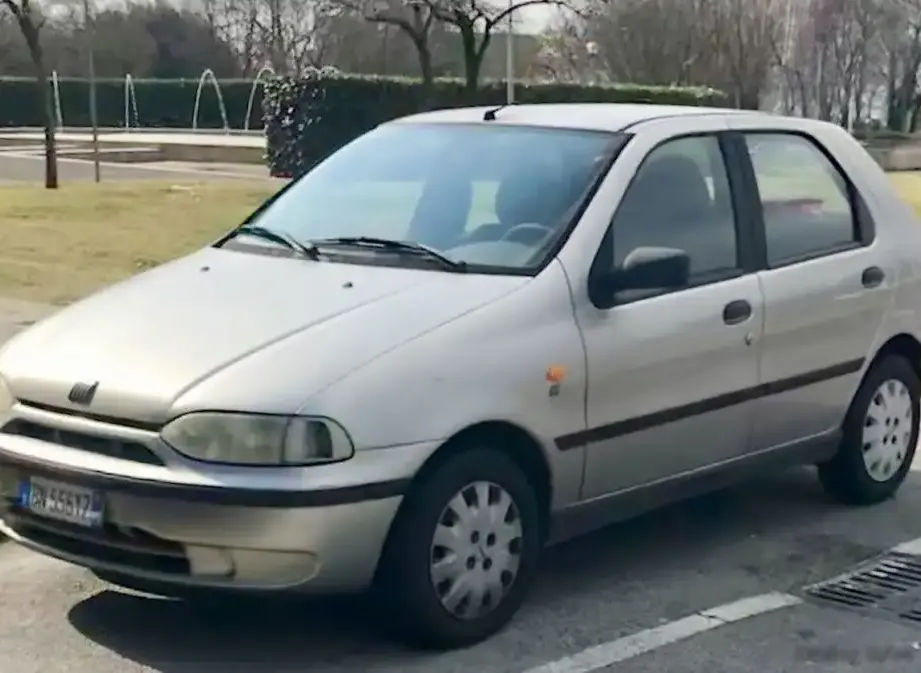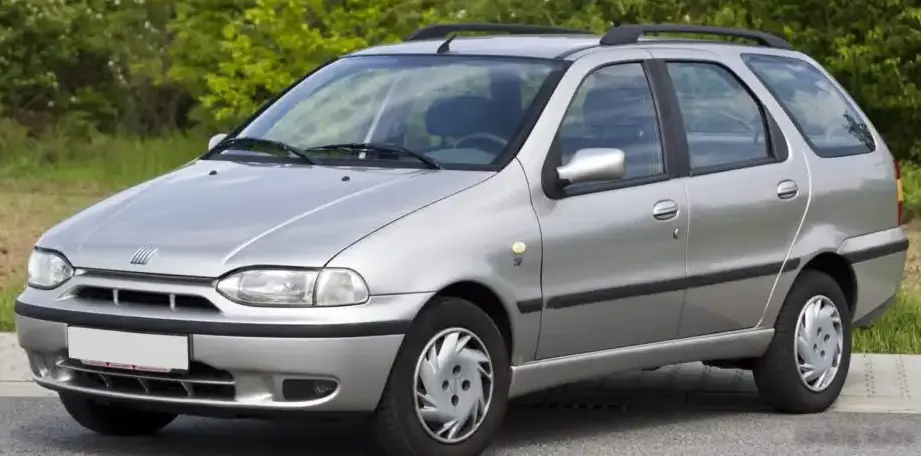
The Fiat Palio Weekend 1.6 i 16V EL, internally designated as the 178 series, was a station wagon variant of the popular Palio, produced between 1997 and 2002. Positioned as a practical and affordable family vehicle, the Weekend offered increased cargo capacity compared to the standard Palio hatchback. This particular 1.6-liter, 100 horsepower version represented a mid-range offering within the Weekend lineup, slotting between the base 1.0 and 1.2-liter engines and the more performance-oriented 1.6 16V models. The Palio Weekend was primarily marketed in South America and Europe, offering a budget-friendly alternative to more established European estates.
Technical Specifications
| Brand | Fiat |
| Model | Palio |
| Generation | Palio Weekend (178) |
| Type (Engine) | 1.6 i 16V EL (100 Hp) |
| Start of production | 1997 |
| End of production | 2002 |
| Powertrain Architecture | Internal Combustion engine |
| Body type | Station wagon (estate) |
| Seats | 5 |
| Doors | 5 |
| Fuel Type | Petrol (Gasoline) |
| Acceleration 0 – 100 km/h | 10.3 sec |
| Acceleration 0 – 62 mph | 10.3 sec |
| Acceleration 0 – 60 mph | 9.8 sec |
| Maximum speed | 185 km/h (114.95 mph) |
| Weight-to-power ratio | 11 kg/Hp, 91.3 Hp/tonne |
| Weight-to-torque ratio | 8 kg/Nm, 125.1 Nm/tonne |
| Power | 100 Hp @ 5500 rpm |
| Power per litre | 63.3 Hp/l |
| Torque | 137 Nm @ 4250 rpm (101.05 lb.-ft. @ 4250 rpm) |
| Engine layout | Front, Transverse |
| Engine Model/Code | 178B3000 |
| Engine displacement | 1581 cm3 (96.48 cu. in.) |
| Number of cylinders | 4 |
| Engine configuration | Inline |
| Cylinder Bore | 86.4 mm (3.4 in.) |
| Piston Stroke | 67.4 mm (2.65 in.) |
| Number of valves per cylinder | 4 |
| Fuel injection system | Multi-port manifold injection |
| Engine aspiration | Naturally aspirated engine |
| Engine oil capacity | 3.8 l (4.02 US qt | 3.34 UK qt) |
| Coolant capacity | 6.6 l (6.97 US qt | 5.81 UK qt) |
| Kerb Weight | 1095 kg (2414.06 lbs.) |
| Max. weight | 1690 kg (3725.81 lbs.) |
| Max load | 595 kg (1311.75 lbs.) |
| Trunk (boot) space – minimum | 460 l (16.24 cu. ft.) |
| Trunk (boot) space – maximum | 1540 l (54.38 cu. ft.) |
| Fuel tank capacity | 51 l (13.47 US gal | 11.22 UK gal) |
| Length | 4130 mm (162.6 in.) |
| Width | 1626 mm (64.02 in.) |
| Height | 1475 mm (58.07 in.) |
| Wheelbase | 2423 mm (95.39 in.) |
| Front track | 1388 mm (54.65 in.) |
| Rear track | 1385 mm (54.53 in.) |
| Drivetrain Architecture | Front wheel drive |
| Number of gears and type of gearbox | 5 gears, manual transmission |
| Front suspension | Spring Strut |
| Rear suspension | Trailing arm |
| Front brakes | Disc |
| Rear brakes | Drum |
| Steering type | Steering rack and pinion |
| Power steering | Hydraulic Steering |
| Tires size | 175/65 R14 T |
Powertrain & Engine Architecture
The heart of the Palio Weekend 1.6 i 16V EL is the 178B3000 engine, a 1.6-liter inline-four cylinder gasoline engine. This engine featured a multi-port fuel injection system, providing precise fuel delivery for improved efficiency and performance. The 16-valve cylinder head, with four valves per cylinder, enhanced volumetric efficiency, contributing to the engine’s 100 horsepower output. The engine’s design prioritized reliability and ease of maintenance, typical of Fiat’s engineering philosophy at the time. The five-speed manual transmission was the standard offering for this trim level, providing drivers with good control over the engine’s power band. The transmission was chosen for its durability and relatively low cost.
Driving Characteristics
The 1.6-liter engine provided a reasonable level of performance for the Palio Weekend, offering a balance between fuel economy and usability. Acceleration from 0-60 mph took approximately 9.8 seconds, making it adequate for everyday driving situations. The five-speed manual transmission allowed drivers to keep the engine in its optimal power range, providing responsive acceleration. Compared to the lower-powered 1.0 and 1.2-liter versions, the 1.6 offered noticeably more grunt, especially when fully loaded or tackling inclines. However, it didn’t possess the sporty character of higher-performance variants. The gear ratios were tuned for practicality rather than outright speed, prioritizing fuel efficiency and comfortable cruising.
Equipment & Trim Levels
The “EL” designation indicated a mid-range trim level. Standard equipment typically included power steering, central locking, electric front windows, and a basic audio system. Interior upholstery was usually cloth, with a functional and durable design. Optional extras could include air conditioning, alloy wheels, and a more advanced audio system. The dashboard layout was straightforward and user-friendly, focusing on practicality rather than luxury. The Weekend’s interior space was a key selling point, offering ample room for passengers and cargo.
Chassis & Braking
The Palio Weekend utilized a relatively simple chassis design, featuring a spring strut front suspension and a trailing arm rear suspension. This setup provided a comfortable ride quality, although it wasn’t particularly sporty. The front brakes were discs, offering adequate stopping power, while the rear brakes were drums, a cost-saving measure common in this segment. The hydraulic power steering provided light and easy steering, making it maneuverable in urban environments. Stabilizer bars were typically fitted to improve handling and reduce body roll.
Market Reception & Comparison
The Palio Weekend 1.6 i 16V EL was generally well-received by automotive critics as a practical and affordable family vehicle. It offered a good balance of space, fuel economy, and performance. Compared to other station wagons in its class, such as the Peugeot 205 Break or the Renault Clio Estate, the Palio Weekend was often praised for its value for money. However, it was sometimes criticized for its relatively basic interior and lack of refinement. Fuel economy was competitive for its time, averaging around 30-35 mpg in mixed driving conditions. Reliability was generally good, although some owners reported minor issues with the electrical system.
Legacy
The Fiat Palio Weekend, and specifically the 1.6 i 16V EL variant, has become a popular choice among budget-conscious used car buyers. The 178B3000 engine is known for its durability and relatively low maintenance costs. Parts availability remains good in many regions, making it an affordable vehicle to keep on the road. While not a collector’s item, the Palio Weekend represents a significant chapter in Fiat’s history, offering a practical and affordable transportation solution for families in South America and Europe. Today, well-maintained examples can still provide reliable and economical transportation.