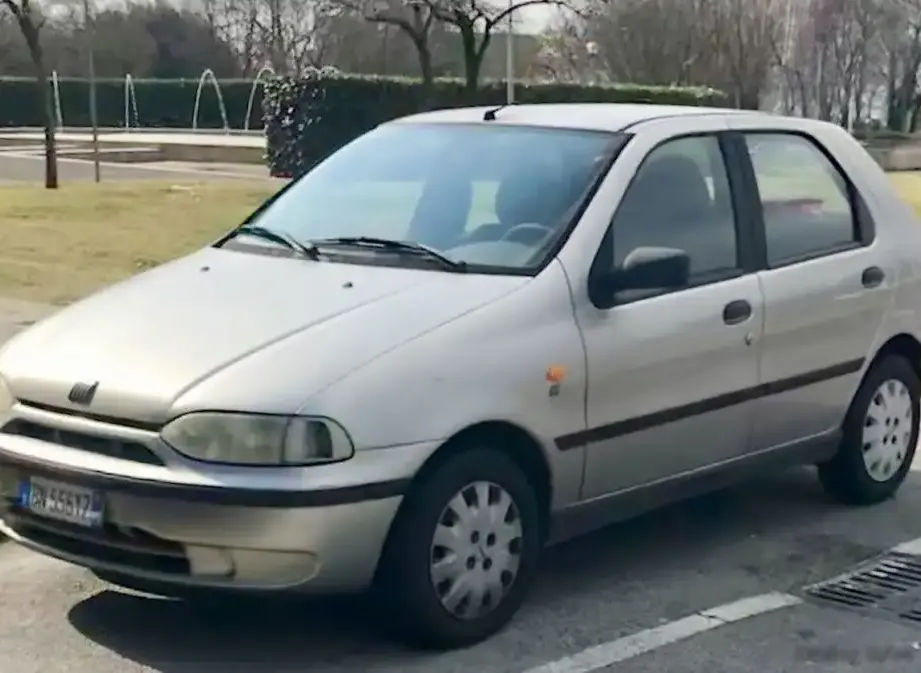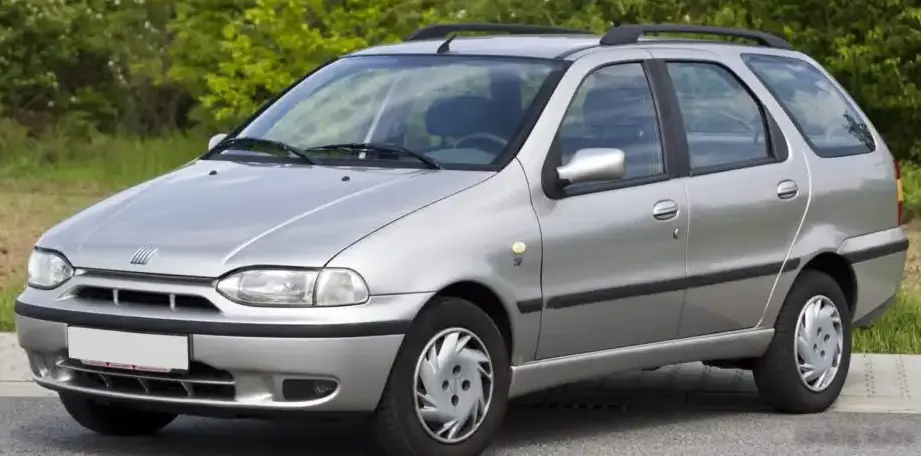
The Fiat Palio Weekend 1.9 JTD (80 hp) was a station wagon variant of the popular Palio, produced between 2002 and 2003. Positioned as a practical and economical choice within the Palio Weekend (178) range, it offered a diesel-powered option geared towards buyers prioritizing fuel efficiency and load-carrying capacity. This model represented Fiat’s attempt to cater to the European market’s growing demand for compact, versatile vehicles, particularly in regions where diesel engines were favored for their lower running costs. It was a key offering in a segment dominated by vehicles like the Renault Clio Estate and Peugeot 206 SW.
Technical Specifications
| Brand | Fiat |
| Model | Palio |
| Generation | Palio Weekend (178) |
| Type (Engine) | 1.9 JTD (80 Hp) |
| Start of production | 2002 |
| End of production | 2003 |
| Powertrain Architecture | Internal Combustion engine |
| Body type | Station wagon (estate) |
| Seats | 5 |
| Doors | 5 |
| Fuel consumption (urban) | 7.5 l/100 km (31.4 US mpg) |
| Fuel consumption (extra urban) | 4.8 l/100 km (49 US mpg) |
| Fuel Type | Diesel |
| Acceleration 0 – 100 km/h | 14.9 sec |
| Acceleration 0 – 62 mph | 14.9 sec |
| Acceleration 0 – 60 mph | 14.2 sec |
| Maximum speed | 164 km/h (101.9 mph) |
| Weight-to-power ratio | 15.1 kg/Hp |
| Weight-to-torque ratio | 6.1 kg/Nm |
| Power | 80 Hp @ 4000 rpm |
| Torque | 196 Nm @ 1500 rpm (144.56 lb.-ft. @ 1500 rpm) |
| Engine layout | Front, Transverse |
| Engine Model/Code | 188 A2.000 |
| Engine displacement | 1910 cm3 (116.56 cu. in.) |
| Number of cylinders | 4 |
| Engine configuration | Inline |
| Cylinder Bore | 82 mm (3.23 in.) |
| Piston Stroke | 90.4 mm (3.56 in.) |
| Compression ratio | 18.5:1 |
| Number of valves per cylinder | 2 |
| Fuel injection system | Diesel Commonrail |
| Engine aspiration | Turbocharger, Intercooler |
| Valvetrain | OHC |
| Engine oil capacity | 4.3 l (4.54 US qt | 3.78 UK qt) |
| Coolant capacity | 7 l (7.4 US qt | 6.16 UK qt) |
| Kerb Weight | 1205 kg (2656.57 lbs.) |
| Max. weight | 1725 kg (3802.97 lbs.) |
| Max load | 520 kg (1146.4 lbs.) |
| Trunk (boot) space – minimum | 460 l (16.24 cu. ft.) |
| Trunk (boot) space – maximum | 1540 l (54.38 cu. ft.) |
| Fuel tank capacity | 51 l (13.47 US gal | 11.22 UK gal) |
| Length | 4130 mm (162.6 in.) |
| Width | 1626 mm (64.02 in.) |
| Height | 1515 mm (59.65 in.) |
| Wheelbase | 2420 mm (95.28 in.) |
| Front track | 1390 mm (54.72 in.) |
| Rear track | 1390 mm (54.72 in.) |
| Drivetrain | Front wheel drive |
| Number of gears | 5 gears, manual transmission |
| Front suspension | Spring Strut |
| Rear suspension | Trailing arm |
| Front brakes | Disc |
| Rear brakes | Drum |
| Assisting systems | ABS (Anti-lock braking system) |
| Steering type | Steering rack and pinion |
| Power steering | Hydraulic Steering |
| Tires size | 175/70 R14 |
Powertrain & Engine Architecture
The heart of the Palio Weekend 1.9 JTD was the 188A2.000 engine, a 1.9-liter inline-four cylinder diesel. This engine was a product of Fiat’s second-generation JTD (Jet Diesel Technology) common rail direct injection system. The common rail system allowed for multiple fuel injections per combustion cycle, improving efficiency, reducing noise, and lowering emissions compared to older diesel technologies. The engine featured an overhead camshaft (OHC) valvetrain with two valves per cylinder. A turbocharger with an intercooler was employed to boost power output, delivering 80 horsepower at 4000 rpm and 196 Nm (144.56 lb-ft) of torque at a low 1500 rpm. This torque curve made the engine particularly suited to hauling loads and providing reasonable acceleration despite its modest horsepower figure. The five-speed manual transmission was the only gearbox option available with this engine.
Driving Characteristics
The 1.9 JTD engine in the Palio Weekend provided a distinctly different driving experience compared to the gasoline-powered versions. While lacking the outright acceleration of the 1.6-liter petrol engine, the JTD offered significantly more low-end torque. This translated to effortless cruising and strong pulling power, making it ideal for carrying passengers and cargo. The five-speed gearbox was well-matched to the engine’s characteristics, although the shift quality wasn’t particularly sporty. The relatively long gearing emphasized fuel economy over rapid acceleration. Compared to the more powerful Palio Weekend variants, the 1.9 JTD felt less responsive, but its fuel efficiency and relaxed cruising ability were major selling points.
Equipment & Trim Levels
The 1.9 JTD variant of the Palio Weekend typically came with a fairly basic level of equipment, reflecting its position as a value-oriented model. Standard features generally included power steering, central locking, and front electric windows. Air conditioning was often an optional extra. Interior trim was typically cloth upholstery, and the dashboard featured a functional, if somewhat utilitarian, design. Higher trim levels, if selected, could add features like alloy wheels, a radio/cassette player, and upgraded interior materials. Safety features were limited by the standards of the time, typically consisting of ABS brakes and driver/passenger airbags.
Chassis & Braking
The Palio Weekend’s chassis was a relatively simple design, utilizing a MacPherson strut front suspension and a trailing arm rear suspension. This setup provided a comfortable ride, but handling was not particularly sharp. The front brakes were discs, while the rear brakes were drums, a common configuration for vehicles in this class at the time. ABS (Anti-lock Braking System) was standard, enhancing braking performance and safety. The suspension was tuned for comfort rather than sporty handling, prioritizing a smooth ride over precise cornering.
Market Reception & Comparison
The Fiat Palio Weekend 1.9 JTD was generally well-received by critics for its fuel efficiency and practicality. It was seen as a sensible choice for buyers needing a versatile and economical vehicle. However, it was often criticized for its relatively slow acceleration and basic interior. Compared to the gasoline-powered Palio Weekend models, the JTD offered superior fuel economy but less performance. Against competitors like the Renault Clio Estate and Peugeot 206 SW, the Palio Weekend 1.9 JTD offered a competitive price point and a spacious interior, but lacked some of the refinement and features of its rivals.
Legacy
The 1.9 JTD engine proved to be a robust and reliable unit, and many Palio Weekend 1.9 JTD models are still on the road today. The engine’s durability and relatively simple construction make it relatively easy and inexpensive to maintain. In the used car market, the Palio Weekend 1.9 JTD is often sought after by buyers looking for an affordable and economical station wagon. While not a performance icon, the 1.9 JTD variant of the Palio Weekend represents a practical and dependable choice for those prioritizing fuel efficiency and load-carrying capacity.