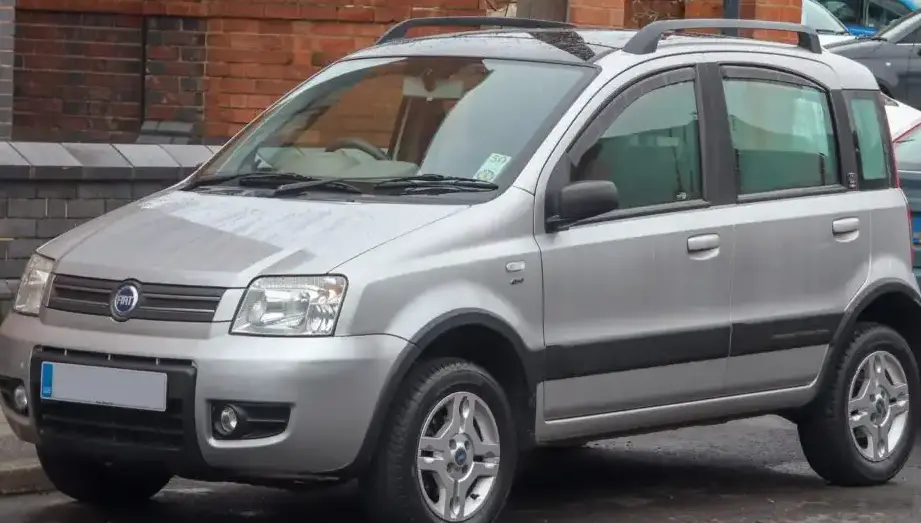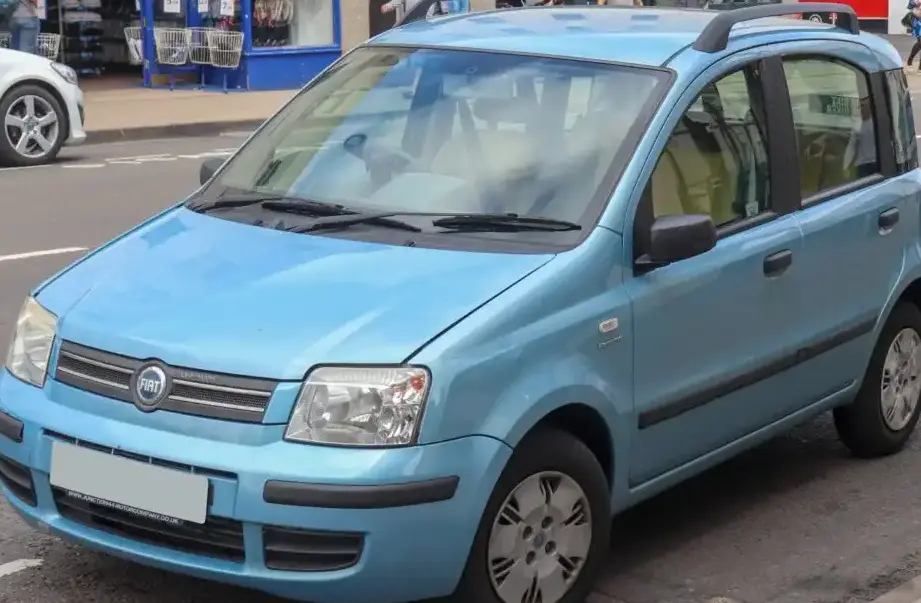
The Fiat Panda II (169) 1.1 MPI, producing 54 horsepower, was a mainstay of the Fiat lineup from 2003 to 2010. Positioned as the entry-level variant of the second-generation Panda, it represented an affordable and economical option for urban drivers. Built on the Fiat Mini platform (shared with the Fiat 500), the 1.1 MPI aimed to provide basic transportation with a focus on fuel efficiency and ease of use. This model was particularly popular in European markets where small, economical cars are highly valued, and served as a gateway into the Panda range for many buyers.
Technical Specifications
| Brand | Fiat |
| Model | Panda |
| Generation | Panda II (169) |
| Type (Engine) | 1.1 MPI (54 Hp) |
| Start of production | 2003 |
| End of production | 2010 |
| Powertrain Architecture | Internal Combustion engine |
| Body type | Hatchback |
| Seats | 5 |
| Doors | 5 |
| Fuel consumption (urban) | 7.2 l/100 km (32.7 US mpg) |
| Fuel consumption (extra urban) | 4.8 l/100 km (49 US mpg) |
| Fuel consumption (combined) | 5.7 l/100 km (41.3 US mpg) |
| Fuel Type | Petrol (Gasoline) |
| Acceleration 0 – 100 km/h | 15 sec |
| Acceleration 0 – 62 mph | 15 sec |
| Acceleration 0 – 60 mph | 14.3 sec |
| Maximum speed | 150 km/h (93.21 mph) |
| Weight-to-power ratio | 15.6 kg/Hp |
| Weight-to-torque ratio | 9.5 kg/Nm |
| Power | 54 Hp @ 5000 rpm |
| Power per litre | 48.7 Hp/l |
| Torque | 88 Nm @ 2750 rpm (64.91 lb.-ft. @ 2750 rpm) |
| Engine layout | Front, Transverse |
| Engine Model/Code | 187A1000 |
| Engine displacement | 1108 cm3 (67.61 cu. in.) |
| Number of cylinders | 4 |
| Engine configuration | Inline |
| Cylinder Bore | 70 mm (2.76 in.) |
| Piston Stroke | 72 mm (2.83 in.) |
| Compression ratio | 9.6:1 |
| Number of valves per cylinder | 2 |
| Fuel injection system | Multi-port manifold injection |
| Engine aspiration | Naturally aspirated engine |
| Valvetrain | OHC |
| Engine oil capacity | 3.5 l (3.7 US qt | 3.08 UK qt) |
| Coolant capacity | 4.5 l (4.76 US qt | 3.96 UK qt) |
| Kerb Weight | 840 kg (1851.88 lbs.) |
| Max. weight | 1255 kg (2766.8 lbs.) |
| Max load | 415 kg (914.92 lbs.) |
| Trunk (boot) space – minimum | 206 l (7.27 cu. ft.) |
| Trunk (boot) space – maximum | 775 l (27.37 cu. ft.) |
| Fuel tank capacity | 35 l (9.25 US gal | 7.7 UK gal) |
| Length | 3538 mm (139.29 in.) |
| Width | 1578 mm (62.13 in.) |
| Height | 1540 mm (60.63 in.) |
| Wheelbase | 2299 mm (90.51 in.) |
| Front track | 1366 mm (53.78 in.) |
| Rear track | 1357 mm (53.43 in.) |
| Minimum turning circle | 9.1 m (29.86 ft.) |
| Drivetrain Architecture | Front wheel drive |
| Number of gears | 5 gears, manual transmission |
| Front suspension | Spring Strut |
| Rear suspension | Torsion |
| Front brakes | Disc |
| Rear brakes | Drum |
| Assisting systems | ABS (Anti-lock braking system) |
| Steering type | Steering rack and pinion |
| Tires size | 155/80 R13 |
| Wheel rims size | 5J x 13 |
INTRODUCTION
The Fiat Panda II (169) 1.1 MPI, launched in 2003, represented a significant update to the iconic Panda city car. The second generation Panda, designed by Giorgetto Giugiaro, offered a more modern and spacious interior compared to its predecessor, while retaining the original’s focus on practicality and affordability. The 1.1 MPI variant, powered by the 187A1000 engine, was the base model, intended to provide economical transportation for a wide range of buyers. It was a common sight in European cities, prized for its compact size, ease of parking, and low running costs. The 169 series Panda continued in production until 2010, undergoing minor revisions throughout its lifespan.
Powertrain & Engine Architecture
The heart of the Panda 1.1 MPI is the 187A1000 engine, a 1.1-liter (1108 cc) inline-four cylinder petrol engine. This engine utilizes a single overhead camshaft (OHC) valvetrain with two valves per cylinder. Fuel delivery is managed by a multi-point fuel injection system, providing a balance between efficiency and performance. The engine is naturally aspirated, meaning it doesn’t employ a turbocharger or supercharger. The 1.1 MPI produces 54 horsepower at 5000 rpm and 88 Nm (64.91 lb-ft) of torque at 2750 rpm. The engine is transversely mounted at the front of the vehicle, driving the front wheels. The standard transmission for this variant was a five-speed manual gearbox, although a Dualogic automated manual transmission was available as an option in some markets. The Dualogic system, while offering some convenience, was often criticized for its slow and jerky shifts.
Driving Characteristics
The Panda 1.1 MPI’s driving experience is best described as utilitarian. With only 54 horsepower, acceleration is modest, taking approximately 15 seconds to reach 62 mph (100 km/h). The engine feels strained when climbing hills or carrying a full load. The five-speed manual transmission is well-matched to the engine’s characteristics, allowing drivers to keep the engine in its optimal power band. The steering is light and precise, making it easy to maneuver in tight urban environments. The suspension, while simple, provides a reasonably comfortable ride on smooth roads, although it can become unsettled on rough surfaces. Compared to higher-powered Panda variants, such as the 1.2 60 hp or the 1.4, the 1.1 MPI feels significantly slower and less refined. However, its simplicity and low weight contribute to excellent fuel economy.
Equipment & Trim Levels
The 1.1 MPI Panda was typically equipped with basic, but functional, features. Standard equipment generally included power steering, central locking, and front airbags. Interior trim was typically spartan, with durable plastic materials and cloth upholstery. Air conditioning, electric windows, and a radio were often offered as optional extras. Higher trim levels, such as the “Active” or “Dynamic”, added features like body-colored bumpers, wheel covers, and upgraded interior trim. The focus was on providing a no-frills, affordable package. The interior design prioritized practicality, with a simple dashboard layout and ample storage spaces.
Chassis & Braking
The Panda II (169) utilizes a relatively simple chassis design. The front suspension consists of MacPherson struts, while the rear suspension employs a torsion beam. This setup provides a good balance between ride comfort and handling. The front brakes are disc brakes, while the rear brakes are drum brakes. ABS (Anti-lock Braking System) was standard equipment, enhancing safety. The relatively light weight of the 1.1 MPI variant (approximately 840 kg or 1852 lbs) contributes to its nimble handling and helps to offset the engine’s modest power output. Stabilizer bars were not typically fitted to the base 1.1 MPI model.
Market Reception & Comparison
The Fiat Panda 1.1 MPI was generally well-received by critics as an affordable and practical city car. Its fuel efficiency was a major selling point, and its compact size made it ideal for navigating congested urban areas. However, its lack of power and basic interior were often criticized. Compared to other small cars in its class, such as the Renault Twingo or the Peugeot 107, the Panda 1.1 MPI offered a similar level of practicality and affordability. The 1.2-liter Panda offered a noticeable performance improvement, but at a slightly higher price point. The 1.1 MPI’s reliability was generally good, although the Dualogic automated manual transmission was known to be prone to issues.
Legacy
The Fiat Panda II (169) 1.1 MPI remains a popular choice in the used car market, particularly for first-time drivers or those seeking an economical runabout. The 187A1000 engine is known for its durability and relatively low maintenance costs. While not a performance car, the 1.1 MPI Panda offers a reliable and affordable means of transportation. Parts availability is generally good, and the simple mechanical design makes it relatively easy to repair. The Panda II (169) cemented the Panda’s reputation as a practical and affordable city car, and the 1.1 MPI variant played a significant role in its success.