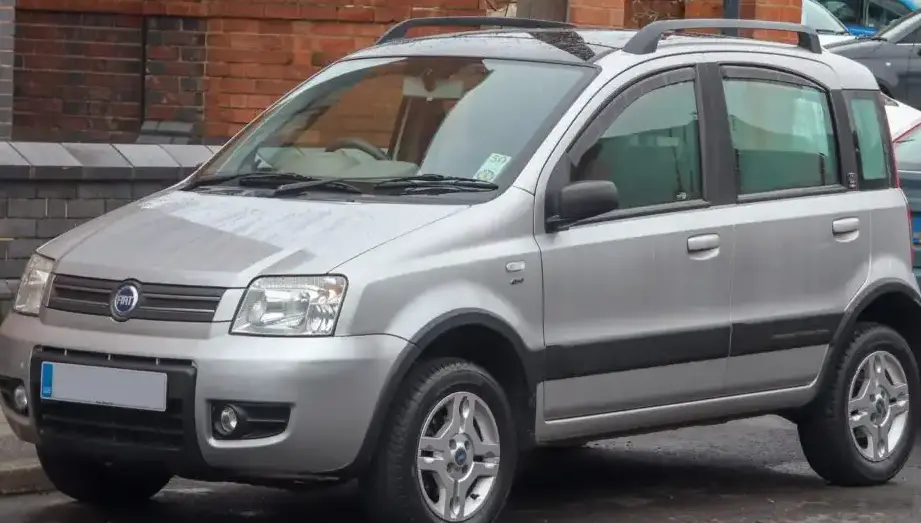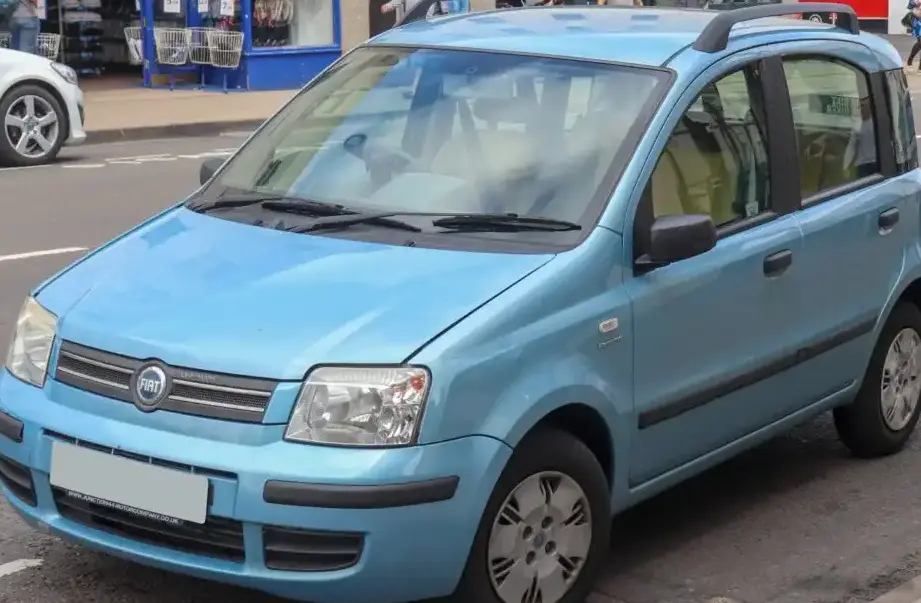
The Fiat Panda II (169) 1.4 16V, produced from October 2006 to January 2011, represented a significant step up in performance and refinement for the popular city car. Positioned as a mid-range offering within the Panda II lineup, this variant combined a 1.4-liter, 16-valve engine producing 100 horsepower with a five-speed manual transmission. It aimed to bridge the gap between the more economical base models and the sportier, albeit less practical, higher-performance options. The 169 series Panda, launched in 2003, was a substantial redesign of the original Panda, offering increased space, safety, and a more modern driving experience while retaining the core values of affordability and practicality that defined the nameplate.
Technical Specifications
| Brand | Fiat |
| Model | Panda |
| Generation | Panda II (169) |
| Type (Engine) | 1.4 16V (100 Hp) |
| Start of production | October, 2006 |
| End of production | January, 2011 |
| Powertrain Architecture | Internal Combustion engine |
| Body type | Hatchback |
| Seats | 5 |
| Doors | 5 |
| Fuel consumption (urban) | 8.7 l/100 km (27 US mpg, 32.5 UK mpg, 11.5 km/l) |
| Fuel consumption (extra urban) | 5.3 l/100 km (44.4 US mpg, 53.3 UK mpg, 18.9 km/l) |
| Fuel consumption (combined) | 6.5 l/100 km (36.2 US mpg, 43.5 UK mpg, 15.4 km/l) |
| CO2 emissions | 154 g/km |
| Fuel Type | Petrol (Gasoline) |
| Acceleration 0 – 100 km/h | 9.5 sec |
| Acceleration 0 – 62 mph | 9.5 sec |
| Acceleration 0 – 60 mph | 9 sec |
| Maximum speed | 185 km/h (114.95 mph) |
| Emission standard | Euro 4 |
| Weight-to-power ratio | 9.8 kg/Hp, 102.6 Hp/tonne |
| Weight-to-torque ratio | 7.4 kg/Nm, 134.4 Nm/tonne |
| Power | 100 Hp @ 6000 rpm |
| Power per litre | 73.1 Hp/l |
| Torque | 131 Nm @ 4250 rpm (96.62 lb.-ft. @ 4250 rpm) |
| Engine layout | Front, Transverse |
| Engine Model/Code | 169A3000 |
| Engine displacement | 1368 cm3 (83.48 cu. in.) |
| Number of cylinders | 4 |
| Engine configuration | Inline |
| Cylinder Bore | 72 mm (2.83 in.) |
| Piston Stroke | 84 mm (3.31 in.) |
| Compression ratio | 11:1 |
| Number of valves per cylinder | 4 |
| Fuel injection system | Multi-port manifold injection |
| Engine aspiration | Naturally aspirated engine |
| Valvetrain | DOHC |
| Engine oil capacity | 2.9 l (3.06 US qt | 2.55 UK qt) |
| Coolant | 4.5 l (4.76 US qt | 3.96 UK qt) |
| Kerb Weight | 975 kg (2149.51 lbs.) |
| Max. weight | 1365 kg (3009.31 lbs.) |
| Max load | 390 kg (859.8 lbs.) |
| Trunk (boot) space – minimum | 206 l (7.27 cu. ft.) |
| Trunk (boot) space – maximum | 860 l (30.37 cu. ft.) |
| Fuel tank capacity | 35 l (9.25 US gal | 7.7 UK gal) |
| Max. roof load | 50 kg (110.23 lbs.) |
| Permitted trailer load with brakes (12%) | 800 kg (1763.7 lbs.) |
| Permitted trailer load without brakes | 400 kg (881.85 lbs.) |
| Permitted towbar download | 60 kg (132.28 lbs.) |
| Length | 3578 mm (140.87 in.) |
| Width | 1606 mm (63.23 in.) |
| Height | 1560 mm (61.42 in.) |
| Wheelbase | 2299 mm (90.51 in.) |
| Front track | 1378 mm (54.25 in.) |
| Rear (Back) track | 1368 mm (53.86 in.) |
| Minimum turning circle | 10.4 m (34.12 ft.) |
| Drivetrain Architecture | The Internal combustion engine (ICE) drives the front wheels of the vehicle. |
| Drive wheel | Front wheel drive |
| Number of gears and type of gearbox | 5 gears, manual transmission |
| Front suspension | Independent, type McPherson with coil spring and anti-roll bar |
| Rear suspension | Spring Strut, Semi-dependent beam with stabilizer lateral stability |
| Front brakes | Ventilated discs, 257 mm |
| Rear brakes | Disc, 240 mm |
| Assisting systems | ABS (Anti-lock braking system) |
| Steering type | Steering rack and pinion |
| Power steering | Electric Steering |
| Tires size | 195/45 R15 |
| Wheel rims size | 15 |
Powertrain & Engine Architecture
The heart of the Panda II 1.4 16V is the Fiat 169A3000 engine, a naturally aspirated, inline-four cylinder gasoline engine. This engine utilizes a multi-port fuel injection system and a double overhead camshaft (DOHC) valvetrain, contributing to its relatively high output for its displacement. The 1.4-liter engine benefits from a compression ratio of 11:1, aiding in efficient combustion. The five-speed manual transmission was the standard offering, providing a balance between fuel economy and driver engagement. The engine’s design prioritized reliability and ease of maintenance, typical of Fiat’s engineering philosophy at the time. While not a particularly sophisticated engine by modern standards, it proved to be durable and capable.
Driving Characteristics
The 1.4 16V Panda offered a noticeable improvement in performance over the lower-powered 1.2-liter variants. Acceleration to 60 mph took approximately 9.5 seconds, and it could reach a top speed of 185 km/h (114.95 mph). The five-speed gearbox allowed for reasonably efficient cruising, although the engine did require some revving to maintain speed on inclines. Compared to the more basic models, the 1.4 felt more confident on the highway and less strained during everyday driving. The gear ratios were tuned for a balance of acceleration and fuel economy, making it a practical choice for both city and occasional longer journeys. It wasn’t a sporty car, but it provided adequate power for most driving situations.
Equipment & Trim Levels
The 1.4 16V trim typically included features such as central locking, power steering, and an adjustable steering wheel. Interior upholstery was generally cloth, with a functional, if somewhat basic, dashboard layout. Optional extras included air conditioning, electric windows, and a radio/CD player. The trim level aimed to provide a comfortable and well-equipped package without significantly increasing the price. Safety features included ABS brakes as standard, a notable improvement over earlier Panda models.
Chassis & Braking
The Panda II utilized a McPherson strut front suspension and a semi-independent rear suspension with a stabilizer bar. This setup provided a reasonable level of ride comfort and handling for a small city car. The front brakes were ventilated discs, while the rear brakes were solid discs, offering adequate stopping power for the vehicle’s weight and performance. The electric power steering provided light and easy steering, making it ideal for maneuvering in tight urban environments.
Market Reception & Comparison
The Panda II 1.4 16V was generally well-received by automotive critics as a practical and affordable city car. It was praised for its improved performance compared to the base models and its relatively spacious interior. Fuel economy was considered good for its class, and the ABS brakes were a welcome addition. Compared to the 1.2-liter versions, the 1.4 offered a more refined driving experience, particularly on longer journeys. However, some critics noted that the interior materials were somewhat basic and that the ride could be a little firm on rough roads. It offered a compelling alternative to other small hatchbacks like the Renault Twingo and Peugeot 107.
Legacy
The Fiat Panda II 1.4 16V has proven to be a reliable and durable vehicle, with many examples still on the road today. The 169A3000 engine is known for its robustness and relatively low maintenance costs. In the used car market, these Pandas are often sought after for their affordability and practicality. While not a collector’s item, they represent a well-engineered and capable small car that provided a significant upgrade over previous Panda generations. Its simplicity and ease of repair continue to make it a popular choice for budget-conscious buyers.