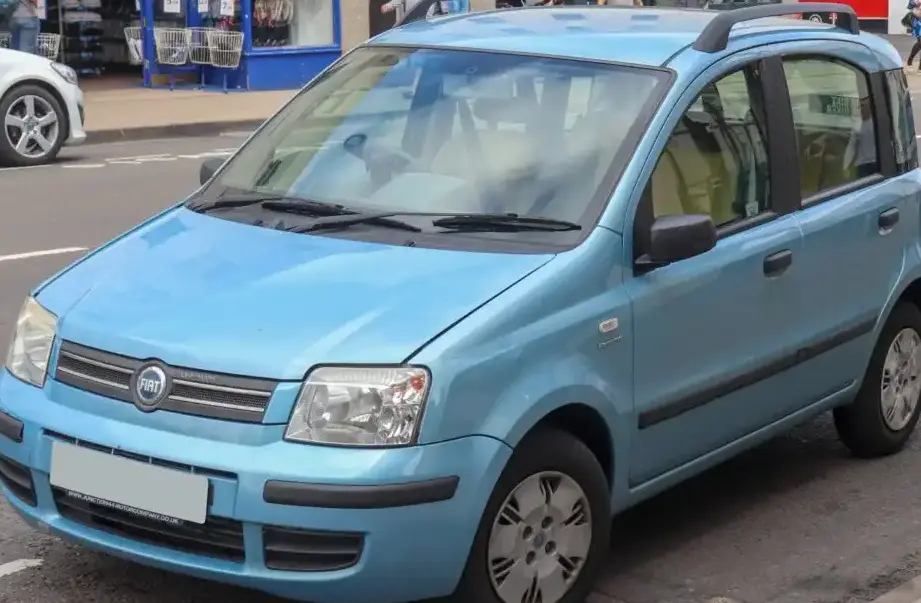
The Fiat Panda II (169) 1.4 8V Natural Power, produced from September 2010 to January 2012, represents a unique offering within the second generation Panda lineup. This variant combined a 1.4-liter, eight-valve gasoline engine with a dedicated Compressed Natural Gas (CNG) system, marketed as “Natural Power.” Positioned as an economical and environmentally conscious choice, it aimed to appeal to buyers seeking lower running costs and reduced emissions. The 169 series Panda, launched in 2003, was a significant update to the iconic original, offering improved safety, comfort, and practicality while retaining the Panda’s core values of affordability and functionality. This specific 1.4 Natural Power model occupied a mid-range position within the Panda II range, offering a balance between performance and economy.
Technical Specifications
| Brand | Fiat |
| Model | Panda |
| Generation | Panda II (169) |
| Type (Engine) | 1.4 8V (77/69 Hp) Natural Power |
| Start of production | September, 2010 |
| End of production | January, 2012 |
| Powertrain Architecture | Internal Combustion engine |
| Body type | Hatchback |
| Seats | 5 |
| Doors | 5 |
| Fuel consumption (economy) – urban | 7.7 l/100 km (30.5 US mpg, 36.7 UK mpg, 13 km/l) |
| Fuel consumption (economy) – urban (CNG) | 7.6 kg/100 km |
| Fuel consumption (economy) – extra urban | 5.0 l/100 km (47 US mpg, 56.5 UK mpg, 20 km/l) |
| Fuel consumption (economy) – extra urban (CNG) | 5.0 kg/100 km |
| Fuel consumption (economy) – combined | 6.0 l/100 km (39.2 US mpg, 47.1 UK mpg, 16.7 km/l) |
| Fuel consumption (economy) – combined (CNG) | 6.0 kg/100 km |
| CO2 emissions | 139 g/km |
| CO2 emissions (CNG) | 107 g/km |
| Fuel Type | Petrol / CNG |
| Acceleration 0 – 100 km/h | 12.8 sec |
| Acceleration 0 – 62 mph | 12.8 sec |
| Acceleration 0 – 100 km/h (CNG) | 14.9 sec |
| Acceleration 0 – 60 mph (Calculated) | 12.2 sec |
| Maximum speed | 163 km/h (101.28 mph) |
| Maximum speed (CNG) | 157 km/h |
| Emission standard | Euro 5 |
| Weight-to-power ratio | 13.6 kg/Hp, 73.3 Hp/tonne |
| Weight-to-torque ratio | 9.1 kg/Nm, 109.5 Nm/tonne |
| Power | 77 Hp @ 6000 rpm |
| Power per litre | 56.3 Hp/l |
| Power (CNG) | 69 Hp @ 6000 rpm |
| Power per litre (CNG) | 50.4 Hp/l |
| Torque | 115 Nm @ 3000 rpm (84.82 lb.-ft. @ 3000 rpm) |
| Torque (CNG) | 104 Nm @ 3000 rpm |
| Engine layout | Front, Transverse |
| Engine Model/Code | 350A1000 |
| Engine displacement | 1368 cm3 (83.48 cu. in.) |
| Number of cylinders | 4 |
| Engine configuration | Inline |
| Cylinder Bore | 72 mm (2.83 in.) |
| Piston Stroke | 84 mm (3.31 in.) |
| Compression ratio | 11.1:1 |
| Number of valves per cylinder | 2 |
| Fuel injection system | Multi-port manifold injection |
| Engine aspiration | Naturally aspirated |
| Valvetrain | SOHC |
| Engine oil capacity | 3.5 l (3.7 US qt, 3.08 UK qt) |
| Coolant | 4.6 l (4.86 US qt, 4.05 UK qt) |
| Kerb Weight | 1050 kg (2314.85 lbs.) |
| Max. weight | 1425 kg (3141.59 lbs.) |
| Max load | 375 kg (826.73 lbs.) |
| Trunk (boot) space – minimum | 190 l (6.71 cu. ft.) |
| Trunk (boot) space – maximum | 840 l (29.66 cu. ft.) |
| Fuel tank capacity | 30 l (7.93 US gal, 6.6 UK gal) |
| CNG cylinder capacity | 72 kg |
| Max. roof load | 50 kg (110.23 lbs.) |
| Permitted towbar download | 60 kg (132.28 lbs.) |
| Length | 3538 mm (139.29 in.) |
| Width | 1589 mm (62.56 in.) |
| Height | 1614 mm (63.54 in.) |
| Wheelbase | 2299 mm (90.51 in.) |
| Front track | 1366 mm (53.78 in.) |
| Rear track | 1358 mm (53.46 in.) |
| Minimum turning circle | 9.6 m (31.5 ft.) |
| Drivetrain Architecture | ICE, Front wheel drive |
| Drive wheel | Front wheel drive |
| Number of gears | 5 gears, manual transmission |
| Front suspension | Independent, McPherson with coil spring and anti-roll bar |
| Rear suspension | Spring Strut, Semi-dependent beam with stabilizer |
| Front brakes | Ventilated discs, 240 mm |
| Rear brakes | Drum, 203 mm |
| Assisting systems | ABS |
| Steering type | Steering rack and pinion |
| Power steering | Electric |
| Tires size | 165/70 R14 |
| Wheel rims size | 14 |
Powertrain & Engine Architecture
The heart of the Panda II 1.4 8V Natural Power is the Fiat 350A1000 engine, a 1368cc inline-four cylinder unit. This engine utilizes a single overhead camshaft (SOHC) design and two valves per cylinder. The gasoline engine produces 77 horsepower at 6000 rpm and 115 Nm (84.82 lb-ft) of torque at 3000 rpm. When running on CNG, the output drops slightly to 69 horsepower at the same engine speed, with torque reduced to 104 Nm. The engine employs multi-point fuel injection for gasoline operation. The CNG system consists of a high-pressure cylinder (72 kg capacity) typically located in the spare wheel well, a pressure regulator, and a dedicated fuel injector for CNG delivery. The engine control unit (ECU) automatically switches between gasoline and CNG operation, depending on fuel availability and driver demand.
Driving Characteristics
The 1.4 8V Natural Power Panda offers modest performance. Acceleration from 0 to 100 km/h (0-62 mph) takes approximately 12.8 seconds on gasoline, increasing to 14.9 seconds on CNG. The five-speed manual transmission is geared for economy rather than outright speed. The power delivery is relatively linear, but the engine feels strained at higher RPMs. On CNG, the engine exhibits slightly reduced power and responsiveness. However, the lower fuel costs associated with CNG operation often outweigh the performance compromise for many drivers. The Panda’s light weight contributes to a feeling of agility in city driving, despite the limited horsepower.
Equipment & Trim Levels
The 1.4 8V Natural Power trim typically included basic features such as power steering, central locking, and front airbags. Interior upholstery was typically cloth, with a functional, if somewhat basic, dashboard layout. Optional extras included air conditioning, electric windows, and a radio/CD player. The Natural Power variant didn’t receive any unique trim elements beyond badging identifying its bi-fuel capability. The focus was on providing a cost-effective and environmentally friendly transportation solution, rather than luxury or extensive features.
Chassis & Braking
The Panda II utilizes a front-wheel-drive layout with an independent McPherson strut suspension at the front and a semi-independent twist-beam suspension at the rear. The front suspension incorporates an anti-roll bar to reduce body roll. Braking is provided by ventilated discs at the front and drum brakes at the rear. The braking system is assisted by ABS (Anti-lock Braking System). The suspension setup is tuned for comfort and ride quality, prioritizing everyday usability over sporty handling. The relatively light weight of the vehicle helps to compensate for the modest braking performance.
Market Reception & Comparison
The Panda II 1.4 8V Natural Power was generally well-received by critics as an affordable and economical city car. Its dual-fuel capability was a major selling point, particularly in countries with favorable CNG infrastructure and pricing. Compared to the standard 1.2-liter Panda, the 1.4 offered slightly more power and performance, while the CNG option provided significantly lower running costs. However, the CNG system did reduce luggage space due to the placement of the fuel cylinder. Compared to other bi-fuel vehicles, the Panda offered a relatively simple and reliable CNG conversion.
Legacy
The Fiat Panda II 1.4 8V Natural Power remains a popular choice in the used car market, particularly for buyers seeking an economical and environmentally friendly vehicle. The 350A1000 engine is known for its reliability, although regular maintenance is essential, especially for the CNG system. The availability of CNG refueling stations is a key consideration for potential buyers. While not a performance car, the Panda II 1.4 Natural Power offers a practical and affordable solution for urban commuting and short trips, and its bi-fuel capability continues to appeal to cost-conscious drivers.