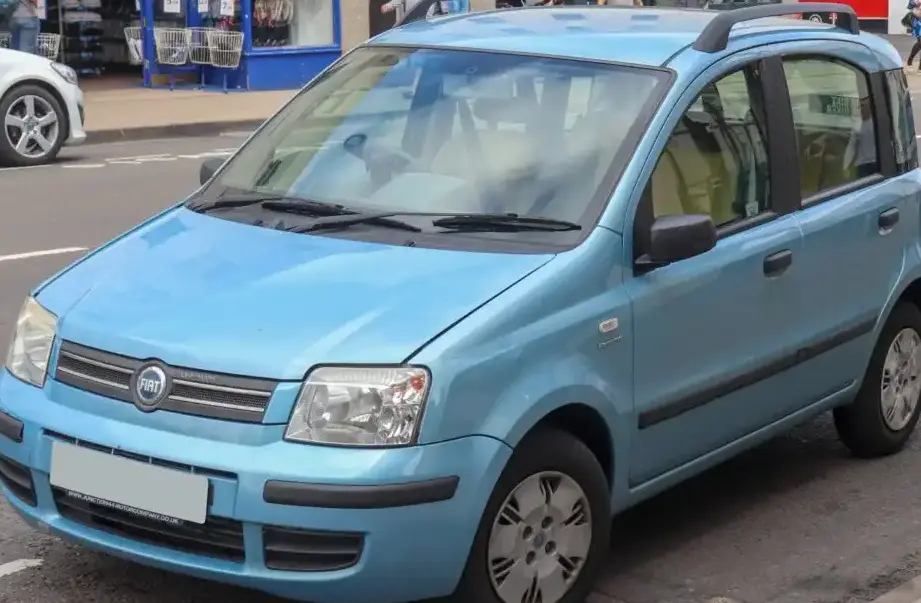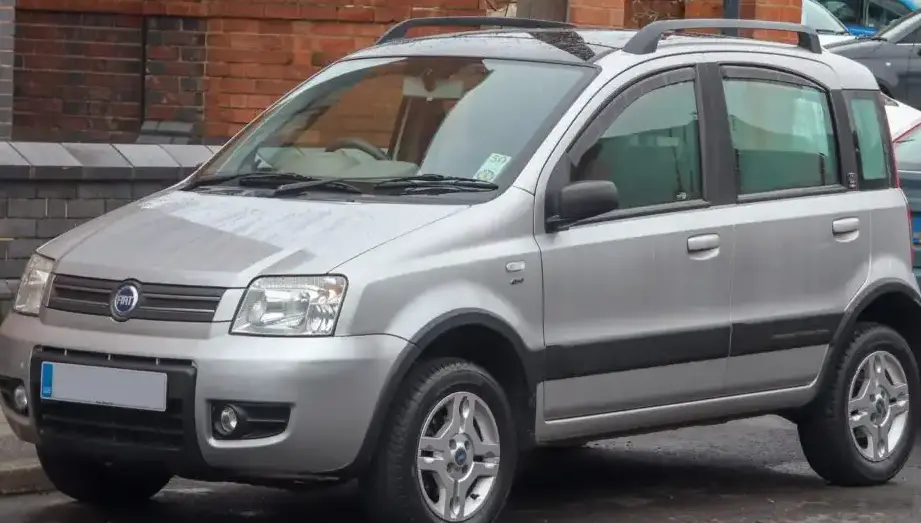
The Fiat Panda II 4×4 1.2 8V (69 hp) represents a unique and capable variant within the second generation of Fiat’s iconic city car. Produced from September 2010 to January 2012, this model combined the practicality and affordability of the Panda II with a surprisingly effective four-wheel-drive system. It occupied a niche position in the Panda lineup, offering all-weather capability for buyers who needed more than a standard front-wheel-drive hatchback. This version was particularly popular in regions with challenging terrain or inclement weather, offering a low-cost entry point into the 4×4 market.
Technical Specifications
| Brand | Fiat |
| Model | Panda |
| Generation | Panda II 4×4 |
| Type (Engine) | 1.2 8V (69 Hp) 4×4 |
| Start of production | September, 2010 |
| End of production | January, 2012 |
| Powertrain Architecture | Internal Combustion engine |
| Body type | Hatchback |
| Seats | 5 |
| Doors | 5 |
| Fuel consumption (urban) | 7.3 l/100 km (32.2 US mpg, 38.7 UK mpg, 13.7 km/l) |
| Fuel consumption (extra urban) | 5.3 l/100 km (44.4 US mpg, 53.3 UK mpg, 18.9 km/l) |
| Fuel consumption (combined) | 6.0 l/100 km (39.2 US mpg, 47.1 UK mpg, 16.7 km/l) |
| CO2 emissions | 139 g/km |
| Fuel Type | Petrol (Gasoline) |
| Acceleration 0 – 100 km/h | 15.3 sec |
| Acceleration 0 – 62 mph | 15.3 sec |
| Acceleration 0 – 60 mph | 14.5 sec |
| Maximum speed | 148 km/h (91.96 mph) |
| Emission standard | Euro 5 |
| Weight-to-power ratio | 14 kg/Hp, 71.5 Hp/tonne |
| Weight-to-torque ratio | 9.5 kg/Nm, 105.7 Nm/tonne |
| Power | 69 Hp @ 5500 rpm |
| Power per litre | 55.6 Hp/l |
| Torque | 102 Nm @ 3000 rpm (75.23 lb.-ft. @ 3000 rpm) |
| Engine layout | Front, Transverse |
| Engine Model/Code | 169A4000 |
| Engine displacement | 1242 cm3 (75.79 cu. in.) |
| Number of cylinders | 4 |
| Engine configuration | Inline |
| Cylinder Bore | 70.8 mm (2.79 in.) |
| Piston Stroke | 78.9 mm (3.11 in.) |
| Compression ratio | 11.1:1 |
| Number of valves per cylinder | 2 |
| Fuel injection system | Multi-port manifold injection |
| Engine aspiration | Naturally aspirated engine |
| Valvetrain | SOHC |
| Engine oil capacity | 2.8 l (2.96 US qt | 2.46 UK qt) |
| Coolant | 4.6 l (4.86 US qt | 4.05 UK qt) |
| Kerb Weight | 965 kg (2127.46 lbs.) |
| Max. weight | 1415 kg (3119.54 lbs.) |
| Max load | 450 kg (992.08 lbs.) |
| Trunk (boot) space – minimum | 200 l (7.06 cu. ft.) |
| Trunk (boot) space – maximum | 855 l (30.19 cu. ft.) |
| Fuel tank capacity | 35 l (9.25 US gal | 7.7 UK gal) |
| Max. roof load | 50 kg (110.23 lbs.) |
| Permitted trailer load with brakes (12%) | 800 kg (1763.7 lbs.) |
| Permitted trailer load without brakes | 400 kg (881.85 lbs.) |
| Permitted towbar download | 60 kg (132.28 lbs.) |
| Length | 3574 mm (140.71 in.) |
| Width | 1605 mm (63.19 in.) |
| Height | 1632 mm (64.25 in.) |
| Wheelbase | 2305 mm (90.75 in.) |
| Front track | 1366 mm (53.78 in.) |
| Rear (Back) track | 1366 mm (53.78 in.) |
| Ride height (ground clearance) | 160 mm (6.3 in.) |
| Minimum turning circle | 9.6 m (31.5 ft.) |
| Approach angle | 24° |
| Departure angle | 42° |
| Ramp-over angle | 24° |
| Wading depth | 400 mm (15.75 in.) |
| Drivetrain Architecture | The Internal combustion engine (ICE) drives the front wheels permanently, and the rear wheels are driven through an electrically or mechanically operated clutch if necessary. |
| Drive wheel | All wheel drive (4×4) |
| Number of gears and type of gearbox | 5 gears, manual transmission |
| Front suspension | Independent, type McPherson with coil spring and anti-roll bar |
| Rear suspension | Spring Strut, Semi-dependent beam with stabilizer lateral stability |
| Front brakes | Ventilated discs, 240 mm |
| Rear brakes | Drum, 203 mm |
| Assisting systems | ABS (Anti-lock braking system) |
| Steering type | Steering rack and pinion |
| Power steering | Electric Steering |
| Tires size | 185/65 R14; 165/70 R14 |
| Wheel rims size | 14 |
INTRODUCTION
The Fiat Panda II 4×4 1.2 8V (69 hp) was a short-lived but significant variant of the second-generation Panda (2003-2012). Built on the 169 platform, shared with the Fiat 500, the Panda II aimed to modernize the original Panda’s utilitarian appeal. The 4×4 version, introduced in 2010, added a layer of capability that broadened the car’s appeal, particularly in mountainous regions of Europe and beyond. This model offered a unique combination of affordability, compact size, and all-wheel-drive traction, making it a popular choice for those needing a versatile and economical vehicle.
Powertrain & Engine Architecture
At the heart of the Panda II 4×4 1.2 8V is the 169A4000 engine, a 1.2-liter inline-four cylinder petrol engine. This engine utilizes a single overhead camshaft (SOHC) valvetrain with two valves per cylinder. Fuel delivery is managed by a multi-port fuel injection system. The engine produces 69 horsepower at 5500 rpm and 102 Nm (75.23 lb-ft) of torque at 3000 rpm. The engine’s relatively simple design prioritized reliability and fuel efficiency over outright performance. The 4×4 system itself is a torque-on-demand setup. Under normal driving conditions, the engine’s power is directed to the front wheels. When wheel slip is detected, an electronically controlled clutch engages the rear wheels, providing all-wheel drive. This system is not designed for serious off-roading, but it provides enhanced traction on slippery surfaces like snow, mud, and gravel. The transmission is a standard 5-speed manual gearbox.
Driving Characteristics
The Panda II 4×4 1.2 8V is not a performance car. With only 69 horsepower, acceleration is leisurely, taking around 15.3 seconds to reach 62 mph. However, the 4×4 system significantly improves traction, particularly in adverse conditions. The gear ratios are tuned for economy and usability rather than outright speed. The car feels stable and predictable, even on loose surfaces. Compared to the front-wheel-drive Panda models, the 4×4 offers noticeably improved grip and confidence in slippery conditions. It’s also slower and less fuel-efficient due to the added weight and complexity of the 4×4 system. Compared to higher-powered Panda variants, the 1.2 8V feels underpowered, especially when fully loaded.
Equipment & Trim Levels
The Panda II 4×4 1.2 8V was typically equipped with a relatively basic level of standard features. This included power steering, ABS brakes, and a driver’s airbag. Interior appointments were functional and durable, with hard-wearing plastics and cloth upholstery. Air conditioning and central locking were often optional extras. The dashboard layout is simple and straightforward, prioritizing usability over aesthetics. Higher trim levels might have included features like electric windows and a radio/CD player. The focus was on providing a practical and affordable vehicle, rather than a luxurious one.
Chassis & Braking
The Panda II 4×4 utilizes a McPherson strut front suspension with a coil spring and anti-roll bar. The rear suspension is a semi-dependent beam with a stabilizer bar. This setup provides a reasonable balance between ride comfort and handling. The front brakes are ventilated discs, while the rear brakes are drums. This configuration was typical for cars in this price range and weight class. The ABS system helps to maintain steering control during emergency braking. The relatively short wheelbase and narrow track contribute to the car’s nimble handling, but also mean it can feel susceptible to crosswinds.
Market Reception & Comparison
The Panda II 4×4 1.2 8V was generally well-received by critics for its affordability and surprising capability. It was praised for its ability to tackle challenging conditions, making it a popular choice in mountainous regions. However, it was also criticized for its lack of power and basic interior. Compared to other small 4x4s of the time, such as the Suzuki Ignis, the Panda 4×4 offered a more affordable entry point, but with less refinement and performance. Fuel economy was respectable for a 4×4, but slightly lower than the front-wheel-drive Panda models. Reliability was generally good, thanks to the engine’s simple design.
Legacy
The Fiat Panda II 4×4 1.2 8V remains a popular choice in the used car market, particularly for those seeking an affordable and capable all-wheel-drive vehicle. The 169A4000 engine is known for its reliability, although regular maintenance is essential. Common issues include oil leaks and wear on the timing chain. The 4×4 system itself is generally robust, but the clutch that engages the rear wheels can occasionally require replacement. The Panda II 4×4 represents a unique and practical vehicle that continues to appeal to buyers looking for a versatile and economical solution to all-weather driving.