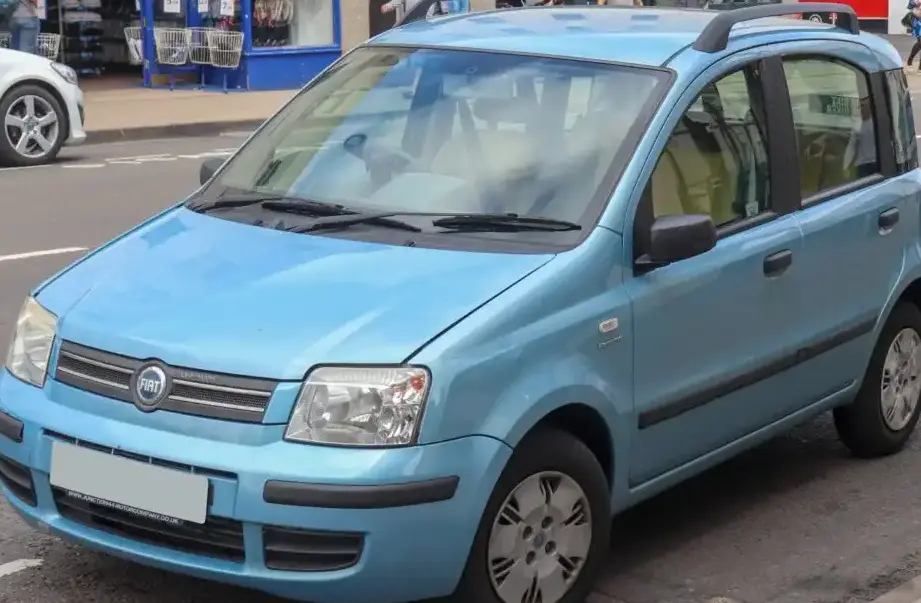
The Fiat Panda II 4×4 1.3 16V Multijet, producing 70 horsepower, was a niche but significant variant of the second-generation Fiat Panda (2003-2010). Introduced in 2004, this model combined the practicality and affordability of the Panda with a surprisingly capable four-wheel-drive system, making it a popular choice in regions with challenging weather conditions or rough terrain, particularly in Europe. It represented a continuation of the Panda’s long-standing tradition of offering accessible all-wheel drive, dating back to the original Panda 4×4 of the 1980s. This version sat in the mid-range of the Panda II lineup, offering a balance between cost, fuel efficiency, and off-road capability.
Technical Specifications
| Brand | Fiat |
| Model | Panda |
| Generation | Panda II 4×4 |
| Type (Engine) | 1.3 16V Multijet (70 Hp) 4×4 |
| Start of production | 2004 |
| End of production | 2010 |
| Powertrain Architecture | Internal Combustion engine |
| Body type | Hatchback |
| Seats | 5 |
| Doors | 5 |
| Fuel Type | Diesel |
| Acceleration 0 – 100 km/h | 16 sec |
| Acceleration 0 – 62 mph | 16 sec |
| Acceleration 0 – 60 mph | 15.2 sec |
| Maximum speed | 155 km/h (96.31 mph) |
| Power | 70 Hp @ 4000 rpm |
| Power per litre | 56 Hp/l |
| Torque | 180 Nm @ 1750 rpm (132.76 lb.-ft. @ 1750 rpm) |
| Engine layout | Front, Transverse |
| Engine Model/Code | 188A8000 |
| Engine displacement | 1251 cm3 (76.34 cu. in.) |
| Number of cylinders | 4 |
| Engine configuration | Inline |
| Cylinder Bore | 69.6 mm (2.74 in.) |
| Piston Stroke | 82 mm (3.23 in.) |
| Compression ratio | 18:1 |
| Number of valves per cylinder | 4 |
| Fuel injection system | Diesel Commonrail |
| Engine aspiration | Turbocharger, Intercooler |
| Valvetrain | DOHC |
| Engine oil capacity | 2.8 l (2.96 US qt | 2.46 UK qt) |
| Coolant | 6.5 l (6.87 US qt | 5.72 UK qt) |
| Trunk (boot) space – minimum | 206 l (7.27 cu. ft.) |
| Trunk (boot) space – maximum | 775 l (27.37 cu. ft.) |
| Fuel tank capacity | 35 l (9.25 US gal | 7.7 UK gal) |
| Length | 3538 mm (139.29 in.) |
| Width | 1578 mm (62.13 in.) |
| Height | 1540 mm (60.63 in.) |
| Wheelbase | 2299 mm (90.51 in.) |
| Front track | 1366 mm (53.78 in.) |
| Rear (Back) track | 1357 mm (53.43 in.) |
| Minimum turning circle | 9.1 m (29.86 ft.) |
| Drive wheel | All wheel drive (4×4) |
| Number of gears and type of gearbox | 5 gears, manual transmission |
| Front suspension | Spring Strut |
| Rear suspension | Torsion |
| Front brakes | Disc |
| Rear brakes | Disc |
| Assisting systems | ABS (Anti-lock braking system) |
| Steering type | Steering rack and pinion |
| Tires size | 155/80 R13 |
| Wheel rims size | 5J x 13 |
Powertrain & Engine Architecture
The heart of the Panda II 4×4 1.3 Multijet was the 188A8000 engine, a 1.3-liter inline-four cylinder diesel. This engine was a member of Fiat’s second-generation Multijet family, known for its common-rail direct injection and 16 valves (four per cylinder). The Multijet system allowed for multiple fuel injections per combustion cycle, resulting in smoother operation, reduced noise, and improved fuel efficiency. A turbocharger with an intercooler was employed to boost power output to 70 horsepower and 180 Nm (133 lb-ft) of torque. The engine featured a double overhead camshaft (DOHC) valvetrain. The five-speed manual transmission was the only gearbox option available with this engine and 4×4 configuration. The transmission was chosen for its durability and suitability for the vehicle’s intended use.
Driving Characteristics
The 1.3 Multijet engine, while not exceptionally powerful, provided adequate performance for the Panda II 4×4. Acceleration from 0 to 60 mph took around 15.2 seconds, and the top speed was approximately 155 km/h (96 mph). The engine’s torque peak at 1750 rpm meant that it felt relatively responsive in everyday driving situations, particularly when navigating hilly terrain. Compared to the base 1.2-liter petrol engine, the Multijet offered significantly more torque, making it easier to climb steep inclines and tow light loads. However, it lacked the outright punch of higher-powered Panda variants. The four-wheel-drive system, a viscous coupling system, automatically engaged the rear wheels when front wheel slip was detected, providing enhanced traction on slippery surfaces. The system wasn’t designed for serious off-roading, but it was more than capable of handling snow, mud, and gravel roads.
Equipment & Trim Levels
The Panda II 4×4 1.3 Multijet typically came with a relatively basic level of equipment, reflecting its affordable positioning. Standard features included power steering, central locking, and ABS brakes. Interior upholstery was typically cloth, and the dashboard featured a simple, functional design. Optional extras included air conditioning, electric windows, and a radio/CD player. The “4×4” badge was prominently displayed on the rear of the vehicle, and the interior often featured unique trim details to differentiate it from other Panda models. The trim level was generally considered a step up from the base “Active” trim, offering a slightly more refined interior and additional convenience features.
Chassis & Braking
The Panda II 4×4 utilized a relatively simple chassis design, featuring a front strut suspension and a rear torsion beam suspension. This setup provided a comfortable ride on paved roads while still offering sufficient off-road capability. The front brakes were ventilated discs, while the rear brakes were solid discs. The ABS system helped to maintain steering control during emergency braking situations. The vehicle’s relatively light weight (around 1,100 kg or 2,425 lbs) contributed to its nimble handling and fuel efficiency. The 4×4 system added some weight compared to the front-wheel-drive models, but the benefits in terms of traction outweighed the slight performance penalty.
Market Reception & Comparison
The Panda II 4×4 1.3 Multijet was generally well-received by automotive critics, who praised its affordability, fuel efficiency, and surprisingly capable four-wheel-drive system. It was often compared to other small, all-wheel-drive vehicles, such as the Suzuki Ignis and the Dacia Sandero Stepway. The Panda 4×4 offered a more compact and maneuverable package than many of its competitors, making it ideal for navigating narrow city streets and winding country roads. Fuel economy was a strong point, with the Multijet engine achieving around 5.3 liters per 100 kilometers (44 mpg) in combined driving. Reliability was generally good, although some owners reported issues with the turbocharger and the common-rail injection system.
Legacy
The Fiat Panda II 4×4 1.3 Multijet has become a popular choice among used car buyers looking for an affordable and practical all-wheel-drive vehicle. Its simple mechanical design and readily available parts make it relatively easy to maintain. While not a performance car, it remains a capable and reliable option for those who need a vehicle that can handle a variety of road conditions. The Panda II 4×4 continues the legacy of the original Panda 4×4, demonstrating that all-wheel drive doesn’t have to be expensive or complicated. Today, well-maintained examples are sought after by enthusiasts and those living in areas prone to inclement weather.