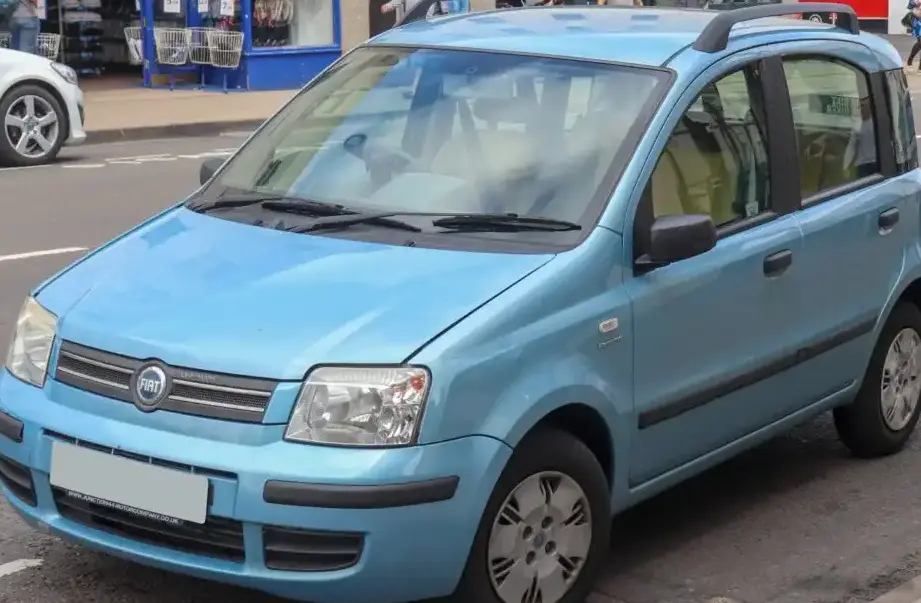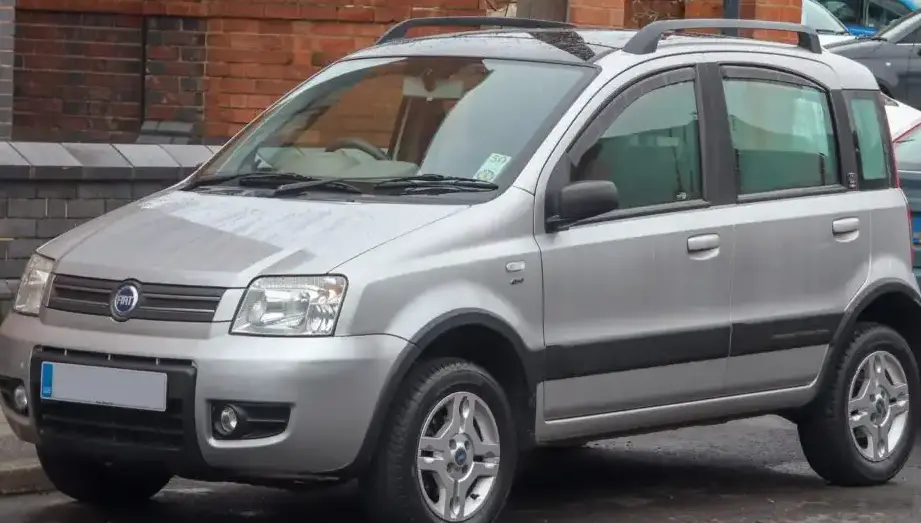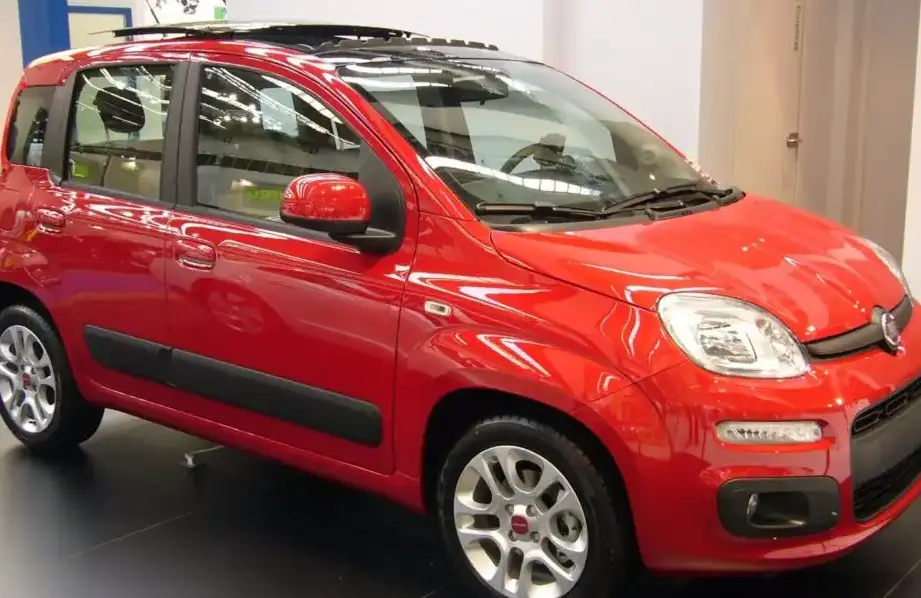
The Fiat Panda III (319) 1.2 Easy Power, produced from 2011 to 2018, represents an entry-level offering within the broader Panda III generation (introduced in 2003). Positioned as a budget-friendly city car, it aimed to provide affordable transportation with reasonable efficiency. This variant, powered by the 169A4.000 1.2-liter engine and typically paired with a five-speed manual transmission, was a mainstay in many European markets, particularly Italy, where the Panda has a long and storied history. It served as the gateway to the Panda lineup, appealing to first-time car buyers, urban commuters, and those seeking a simple, economical vehicle.
Technical Specifications
| Brand | Fiat |
| Model | Panda |
| Generation | Panda III (319) |
| Type (Engine) | 1.2 EASY POWER (69 Hp) |
| Start of production | 2011 |
| End of production | 2018 |
| Powertrain Architecture | Internal Combustion engine |
| Body type | Hatchback |
| Seats | 5 |
| Doors | 5 |
| Fuel consumption (urban) | 6.7 l/100 km (35.1 US mpg, 42.2 UK mpg, 14.9 km/l) |
| Fuel consumption (extra urban) | 4.3 l/100 km (54.7 US mpg, 65.7 UK mpg, 23.3 km/l) |
| Fuel consumption (combined) | 5.2 l/100 km (45.2 US mpg, 54.3 UK mpg, 19.2 km/l) |
| Fuel Type | Petrol (Gasoline) |
| Acceleration 0 – 100 km/h | 14.2 sec |
| Acceleration 0 – 62 mph | 14.2 sec |
| Acceleration 0 – 60 mph | 13.5 sec |
| Maximum speed | 164 km/h (101.9 mph) |
| Emission standard | Euro 5 |
| Weight-to-power ratio | 14.2 kg/Hp, 70.4 Hp/tonne |
| Weight-to-torque ratio | 9.6 kg/Nm, 104.1 Nm/tonne |
| Power | 69 Hp @ 5500 rpm |
| Power per litre | 55.6 Hp/l |
| Torque | 102 Nm @ 3000 rpm (75.23 lb.-ft. @ 3000 rpm) |
| Engine layout | Front, Transverse |
| Engine Model/Code | 169A4000 |
| Engine displacement | 1242 cm3 (75.79 cu. in.) |
| Number of cylinders | 4 |
| Engine configuration | Inline |
| Fuel injection system | Multi-point injection |
| Engine oil capacity | 2.8 l (2.96 US qt | 2.46 UK qt) |
| Coolant capacity | 4.6 l (4.86 US qt | 4.05 UK qt) |
| Kerb Weight | 980 kg (2160.53 lbs) |
| Trunk (boot) space – minimum | 200 l (7.06 cu. ft.) |
| Fuel tank capacity | 37 l (9.77 US gal | 8.14 UK gal) |
| Length | 3653 mm (143.82 in) |
| Width | 1643 mm (64.69 in) |
| Height | 1551 mm (61.06 in) |
| Wheelbase | 2300 mm (90.55 in) |
| Front track | 1522 mm (59.92 in) |
| Rear track | 1519 mm (59.8 in) |
| Minimum turning circle | 9.3 m (30.51 ft) |
| Drivetrain Architecture | Front wheel drive |
| Number of gears and type of gearbox | 5 gears, manual transmission |
| Front suspension | Independent type McPherson |
| Rear suspension | Torsion beam |
| Front brakes | Disc |
| Rear brakes | Drum |
| Assisting systems | ABS (Anti-lock braking system) |
| Steering type | Steering rack and pinion |
| Power steering | Electric Steering |
| Tires size | 175/65 R14 82T; 185/55 R15 82T |
| Wheel rims size | 14; 15 |
Introduction
The Fiat Panda III 1.2 Easy Power, launched in 2011, was a crucial model for Fiat, particularly in Europe. Building on the success of its predecessors, the Panda III aimed to offer a modern, practical, and affordable vehicle for urban environments. The 1.2 Easy Power variant served as the entry point to the range, offering a balance between fuel economy and usability. It was designed to appeal to a broad demographic, from young drivers to families needing a second car for city duties. The Panda III platform (319) was a significant departure from earlier Pandas, offering improved safety, comfort, and refinement while retaining the core values of simplicity and affordability.
Powertrain & Engine Architecture
At the heart of the 1.2 Easy Power is the Fiat 169A4.000 engine, a 1.2-liter inline-four cylinder petrol engine. This engine utilizes multi-point fuel injection, a relatively simple and reliable system. While not a high-performance unit, it was designed for efficiency and low running costs. The engine produces 69 horsepower at 5500 rpm and 102 Nm (75.23 lb-ft) of torque at 3000 rpm. The engine’s architecture is relatively straightforward, contributing to its ease of maintenance. The five-speed manual transmission was the most common pairing for this engine, offering a decent spread of gears for both city and highway driving. The gearbox is known for its light shift action, but isn’t particularly sporty in feel.
Driving Characteristics
The Panda 1.2 Easy Power’s driving experience is best described as functional and undemanding. Acceleration is modest, taking around 14.2 seconds to reach 62 mph (100 km/h). However, the engine provides sufficient power for navigating urban streets and maintaining reasonable speeds on highways. The gear ratios are tuned for economy, meaning the engine can feel strained when pushed hard. Compared to higher-output versions of the Panda III, such as the 1.4-liter models, the 1.2 Easy Power feels noticeably slower. The light steering and compact dimensions make it easy to maneuver in tight spaces, and the suspension provides a comfortable, if somewhat basic, ride. The manual transmission allows for a degree of driver engagement, but it’s not a particularly sporty setup.
Equipment & Trim Levels
The 1.2 Easy Power trim typically included basic but essential features. Standard equipment generally consisted of power steering, central locking, electric front windows, and an ABS anti-lock braking system. Interior upholstery was typically a durable cloth material. Optional extras included air conditioning, a radio with CD player, and alloy wheels. The dashboard layout was simple and functional, prioritizing ease of use over aesthetic flair. Higher trim levels, such as the Lounge or Eleganza, added features like air conditioning, upgraded interior trim, and alloy wheels as standard.
Chassis & Braking
The Panda III utilizes a front-wheel-drive layout with an independent McPherson strut suspension at the front and a torsion beam suspension at the rear. This setup provides a reasonable balance between ride comfort and handling. The front brakes are discs, while the rear brakes are drums – a cost-saving measure common in this segment. The steering is a rack and pinion system with electric power assistance, providing light and easy steering. The relatively lightweight construction of the Panda helps to offset the modest power output, resulting in acceptable braking performance.
Market Reception & Comparison
The Fiat Panda 1.2 Easy Power was generally well-received by critics as a practical and affordable city car. Its fuel economy was a major selling point, and its compact size made it ideal for navigating congested urban areas. Compared to other trims in the Panda lineup, the 1.2 Easy Power offered the lowest price point, making it accessible to a wider range of buyers. However, its performance was often criticized as being underwhelming, particularly when compared to more powerful alternatives. In terms of reliability, the 1.2 Easy Power engine is generally considered to be robust and dependable, although regular maintenance is essential.
Legacy
The Fiat Panda III 1.2 Easy Power remains a popular choice in the used car market, particularly for those seeking an affordable and economical vehicle. Its simple mechanicals and readily available parts make it relatively easy and inexpensive to maintain. While not a particularly exciting car to drive, it offers a practical and reliable solution for urban transportation. The 169A4.000 engine has proven to be a durable unit, and many examples are still on the road today with high mileage. The Panda III, and the 1.2 Easy Power variant in particular, cemented the Panda’s reputation as a dependable and affordable city car.