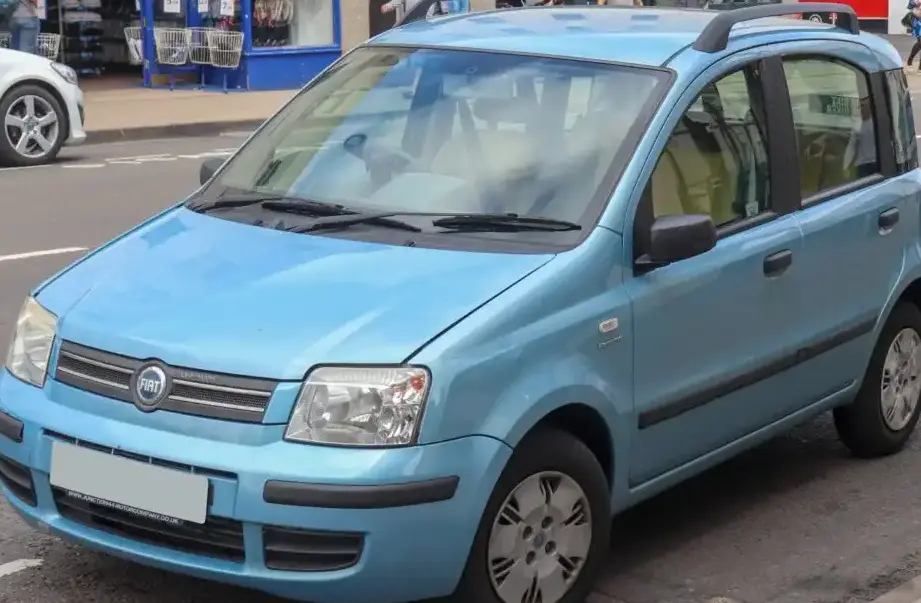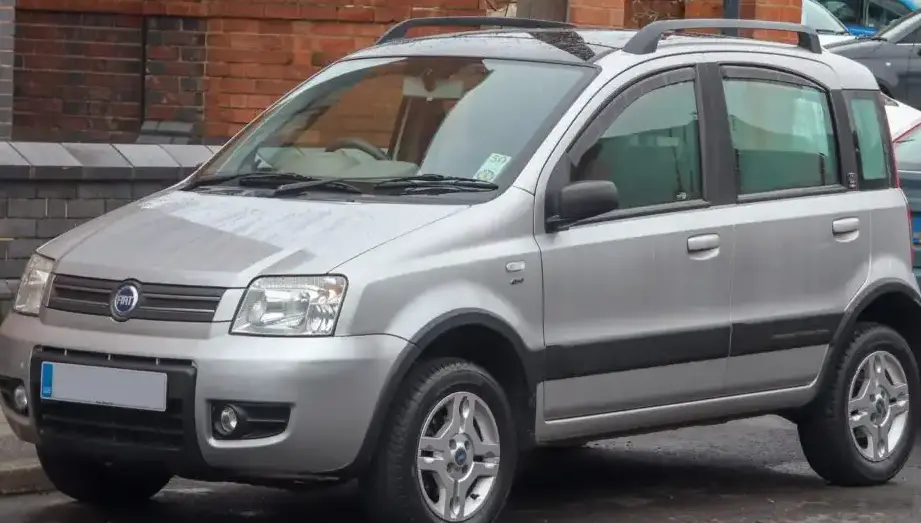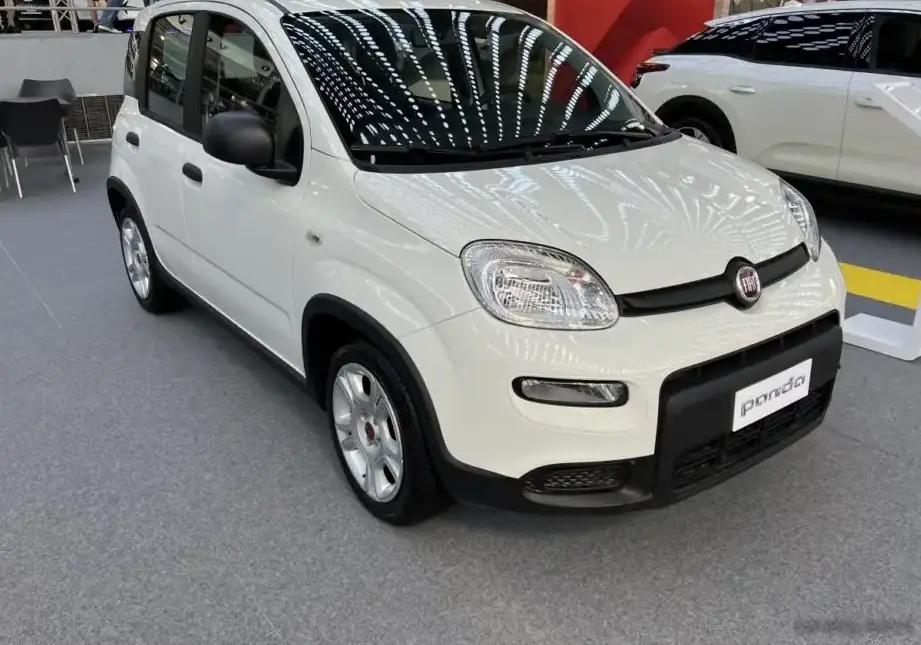
The Fiat Panda III (319 series), particularly the facelifted version introduced in October 2020, represents the third generation of Fiat’s iconic city car. The 1.0 GSE (70 Hp) Mild Hybrid variant was a key addition to the lineup, designed to offer improved fuel efficiency and reduced emissions while maintaining the Panda’s core values of affordability and practicality. This model year saw a significant push towards hybridization within the Panda range, aligning with increasingly stringent European emission standards. The 1.0 GSE Mild Hybrid occupied an entry-level position within the Panda III range, serving as a more economical alternative to the non-hybridized 1.2-liter engine options.
Technical Specifications
| Brand | Fiat |
| Model | Panda |
| Generation | Panda III (319, facelift 2020) |
| Type (Engine) | 1.0 GSE (70 Hp) Mild Hybrid |
| Start of production | October, 2020 |
| Powertrain Architecture | MHEV (Mild Hybrid Electric Vehicle) |
| Body type | Hatchback |
| Seats | 4-5 |
| Doors | 5 |
| Fuel consumption at Low speed (WLTP) | 4.9 l/100 km (48 US mpg, 57.6 UK mpg) |
| Fuel consumption at Medium speed (WLTP) | 4.5 l/100 km (52.3 US mpg, 62.8 UK mpg) |
| Fuel consumption at high speed (WLTP) | 4.1 l/100 km (57.4 US mpg, 68.9 UK mpg) |
| Fuel consumption at very high speed (WLTP) | 5.4 l/100 km (43.6 US mpg, 52.3 UK mpg) |
| Combined fuel consumption (WLTP) | 4.8 l/100 km (49 US mpg, 58.9 UK mpg) |
| CO2 emissions (WLTP) | 108 g/km |
| Fuel consumption (economy) – urban (NEDC) | 5.5 l/100 km (42.8 US mpg, 51.4 UK mpg) |
| Fuel consumption (economy) – extra urban (NEDC) | 3.2 l/100 km (73.5 US mpg, 88.3 UK mpg) |
| Fuel consumption (economy) – combined (NEDC) | 4.1 l/100 km (57.4 US mpg, 68.9 UK mpg) |
| CO2 emissions (NEDC) | 93 g/km |
| Fuel Type | Petrol (Gasoline) |
| Acceleration 0 – 100 km/h | 13.9 sec |
| Acceleration 0 – 62 mph | 13.9 sec |
| Acceleration 0 – 60 mph | 13.2 sec |
| Maximum speed | 164 km/h (101.9 mph) |
| Emission standard | Euro 6d |
| Weight-to-power ratio | 14 kg/Hp |
| Weight-to-torque ratio | 10.7 kg/Nm |
| Battery voltage | 12 V |
| Battery technology | Lithium-ion (Li-Ion) |
| Electric motor power | 5 Hp |
| Electric motor location | Front, Transverse |
| Power | 70 Hp @ 6000 rpm |
| Torque | 92 Nm @ 3500 rpm (67.86 lb.-ft. @ 3500 rpm) |
| Engine layout | Front, Transverse |
| Engine Model/Code | FireFly / 46341162 |
| Engine displacement | 999 cm3 (60.96 cu. in.) |
| Number of cylinders | 3 |
| Engine configuration | Inline |
| Cylinder Bore | 70 mm (2.76 in.) |
| Piston Stroke | 86.5 mm (3.41 in.) |
| Compression ratio | 12:1 |
| Number of valves per cylinder | 2 |
| Fuel injection system | Multi-port manifold injection |
| Engine aspiration | Naturally aspirated engine |
| Valvetrain | SOHC |
| Engine oil capacity | 2.5 l (2.64 US qt, 2.2 UK qt) |
| Coolant capacity | 4.4 l (4.65 US qt, 3.87 UK qt) |
| Kerb Weight | 980 kg (2160.53 lbs.) |
| Max. weight | 1420-1440 kg (3130.56 – 3174.66 lbs.) |
| Max load | 440-460 kg (970.03 – 1014.13 lbs.) |
| Trunk (boot) space – minimum | 225 l (7.95 cu. ft.) |
| Trunk (boot) space – maximum | 870 l (30.72 cu. ft.) |
| Fuel tank capacity | 38 l (10.04 US gal, 8.36 UK gal) |
| Length | 3653 mm (143.82 in.) |
| Width | 1643 mm (64.69 in.) |
| Width including mirrors | 1882 mm (74.09 in.) |
| Height | 1551 mm (61.06 in.) |
| Wheelbase | 2300 mm (90.55 in.) |
| Front track | 1409 mm (55.47 in.) |
| Rear (Back) track | 1407 mm (55.39 in.) |
| Front overhang | 747 mm (29.41 in.) |
| Rear overhang | 606 mm (23.86 in.) |
| Minimum turning circle | 9.3 m (30.51 ft.) |
| Drivetrain Architecture | ICE and electric motor drive front wheels |
| Drive wheel | Front wheel drive |
| Number of gears | 6 |
| Gearbox type | Manual transmission |
| Front suspension | Independent, McPherson with coil spring and anti-roll bar |
| Rear suspension | Transverse stabilizer, Torsion |
| Front brakes | Disc, 257 mm |
| Rear brakes | Drum, 203 mm |
| Assisting systems | ABS (Anti-lock braking system) |
| Steering type | Steering rack and pinion |
| Power steering | Electric |
| Tires size | 175/65 R14; 185/55 R15; 195/45 R16 |
| Wheel rims size | 5.5J x 14; 6J x 15; 6.5J x 16 |
INTRODUCTION
The Fiat Panda III, launched in 2012, continued the legacy of the original Panda as a small, affordable, and practical city car. The 2020 facelift brought updated styling, improved safety features, and the introduction of mild-hybrid technology to the range. The 1.0 GSE (70 Hp) Mild Hybrid variant was positioned as the most fuel-efficient non-electric option, appealing to buyers prioritizing economy and lower running costs. Built on the Fiat Small Wide platform, the Panda III aimed to provide a comfortable and functional driving experience within a compact footprint. This particular engine and transmission combination was aimed at buyers who preferred the convenience of a manual gearbox over the automated options available on some other trims.
Powertrain & Engine Architecture
The heart of the 1.0 GSE Mild Hybrid is the Fiat FireFly engine, specifically the 999cc three-cylinder unit designated as the 46341162. This engine utilizes a multi-point fuel injection system and a single overhead camshaft (SOHC) valvetrain. The mild-hybrid system incorporates a 48-volt electric motor and a lithium-ion battery, providing a small amount of electric assistance during acceleration and allowing for an extended start-stop system operation. The electric motor contributes an additional 5 horsepower. The engine’s design prioritizes efficiency, with a relatively high compression ratio of 12:1. The six-speed manual transmission was chosen for its efficiency and driver engagement, offering precise gear changes and contributing to the car’s overall fuel economy. The engine’s transverse mounting and compact dimensions contribute to the Panda’s space-efficient design.
Driving Characteristics
The 70 horsepower output of the 1.0 GSE engine, coupled with the six-speed manual transmission, provides adequate performance for urban driving and short highway trips. Acceleration from 0 to 60 mph takes approximately 13.2 seconds, and the top speed is around 101.9 mph. While not particularly sporty, the engine delivers a usable amount of torque at 3500 rpm (92 Nm or 67.86 lb-ft), making it reasonably responsive in everyday driving situations. The gear ratios are well-matched to the engine’s characteristics, allowing for smooth and efficient cruising. Compared to higher-powered Panda variants, such as those with the 1.2-liter engine, the 1.0 GSE Mild Hybrid feels less eager to accelerate, but it compensates with significantly improved fuel economy. The light weight of the Panda (around 980 kg or 2160.53 lbs) helps to mitigate the effects of the relatively modest power output.
Equipment & Trim Levels
The 1.0 GSE Mild Hybrid trim typically included standard features such as air conditioning, power steering, ABS brakes, and a basic audio system. Interior upholstery was typically cloth, with a functional and durable design. Higher trim levels offered options such as alloy wheels, a touchscreen infotainment system with Bluetooth connectivity, and parking sensors. The dashboard layout was simple and straightforward, prioritizing ease of use. Safety features included driver and passenger airbags, and electronic stability control. The Panda’s interior, while not luxurious, was designed to be practical and hard-wearing, reflecting its target audience of budget-conscious buyers.
Chassis & Braking
The Panda III utilizes a McPherson strut front suspension and a torsion beam rear suspension. This setup provides a comfortable ride quality, particularly on smooth roads. The front brakes are disc brakes, while the rear brakes are drum brakes, a cost-saving measure common in this segment. ABS (Anti-lock Braking System) is standard, enhancing braking performance and safety. The steering is electric power-assisted, providing light and precise control. The Panda’s relatively narrow track width contributes to its maneuverability in tight urban environments. Stabilizer bars are included to reduce body roll during cornering.
Market Reception & Comparison
The 1.0 GSE Mild Hybrid variant was generally well-received by critics for its fuel efficiency and low running costs. It was praised for its practicality and ease of driving in urban environments. Compared to the non-hybrid 1.2-liter Panda, the 1.0 GSE offered a noticeable improvement in fuel economy, albeit with a slight reduction in performance. The mild-hybrid system helped to reduce CO2 emissions, making it a more environmentally friendly option. The manual transmission was favored by drivers who preferred a more engaging driving experience. The Panda’s affordability and practicality made it a popular choice for first-time car buyers and city dwellers.
Legacy
The Fiat Panda III 1.0 GSE Mild Hybrid powertrain has proven to be relatively reliable, with few widespread mechanical issues reported. The FireFly engine is known for its durability and efficiency. In the used car market, these models are sought after for their low running costs and practicality. The mild-hybrid system, while not as sophisticated as full hybrid or electric powertrains, has contributed to the Panda’s longevity and relevance in a market increasingly focused on fuel efficiency and emissions reduction. The Panda continues to be a popular choice for those seeking an affordable and reliable city car.