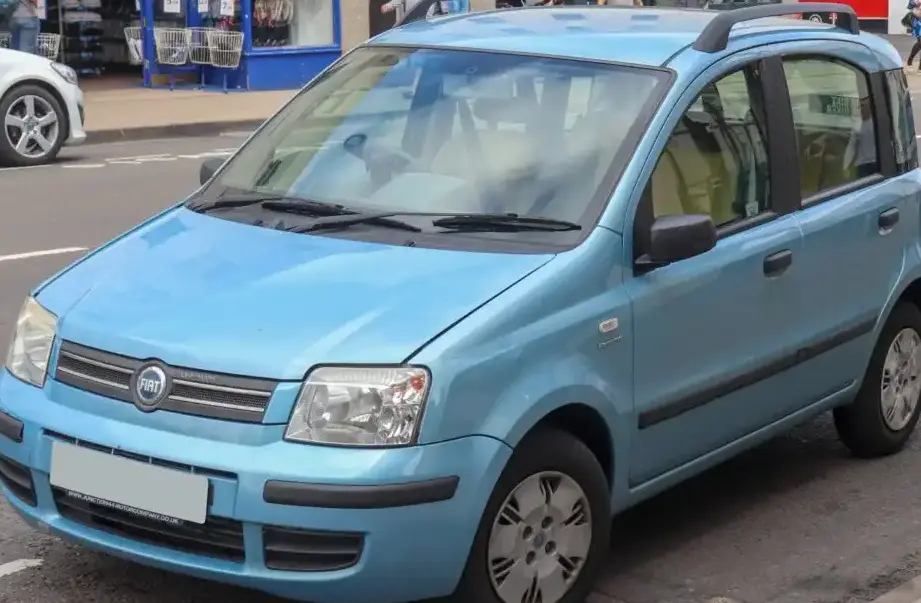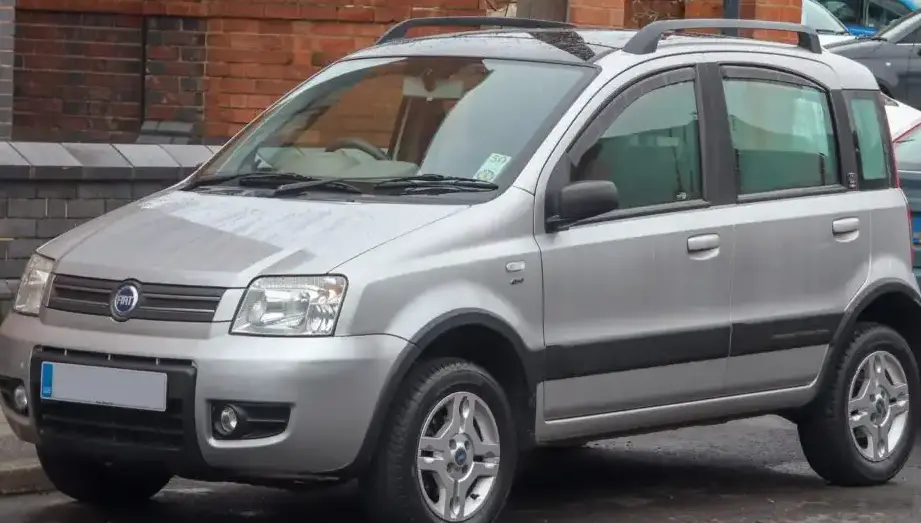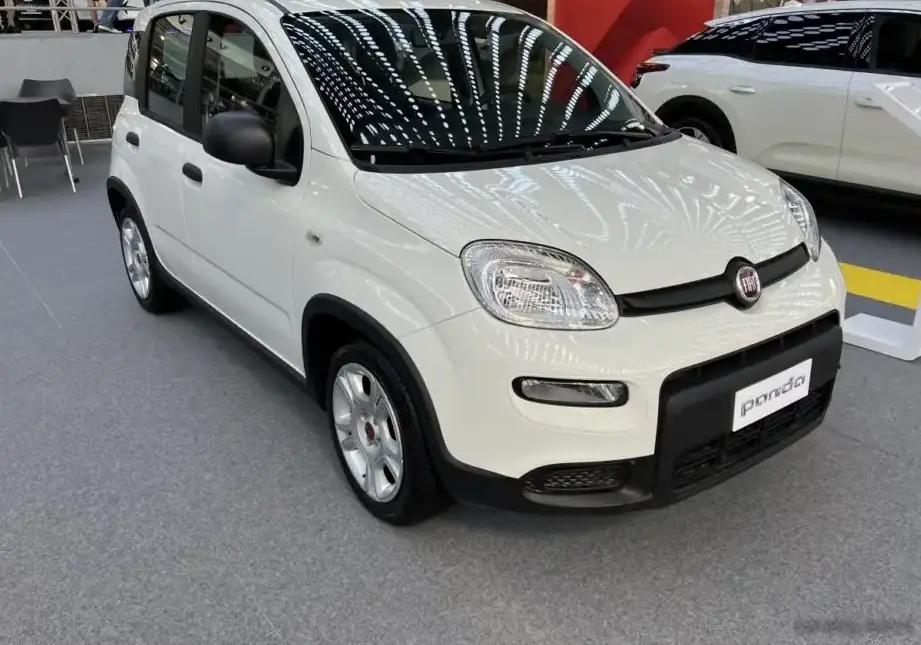
The Fiat Panda III (319 series), particularly the facelifted version introduced in October 2020, represents the continuation of a long and storied lineage of small, economical city cars from Fiat. The 1.2-liter (69 horsepower) LPG variant, launched with the 2020 refresh, aimed to provide an even more affordable and environmentally conscious option within the Panda lineup. This model occupied the entry-level position, appealing to buyers prioritizing fuel efficiency and low running costs. It built upon the foundation of the 319 platform, shared with other Fiat and Stellantis vehicles, offering a practical and compact solution for urban mobility in the European market.
Technical Specifications
| Brand | Fiat |
| Model | Panda |
| Generation | Panda III (319, facelift 2020) |
| Type (Engine) | 1.2 (69 Hp) LPG |
| Start of production | October, 2020 |
| Powertrain Architecture | Internal Combustion engine |
| Body type | Hatchback |
| Seats | 4-5 |
| Doors | 5 |
| Combined fuel consumption (WLTP) | 7.7 l/100 km (30.5 US mpg, 36.7 UK mpg, 13 km/l) |
| CO2 emissions (WLTP) | 125 g/km |
| Fuel Type | Petrol / LPG |
| Acceleration 0 – 100 km/h | 14.5 sec |
| Acceleration 0 – 62 mph | 14.5 sec |
| Acceleration 0 – 60 mph | 13.8 sec |
| Maximum speed | 164 km/h (101.9 mph) |
| Emission standard | Euro 6 AP |
| Weight-to-power ratio | 14.5 kg/Hp, 69 Hp/tonne |
| Weight-to-torque ratio | 9.8 kg/Nm, 102 Nm/tonne |
| Power | 69 Hp @ 5500 rpm |
| Power per litre | 55.6 Hp/l |
| Torque | 102 Nm @ 3000 rpm (75.23 lb.-ft. @ 3000 rpm) |
| Engine layout | Front, Transverse |
| Engine Model/Code | 169A4000 |
| Engine displacement | 1242 cm3 (75.79 cu. in.) |
| Number of cylinders | 4 |
| Engine configuration | Inline |
| Cylinder Bore | 70.8 mm (2.79 in.) |
| Piston Stroke | 78.86 mm (3.1 in.) |
| Compression ratio | 11.1:1 |
| Number of valves per cylinder | 2 |
| Fuel injection system | Multi-port manifold injection |
| Engine aspiration | Naturally aspirated engine |
| Valvetrain | SOHC |
| Engine oil capacity | 2.8 l (2.96 US qt | 2.46 UK qt) |
| Coolant | 4.6 l (4.86 US qt | 4.05 UK qt) |
| Kerb Weight | 1000 kg (2204.62 lbs.) |
| Max. weight | 1420 kg (3130.56 lbs.) |
| Max load | 420 kg (925.94 lbs.) |
| Trunk (boot) space – minimum | 200 l (7.06 cu. ft.) |
| Trunk (boot) space – maximum | 845 l (29.84 cu. ft.) |
| Fuel tank capacity | 37 l (9.77 US gal | 8.14 UK gal) |
| Fuel tank capacity (LPG) | 38 l |
| Length | 3653 mm (143.82 in.) |
| Width | 1643 mm (64.69 in.) |
| Width including mirrors | 1882 mm (74.09 in.) |
| Height | 1548 mm (60.94 in.) |
| Wheelbase | 2300 mm (90.55 in.) |
| Front track | 1409 mm (55.47 in.) |
| Rear (Back) track | 1408 mm (55.43 in.) |
| Front overhang | 747 mm (29.41 in.) |
| Rear overhang | 606 mm (23.86 in.) |
| Minimum turning circle | 9.3 m (30.51 ft.) |
| Drivetrain Architecture | ICE, Front wheel drive |
| Drive wheel | Front wheel drive |
| Number of gears and type of gearbox | 5 gears, manual transmission |
| Front suspension | Independent, McPherson with coil spring and anti-roll bar |
| Rear suspension | Transverse stabilizer, Torsion |
| Front brakes | Disc, 257×12 mm |
| Rear brakes | Drum, 203 mm |
| Assisting systems | ABS (Anti-lock braking system) |
| Steering type | Steering rack and pinion |
| Power steering | Electric Steering |
| Tires size | 175/65 R14; 185/55 R15; 195/45 R16 |
| Wheel rims size | 5.5J x 14; 6J x 15; 6.5J x 16 |
Powertrain & Engine Architecture
The heart of this Panda variant is the 1.2-liter, naturally aspirated inline-four cylinder engine, designated with the code 169A4000. This engine is a relatively simple design, utilizing a single overhead camshaft (SOHC) valvetrain with two valves per cylinder. Fuel delivery is managed by a multi-point fuel injection system, providing adequate atomization for efficient combustion. The engine’s 1242 cc displacement and 11.1:1 compression ratio contribute to its modest power output of 69 horsepower at 5500 rpm and 102 Nm (75.23 lb-ft) of torque at 3000 rpm. Crucially, this version is equipped for both petrol and LPG (Liquefied Petroleum Gas) operation, offering a dual-fuel capability. The LPG system allows the driver to switch between fuels, potentially reducing running costs and emissions. The engine is transversely mounted at the front of the vehicle, driving the front wheels through a five-speed manual transmission. This transmission was chosen for its simplicity and cost-effectiveness, aligning with the Panda’s overall value proposition.
Driving Characteristics
The 1.2-liter 69 hp engine, paired with the five-speed manual gearbox, delivers a driving experience best described as utilitarian. Acceleration is leisurely, taking 14.5 seconds to reach 100 km/h (62 mph). The engine feels strained when pushed hard, and overtaking maneuvers require careful planning. The gear ratios are tuned for economy rather than performance, with a relatively tall final drive. Compared to higher-output versions of the Panda, such as those with the 0.9 TwinAir Turbo engine, this variant feels significantly slower. However, the LPG system provides a noticeable boost in torque at lower engine speeds, improving drivability around town. The light weight of the Panda (around 1000 kg or 2204 lbs) helps to mitigate the engine’s lack of power, making it feel reasonably nimble in urban environments.
Equipment & Trim Levels
The 1.2 LPG variant of the Panda III typically came with a basic level of equipment, reflecting its position as the entry point to the range. Standard features generally included power steering, central locking, electric front windows, and an ABS anti-lock braking system. Interior upholstery was typically a simple cloth material. Optional extras included air conditioning, a radio with Bluetooth connectivity, and alloy wheels. The dashboard layout was functional and straightforward, prioritizing ease of use over aesthetic flair. Trim levels were often differentiated by minor cosmetic changes, such as different seat fabrics or wheel covers.
Chassis & Braking
The Panda III utilizes a relatively simple chassis design. The front suspension consists of independent McPherson struts with a coil spring and anti-roll bar, providing a reasonable level of comfort and handling. The rear suspension employs a torsion beam setup, which is cost-effective but less sophisticated than a fully independent system. Braking is handled by disc brakes at the front and drum brakes at the rear. While adequate for the vehicle’s weight and performance, the drum brakes on the rear wheels are less effective than disc brakes, particularly in demanding braking situations. The steering is a rack and pinion system with electric power assistance, providing light and easy steering feel.
Market Reception & Comparison
The 1.2 LPG Panda was generally well-received by buyers seeking an affordable and economical city car. Critics praised its low running costs, thanks to the dual-fuel capability, and its compact size, which made it easy to maneuver in tight urban spaces. However, the engine’s lack of power was a common criticism. Compared to other trims in the Panda lineup, such as the 0.9 TwinAir Turbo, the 1.2 LPG offered significantly less performance but a lower purchase price and potentially lower fuel costs. Against competitors like the Hyundai i10 and Kia Picanto, the Panda 1.2 LPG offered a comparable level of practicality and economy, but often lacked the refinement and features of its rivals.
Legacy
The 1.2 LPG engine, while not known for its performance, has proven to be relatively reliable in the Panda III. The simplicity of the engine design contributes to its durability, and maintenance costs are generally low. In the used car market, these models are often sought after by buyers looking for an inexpensive and fuel-efficient vehicle. The LPG conversion adds a layer of complexity to the engine, requiring periodic inspection and maintenance of the LPG system. However, with proper care, these engines can provide many years of reliable service. The Panda III 1.2 LPG represents a pragmatic and economical solution for urban transportation, continuing the Panda’s tradition of providing affordable mobility to a wide range of drivers.