Technical Specifications
| Brand | Fiat |
| Model | Panda |
| Generation | Panda III City Cross |
| Type (Engine) | 1.3 Multijet II (95 Hp) |
| Start of production | 2017 |
| End of production | 2018 |
| Powertrain Architecture | Internal Combustion engine |
| Body type | Hatchback |
| Seats | 5 |
| Doors | 5 |
| Fuel consumption (urban) | 4.3 l/100 km (54.7 US mpg, 65.7 UK mpg, 23.3 km/l) |
| Fuel consumption (extra urban) | 3.3 l/100 km (71.3 US mpg, 85.6 UK mpg, 30.3 km/l) |
| Fuel consumption (combined) | 3.7 l/100 km (63.6 US mpg, 76.3 UK mpg, 27 km/l) |
| CO2 emissions | 97 g/km |
| Fuel Type | Diesel |
| Acceleration 0 – 100 km/h | 11.8 sec |
| Acceleration 0 – 62 mph | 11.8 sec |
| Acceleration 0 – 60 mph | 11.2 sec |
| Maximum speed | 169 km/h (105.01 mph) |
| Emission standard | Euro 6 |
| Weight-to-power ratio | 10.5 kg/Hp, 95 Hp/tonne |
| Weight-to-torque ratio | 5 kg/Nm, 200 Nm/tonne |
| Power | 95 Hp @ 3750 rpm |
| Power per litre | 76.1 Hp/l |
| Torque | 200 Nm @ 1500 rpm (147.51 lb.-ft. @ 1500 rpm) |
| Engine layout | Front, Transverse |
| Engine Model/Code | 312B1000, 330A1000 |
| Engine displacement | 1248 cm3 (76.16 cu. in.) |
| Number of cylinders | 4 |
| Engine configuration | Inline |
| Cylinder Bore | 69.6 mm (2.74 in.) |
| Piston Stroke | 82 mm (3.23 in.) |
| Compression ratio | 16.8:1 |
| Number of valves per cylinder | 4 |
| Fuel injection system | Diesel Commonrail |
| Engine aspiration | Turbocharger, Intercooler |
| Valvetrain | DOHC |
| Engine oil capacity | 3.9 l (4.12 US qt | 3.43 UK qt) |
| Coolant capacity | 6.3 l (6.66 US qt | 5.54 UK qt) |
| Kerb Weight | 1000 kg (2204.62 lbs.) |
| Trunk (boot) space – minimum | 225 l (7.95 cu. ft.) |
| Trunk (boot) space – maximum | 870 l (30.72 cu. ft.) |
| Fuel tank capacity | 35 l (9.25 US gal | 7.7 UK gal) |
| Permitted trailer load with brakes (12%) | 900 kg (1984.16 lbs.) |
| Permitted trailer load without brakes | 400 kg (881.85 lbs.) |
| Length | 3686 mm (145.12 in.) |
| Width | 1662 mm (65.43 in.) |
| Width including mirrors | 1882 mm (74.09 in.) |
| Height | 1635 mm (64.37 in.) |
| Wheelbase | 2300 mm (90.55 in.) |
| Front track | 1416-1426 mm (55.75 – 56.14 in.) |
| Rear track | 1412-1422 mm (55.59 – 55.98 in.) |
| Minimum turning circle | 9.7 m (31.82 ft.) |
| Drivetrain | Front wheel drive |
| Number of gears | 5 |
| Gearbox type | Manual transmission |
| Front suspension | Independent type McPherson |
| Rear suspension | Torsion |
| Front brakes | Disc |
| Rear brakes | Drum |
| Assisting systems | ABS (Anti-lock braking system) |
| Steering type | Steering rack and pinion |
| Power steering | Electric Steering |
| Tires size | 185/65 R15; 175/65 R15 |
| Wheel rims size | 15 |
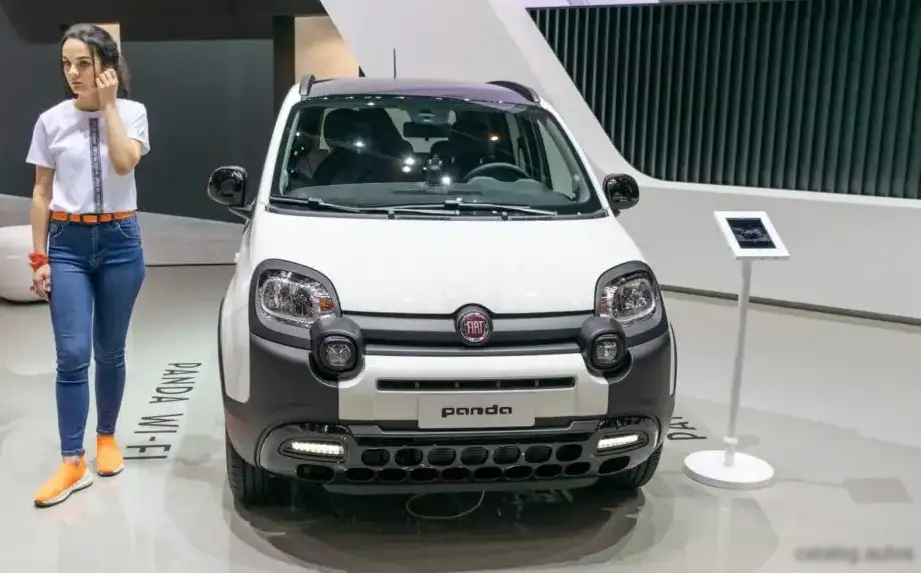
The Fiat Panda III City Cross 1.3 Multijet II was a subcompact hatchback produced by Fiat between 2017 and 2018. Positioned as a more rugged and adventurous variant within the Panda III range, the City Cross aimed to blend the practicality of the standard Panda with a slightly more off-road oriented aesthetic and capability. It was primarily marketed in Europe, where the Panda has historically been a popular choice for urban drivers and those seeking an affordable, economical vehicle. This particular configuration, featuring the 1.3 Multijet II diesel engine paired with a five-speed manual transmission, represented a mid-range offering within the City Cross lineup, balancing fuel efficiency with acceptable performance.
Powertrain & Engine Architecture
The heart of the Panda III City Cross 1.3 Multijet II is the 312B1000 or 330A1000 engine code, a 1.3-liter inline-four cylinder diesel engine. This engine is part of Fiat’s Multijet II family, known for its common-rail direct injection system and turbocharging. The Multijet II technology allows for multiple injections per combustion cycle, improving efficiency and reducing noise. The engine utilizes a double overhead camshaft (DOHC) design, operating four valves per cylinder. The turbocharger, coupled with an intercooler, helps to boost power output and torque, particularly at lower engine speeds. The five-speed manual transmission was the standard offering for this variant, providing a direct connection between the engine and the front wheels. The transmission’s gear ratios were tuned for fuel economy and urban driving, with a relatively long final drive.
Driving Characteristics
The 95 horsepower output of the 1.3 Multijet II, combined with the five-speed manual transmission, provided adequate performance for everyday driving. Acceleration from 0-60 mph took around 11.2 seconds, and the top speed was approximately 105 mph. While not particularly sporty, the engine delivered a useful amount of torque (200 Nm or 147.51 lb-ft) from as low as 1500 rpm, making it relatively easy to navigate city streets and maintain highway speeds. Compared to the lower-powered 1.2-liter petrol engine option, the Multijet offered significantly more pulling power. However, it lacked the responsiveness of higher-output diesel variants available in other Panda trims. The manual transmission allowed for greater driver control compared to the Dualogic automated manual transmission offered on some models. The gear ratios were spaced to prioritize fuel economy, meaning the engine sometimes felt strained when accelerating quickly.
Equipment & Trim Levels
The City Cross trim level added several features to the standard Panda III, including a raised ride height, skid plates, and distinctive exterior styling elements designed to give it a more rugged appearance. Standard equipment typically included air conditioning, power steering, ABS brakes, and a basic audio system. Interior upholstery was typically cloth, with a functional and durable design. Optional extras could include alloy wheels, a more advanced audio system, and parking sensors. The City Cross trim was positioned as a step up from the base Panda, offering a blend of practicality and style. It aimed to appeal to buyers who wanted a vehicle that could handle occasional rough roads or light off-road conditions without sacrificing everyday usability.
Chassis & Braking
The Panda III City Cross utilized a front-wheel-drive layout with an independent McPherson strut suspension at the front and a torsion beam suspension at the rear. The front brakes were discs, while the rear brakes were drums. This configuration was typical for vehicles in this weight class and price range. The City Cross trim often featured slightly upgraded suspension components to cope with the increased ride height and potential for light off-road use. The steering was rack and pinion with electric power assistance, providing light and easy steering for urban driving. The suspension setup prioritized comfort and ride quality over sporty handling, making it well-suited for city streets.
Market Reception & Comparison
The Fiat Panda III City Cross 1.3 Multijet II was generally well-received by critics for its fuel efficiency, practicality, and affordability. The diesel engine offered excellent economy, making it a popular choice for drivers covering high mileages. However, some reviewers noted that the engine could be somewhat noisy and lacked the refinement of more expensive vehicles. Compared to the petrol-powered Panda, the Multijet offered superior torque and fuel economy, but at a higher purchase price. Against competitors like the Renault Twingo and Peugeot 108, the Panda City Cross offered a unique blend of rugged styling and practicality. It stood out as a more versatile option for those who occasionally ventured beyond the city limits.
Legacy
The 1.3 Multijet II engine proved to be a reliable and durable unit, and many examples of the Panda III City Cross are still on the road today. While diesel engines have faced increasing scrutiny in recent years, the 1.3 Multijet remains a relatively economical and dependable powertrain. On the used car market, the City Cross trim commands a slight premium over the standard Panda due to its enhanced styling and features. The Panda III City Cross represents a practical and affordable option for those seeking a small, fuel-efficient hatchback with a touch of adventure. Its enduring popularity is a testament to its simple, yet effective design and its ability to meet the needs of a wide range of drivers.