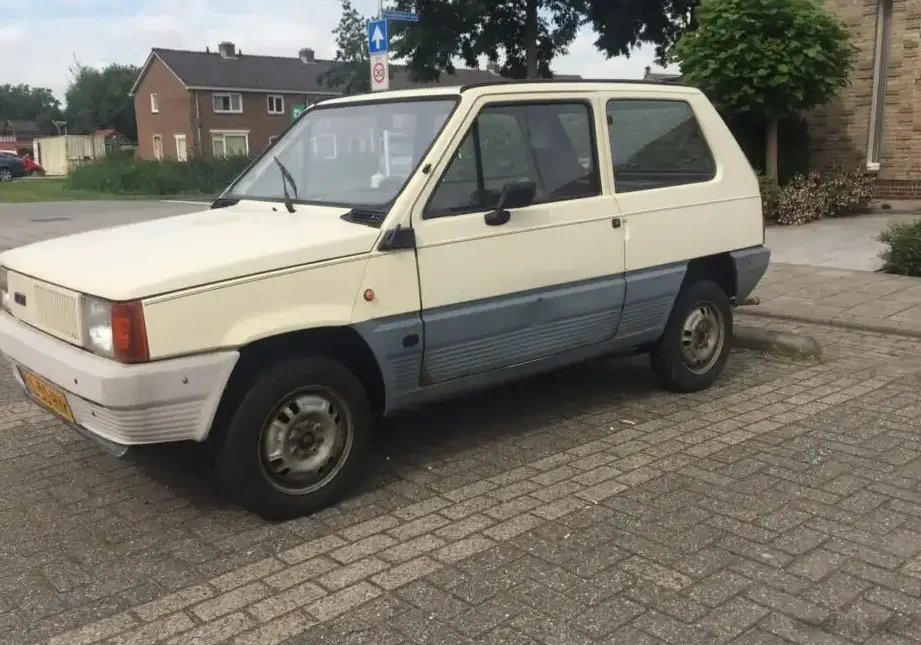
The Fiat Panda (ZAF 141) 0.9, producing 45 horsepower, was a foundational model in the history of the iconic Italian city car. Introduced in 1982 and remaining in production through 1985, this variant represented the entry point into the first generation Panda lineup. The Panda, designed by Giorgetto Giugiaro, aimed to provide affordable, practical, and efficient transportation for a broad demographic, particularly in Italy and other European markets. The 0.9-liter engine and four-speed manual transmission combination was specifically targeted at buyers prioritizing economy and basic mobility over outright performance. It was a key component of the Panda’s success, establishing it as a popular choice for urban commuters and first-time car owners.
Technical Specifications
| Brand | Fiat |
| Model | Panda |
| Generation | Panda (ZAF 141) |
| Type (Engine) | 0.9 (45 Hp) |
| Start of production | 1982 |
| End of production | 1985 |
| Powertrain Architecture | Internal Combustion engine |
| Body type | Hatchback |
| Seats | 5 |
| Doors | 3 |
| Fuel consumption (urban) | 7.1 l/100 km (33.1 US mpg, 39.8 UK mpg, 14.1 km/l) |
| Fuel consumption (extra urban) | 5 l/100 km (47 US mpg, 56.5 UK mpg, 20 km/l) |
| Fuel Type | Petrol (Gasoline) |
| Acceleration 0 – 100 km/h | 18.5 sec |
| Acceleration 0 – 62 mph | 18.5 sec |
| Acceleration 0 – 60 mph | 17.6 sec |
| Maximum speed | 140 km/h (86.99 mph) |
| Weight-to-power ratio | 14.9 kg/Hp (67.2 Hp/tonne) |
| Weight-to-torque ratio | 10 kg/Nm (100 Nm/tonne) |
| Power | 45 Hp @ 5600 rpm |
| Power per litre | 49.8 Hp/l |
| Torque | 67 Nm @ 3000 rpm (49.42 lb.-ft. @ 3000 rpm) |
| Engine layout | Front, Transverse |
| Engine Model/Code | 100 GL3.000 |
| Engine displacement | 903 cm3 (55.1 cu. in.) |
| Number of cylinders | 4 |
| Engine configuration | Inline |
| Cylinder Bore | 65 mm (2.56 in.) |
| Piston Stroke | 68 mm (2.68 in.) |
| Compression ratio | 9:1 |
| Number of valves per cylinder | 2 |
| Fuel injection system | Carburettor |
| Engine aspiration | Naturally aspirated engine |
| Valvetrain | OHV |
| Engine oil capacity | 3.4 l (3.59 US qt | 2.99 UK qt) |
| Coolant | 5 l (5.28 US qt | 4.4 UK qt) |
| Kerb Weight | 670 kg (1477.1 lbs.) |
| Max. weight | 1150 kg (2535.32 lbs.) |
| Max load | 480 kg (1058.22 lbs.) |
| Trunk (boot) space – minimum | 272 l (9.61 cu. ft.) |
| Trunk (boot) space – maximum | 1088 l (38.42 cu. ft.) |
| Permitted trailer load with brakes (12%) | 750 kg (1653.47 lbs.) |
| Length | 3380 mm (133.07 in.) |
| Width | 1460 mm (57.48 in.) |
| Height | 1445 mm (56.89 in.) |
| Wheelbase | 2160 mm (85.04 in.) |
| Front track | 1254 mm (49.37 in.) |
| Rear (Back) track | 1249 mm (49.17 in.) |
| Minimum turning circle | 9.2 m (30.18 ft.) |
| Drivetrain Architecture | Front wheel drive |
| Number of gears and type of gearbox | 4 gears, manual transmission |
| Front suspension | Independent type McPherson |
| Rear suspension | Rigid axle suspension |
| Front brakes | Disc |
| Rear brakes | Drum |
| Steering type | Steering rack and pinion |
| Wheel rims size | 4J x 13 |
Powertrain & Engine Architecture
The heart of the Panda 0.9 was the 100 GL3.000 engine, a 903cc inline-four cylinder unit. This engine was a relatively simple design, utilizing an overhead valve (OHV) valvetrain and a single carburetor for fuel delivery. The carburetor system, while common for the era, contributed to the engine’s modest power output and relatively high emissions compared to later fuel-injected engines. The engine’s 9:1 compression ratio was a compromise between efficiency and performance. The four-speed manual transmission was a standard feature, chosen for its simplicity and cost-effectiveness. The transmission’s gear ratios were optimized for urban driving and maximizing fuel economy, rather than providing rapid acceleration.
Driving Characteristics
The 45 horsepower and 67 Nm (49.42 lb-ft) of torque produced by the 0.9-liter engine resulted in leisurely, but adequate, performance. Acceleration from 0 to 100 km/h (0-62 mph) took approximately 18.5 seconds, and the top speed was around 140 km/h (87 mph). Compared to other Panda variants, such as the 1.0-liter or the later diesel models, the 0.9 was noticeably slower. However, its lightweight construction (670 kg / 1477 lbs) helped to mitigate the lack of power. The gear ratios were relatively short, providing reasonable acceleration in lower gears, but the engine quickly ran out of steam at higher speeds. The driving experience was best suited for city streets and short trips, where its nimble handling and low running costs were most appreciated.
Equipment & Trim Levels
The Panda 0.9 was the base model, and as such, it came with a minimal level of equipment. Standard features typically included basic cloth upholstery, a simple dashboard with analog gauges, and manually operated windows and door locks. Optional extras were limited, but could include a radio, a heated rear window, and upgraded seat fabrics. The interior was designed for practicality and durability, rather than luxury. The focus was on providing a functional and affordable transportation solution.
Chassis & Braking
The Panda’s chassis was designed for simplicity and cost-effectiveness. It featured an independent McPherson strut suspension at the front and a rigid axle suspension at the rear. This setup provided a reasonable level of ride comfort, considering the vehicle’s price point. The front brakes were disc brakes, while the rear brakes were drums. This configuration was typical for small, economy cars of the era. The steering was a rack and pinion system, providing light and precise steering feel. The relatively narrow tires (4J x 13) contributed to the car’s fuel efficiency and low rolling resistance.
Market Reception & Comparison
The Fiat Panda 0.9 was well-received in its target market, particularly in Italy and other European countries. Critics praised its affordability, practicality, and fuel efficiency. However, its lack of power and basic equipment were also noted. Compared to other small cars of the time, such as the Renault 5 or the Citroën 2CV, the Panda offered a more modern design and a slightly more refined driving experience. The 0.9-liter engine provided excellent fuel economy, making it an attractive option for budget-conscious buyers. However, the higher-powered Panda variants, such as the 1.0-liter, offered a more enjoyable driving experience for those willing to spend a little more.
Legacy
The Fiat Panda 0.9, while the most basic version of the first-generation Panda, played a crucial role in establishing the model’s reputation for affordability and practicality. The 100 GL3.000 engine, while not known for its performance or longevity, proved to be relatively reliable with proper maintenance. Today, the Panda 0.9 is a sought-after classic car, particularly among enthusiasts who appreciate its simplicity and historical significance. Well-maintained examples are becoming increasingly rare, and their value is steadily increasing. The Panda’s enduring legacy is a testament to its clever design and its ability to meet the transportation needs of a wide range of people.