Technical Specifications
| Brand | Fiat |
| Model | Panda |
| Generation | Panda (ZAF 141, facelift 1991) |
| Type (Engine) | 0.9 ie (40 Hp) |
| Start of production | June, 1992 |
| End of production | December, 1996 |
| Powertrain Architecture | Internal Combustion engine |
| Body type | Hatchback |
| Seats | 5 |
| Doors | 3 |
| Fuel consumption (combined) | 5.9 l/100 km (39.9 US mpg, 47.9 UK mpg, 16.9 km/l) |
| Fuel Type | Petrol (Gasoline) |
| Acceleration 0 – 100 km/h | 19.5 sec |
| Acceleration 0 – 62 mph | 19.5 sec |
| Acceleration 0 – 60 mph | 18.5 sec |
| Maximum speed | 135 km/h (83.89 mph) |
| Weight-to-power ratio | 17.9 kg/Hp, 55.9 Hp/tonne |
| Weight-to-torque ratio | 10.8 kg/Nm, 92.3 Nm/tonne |
| Power | 40 Hp @ 5500 rpm |
| Power per litre | 44.5 Hp/l |
| Torque | 66 Nm @ 3000 rpm (48.68 lb.-ft. @ 3000 rpm) |
| Engine layout | Front, Transverse |
| Engine Model/Code | 1170 A1.046 |
| Engine displacement | 899 cm3 (54.86 cu. in.) |
| Number of cylinders | 4 |
| Engine configuration | Inline |
| Cylinder Bore | 65 mm (2.56 in.) |
| Piston Stroke | 68 mm (2.68 in.) |
| Compression ratio | 9.5:1 |
| Number of valves per cylinder | 2 |
| Fuel injection system | Single-point injection |
| Engine aspiration | Naturally aspirated engine |
| Engine oil capacity | 3.8 l (4.02 US qt | 3.34 UK qt) |
| Kerb Weight | 715 kg (1576.31 lbs.) |
| Max. weight | 1150 kg (2535.32 lbs.) |
| Max load | 435 kg (959.01 lbs.) |
| Trunk (boot) space – minimum | 270 l (9.53 cu. ft.) |
| Trunk (boot) space – maximum | 630 l (22.25 cu. ft.) |
| Fuel tank capacity | 40 l (10.57 US gal | 8.8 UK gal) |
| Length | 3408 mm (134.17 in.) |
| Width | 1494 mm (58.82 in.) |
| Height | 1420 mm (55.91 in.) |
| Wheelbase | 2151 mm (84.69 in.) |
| Front track | 1263 mm (49.72 in.) |
| Rear (Back) track | 1265 mm (49.8 in.) |
| Minimum turning circle | 9.4 m (30.84 ft.) |
| Drivetrain Architecture | The Internal combustion engine (ICE) drives the front wheels of the vehicle. |
| Drive wheel | Front wheel drive |
| Number of gears and type of gearbox | 5 gears, manual transmission |
| Front suspension | Coil spring |
| Rear suspension | Coil spring |
| Front brakes | Disc |
| Rear brakes | Drum |
| Assisting systems | ABS (Anti-lock braking system) |
| Tires size | 135/75 R13 S |
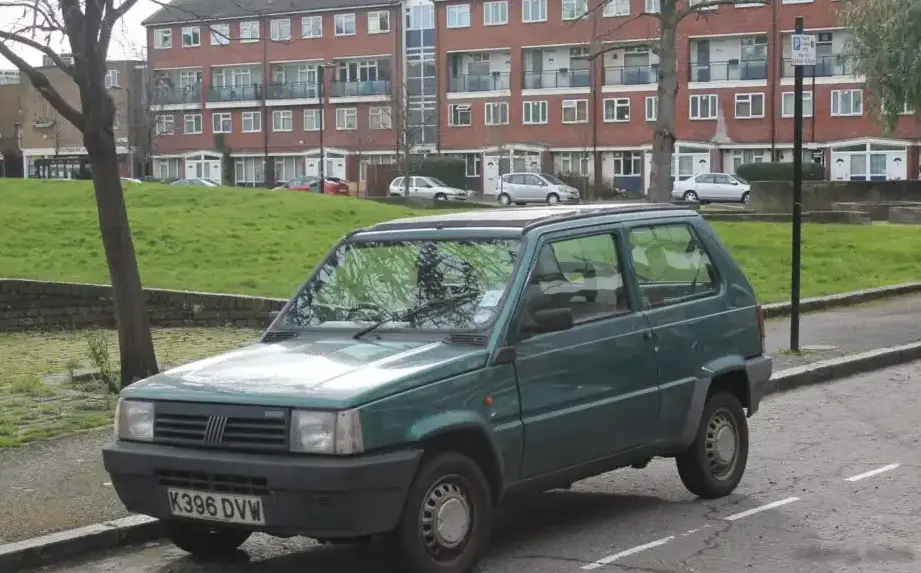
The Fiat Panda ZAF 141 0.9 ie, produced between 1992 and 1996, was a cornerstone of affordable motoring in Europe. Building upon the success of the original Panda, this facelifted version offered improved refinement and a slightly more modern aesthetic. It was designed as a practical, no-frills vehicle for urban environments, prioritizing fuel efficiency and ease of use. The 0.9-liter engine, while modest in power, proved to be reliable and economical, making it a popular choice for first-time car buyers, city dwellers, and those seeking a secondary vehicle.
Powertrain & Engine Architecture
The heart of the Panda 0.9 ie is the Fiat 1170 A1.046 engine, an 899cc inline-four cylinder unit. This engine utilizes a single-point fuel injection system, a relatively simple setup for the time, contributing to its reliability and low maintenance costs. The engine features two valves per cylinder and a compression ratio of 9.5:1. While not a powerhouse, the engine was designed for efficiency and durability. The 40 horsepower peak is reached at 5500 rpm, and the 66 Nm (48.68 lb-ft) of torque is available at 3000 rpm. The engine is transversely mounted at the front of the vehicle, driving the front wheels. The standard transmission was a five-speed manual gearbox, optimized for maximizing fuel economy and providing adequate acceleration in urban conditions.
Driving Characteristics
The driving experience in the Panda 0.9 ie is best described as utilitarian. Acceleration is slow, with a 0-60 mph time of around 18.5 seconds. However, the car is surprisingly nimble in city traffic, thanks to its small size and light weight. The five-speed manual transmission allows drivers to keep the engine in its optimal power band, although frequent gear changes are necessary for overtaking or climbing hills. Compared to the more powerful 1.0 Fire and 1.4 liter versions, the 0.9 ie feels significantly underpowered, particularly when fully loaded. However, this trade-off is offset by superior fuel economy and a more forgiving engine for inexperienced drivers.
Equipment & Trim Levels
The Panda 0.9 ie was typically offered with a basic level of equipment, reflecting its position as the entry-level model. Standard features generally included cloth upholstery, a basic dashboard layout, and manual windows and door locks. Optional extras, such as a radio, upgraded interior trim, and even a sunroof, were available, but these were typically chosen by a small percentage of buyers. The interior was designed for practicality, with durable materials and a focus on maximizing space within the small cabin. The rear seats could be folded down to increase luggage capacity, making the Panda surprisingly versatile.
Chassis & Braking
The Panda ZAF 141 utilizes a simple but effective chassis design. Front suspension consists of coil springs, while the rear employs a similar coil spring setup. The front brakes are discs, providing adequate stopping power, while the rear brakes are drums, a cost-saving measure common in this class of vehicle. ABS (Anti-lock Braking System) was available as an option, enhancing safety in slippery conditions. The car’s light weight contributes to its nimble handling, and the relatively narrow tires (135/75 R13) provide reasonable grip in most conditions.
Market Reception & Comparison
The Fiat Panda 0.9 ie was generally well-received by critics as a practical and affordable city car. Its fuel economy was a major selling point, and its reliability was praised. However, its lack of power was often noted, and some reviewers found the interior to be too basic. Compared to other small cars of the time, such as the Renault Twingo and the Citroën AX, the Panda offered a more utilitarian experience, prioritizing affordability and practicality over refinement and performance. The 1.0 Fire engine variant offered a noticeable performance boost for a modest price increase, making it a popular alternative for those willing to spend a little more.
Legacy
The Fiat Panda 0.9 ie has proven to be a remarkably durable vehicle. Many examples are still on the road today, testament to the robustness of its engine and simple mechanical design. In the used car market, these Pandas are highly sought after by enthusiasts and those seeking a classic, affordable runabout. While maintenance costs are generally low, finding replacement parts can sometimes be a challenge. The 0.9-liter engine, while not particularly powerful, is known for its longevity and relatively simple repair procedures. The Panda 0.9 ie remains a beloved icon of Italian automotive history, representing a time when practicality and affordability were paramount.