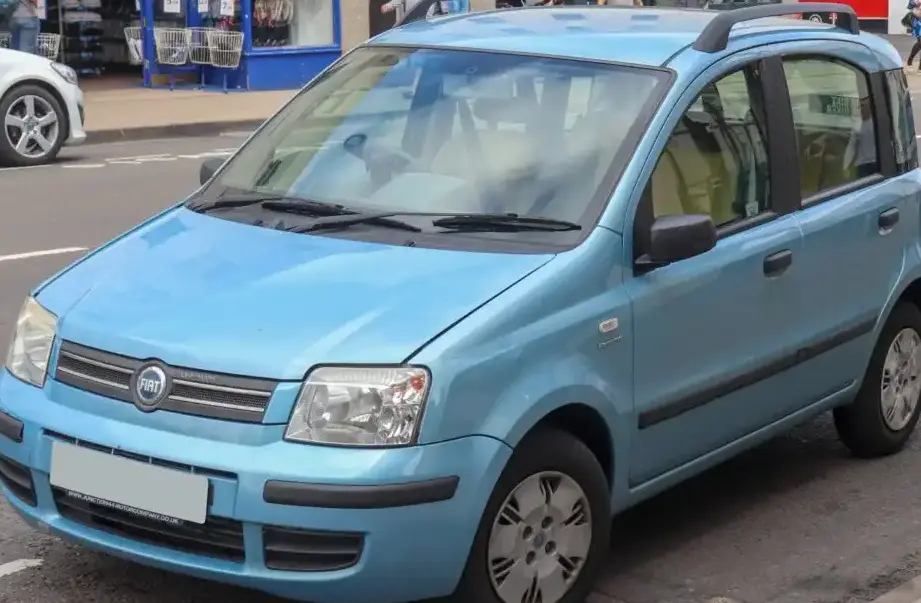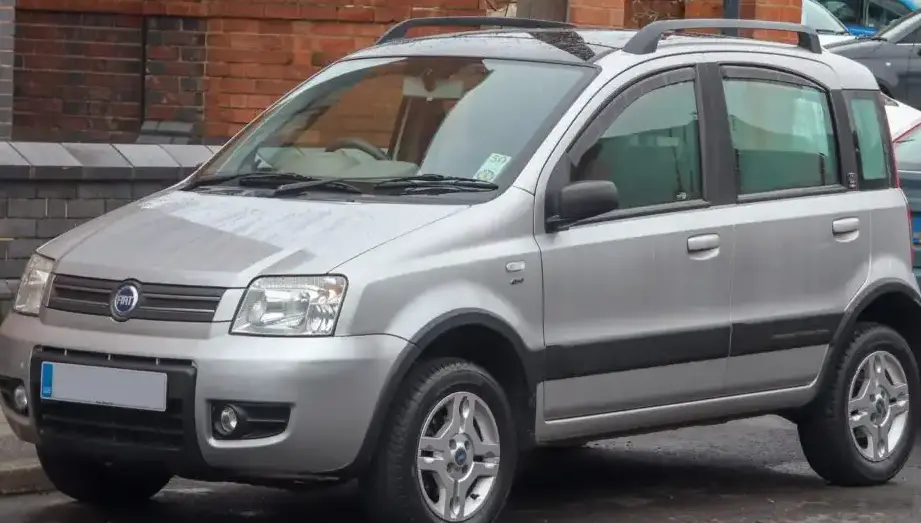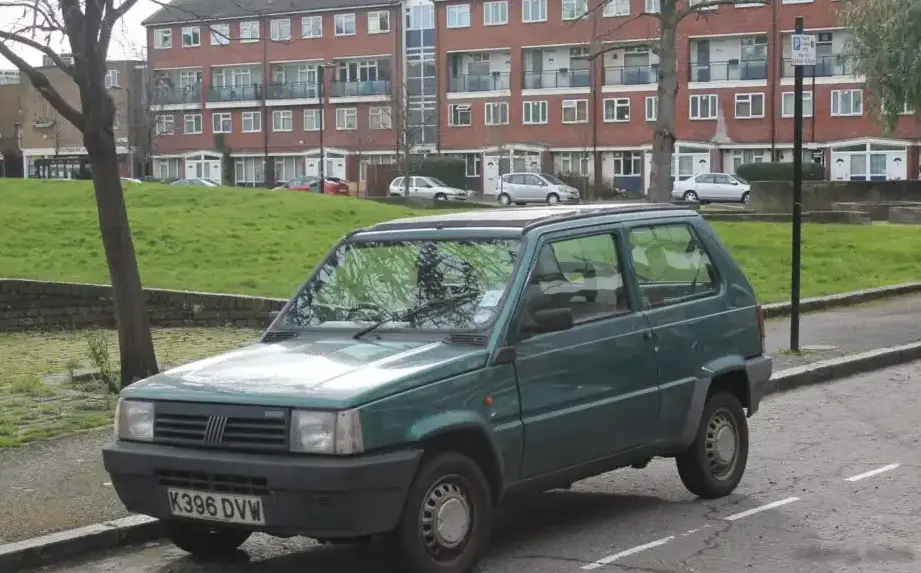
The Fiat Panda 1.1 ie 4×4, produced between June 1992 and March 1995, represents a unique and capable variant within the second generation (ZAF 141, facelift 1991) of Fiat’s iconic city car. This model combined the practicality and affordability of the Panda with a surprisingly effective four-wheel-drive system, making it a popular choice in regions with challenging weather conditions or rough terrain. Positioned as a niche offering within the Panda lineup, it catered to buyers seeking enhanced traction and versatility without sacrificing the Panda’s core attributes of simplicity and low running costs. It was a relatively short-lived production run, adding to its collectibility today.
Technical Specifications
| Brand | Fiat |
| Model | Panda |
| Generation | Panda (ZAF 141, facelift 1991) |
| Type (Engine) | 1.1 ie 4×4 (50 Hp) |
| Start of production | June, 1992 |
| End of production | March, 1995 |
| Powertrain Architecture | Internal Combustion engine |
| Body type | Hatchback |
| Seats | 5 |
| Doors | 3 |
| Fuel consumption (extra urban) | 6 l/100 km (39.2 US mpg, 47.1 UK mpg, 16.7 km/l) |
| Fuel consumption (combined) | 7.9 l/100 km (29.8 US mpg, 35.8 UK mpg, 12.7 km/l) |
| Fuel Type | Petrol (Gasoline) |
| Acceleration 0 – 100 km/h | 19.5 sec |
| Acceleration 0 – 62 mph | 19.5 sec |
| Acceleration 0 – 60 mph | 18.5 sec |
| Maximum speed | 130 km/h (80.78 mph) |
| Weight-to-power ratio | 16 kg/Hp, 62.5 Hp/tonne |
| Weight-to-torque ratio | 9.5 kg/Nm, 105 Nm/tonne |
| Power | 50 Hp @ 5250 rpm |
| Power per litre | 45.1 Hp/l |
| Torque | 84 Nm @ 3000 rpm (61.96 lb.-ft. @ 3000 rpm) |
| Engine layout | Front, Transverse |
| Engine Model/Code | 156 C.046 |
| Engine displacement | 1108 cm3 (67.61 cu. in.) |
| Number of cylinders | 4 |
| Engine configuration | Inline |
| Cylinder Bore | 70 mm (2.76 in.) |
| Piston Stroke | 72 mm (2.83 in.) |
| Compression ratio | 9:1 |
| Number of valves per cylinder | 2 |
| Fuel injection system | Single-point injection |
| Engine aspiration | Naturally aspirated engine |
| Valvetrain | OHC |
| Engine oil capacity | 3.8 l (4.02 US qt | 3.34 UK qt) |
| Kerb Weight | 800 kg (1763.7 lbs.) |
| Max. weight | 1220 kg (2689.64 lbs.) |
| Max load | 420 kg (925.94 lbs.) |
| Trunk (boot) space – minimum | 270 l (9.53 cu. ft.) |
| Trunk (boot) space – maximum | 630 l (22.25 cu. ft.) |
| Fuel tank capacity | 30 l (7.93 US gal | 6.6 UK gal) |
| Length | 3435 mm (135.24 in.) |
| Width | 1500 mm (59.06 in.) |
| Height | 1485 mm (58.46 in.) |
| Wheelbase | 2170 mm (85.43 in.) |
| Front track | 1254 mm (49.37 in.) |
| Rear (Back) track | 1258 mm (49.53 in.) |
| Minimum turning circle | 9.4 m (30.84 ft.) |
| Drive wheel | All wheel drive (4×4) |
| Number of gears | 5 gears, manual transmission |
| Front suspension | Coil spring |
| Rear suspension | Coil spring |
| Front brakes | Disc |
| Rear brakes | Drum |
| Assisting systems | ABS (Anti-lock braking system) |
| Tires size | 145/70 R13 Q |
Introduction
The Fiat Panda 1.1 ie 4×4, launched in 1992, was a surprisingly capable and versatile addition to the already popular second-generation Panda (ZAF 141) range. Building upon the facelifted model introduced in 1991, this variant offered all-wheel drive functionality, expanding the Panda’s appeal beyond purely urban environments. The 4×4 system, developed in collaboration with Steyr-Puch of Austria, was a key differentiator, transforming the humble Panda into a miniature off-roader. It was designed to provide enhanced traction in slippery conditions, making it a practical choice for rural areas and regions prone to inclement weather. The 1.1 ie 4×4 occupied a unique position in the Panda lineup, appealing to a specific segment of buyers who needed the added capability of four-wheel drive without the expense or size of a larger SUV.
Powertrain & Engine Architecture
The heart of the Panda 1.1 ie 4×4 is the 156 C.046, a 1108cc inline-four cylinder petrol engine. This engine, producing 50 horsepower at 5250 rpm and 84 Nm (62 lb-ft) of torque at 3000 rpm, is characterized by its simplicity and durability. It utilizes a single-point fuel injection system, a relatively basic setup for the time, but one that contributed to the engine’s reliability and ease of maintenance. The engine features an overhead camshaft (OHC) valvetrain with two valves per cylinder. The 4×4 system itself is a selectable four-wheel drive, meaning it could be operated in two-wheel drive for normal road conditions to improve fuel economy, and switched to four-wheel drive when needed. The transmission is a robust, albeit not particularly refined, five-speed manual gearbox. The transfer case, responsible for distributing power to all four wheels, is mechanically operated via a lever located within the cabin.
Driving Characteristics
The Panda 1.1 ie 4×4’s driving experience is defined by its modest performance. With only 50 horsepower propelling around 800 kg, acceleration is leisurely, taking approximately 19.5 seconds to reach 62 mph. However, the four-wheel-drive system significantly enhances traction, particularly on loose surfaces. The gear ratios are relatively short, prioritizing usability over outright speed. Compared to the standard 1.0-liter Panda, the 1.1 ie 4×4 feels more capable and stable, especially when fully loaded or navigating challenging terrain. It’s noticeably slower than higher-powered Panda variants, such as the 1.4-liter models, but offers a level of all-weather confidence that those versions lack. The steering is light and direct, making it easy to maneuver in tight spaces, and the suspension provides a reasonably comfortable ride, although it can feel somewhat bouncy on uneven roads.
Equipment & Trim Levels
The Panda 1.1 ie 4×4 was typically equipped with a fairly basic level of trim, reflecting its affordable positioning. Standard features included cloth upholstery, a simple dashboard layout, and manual windows and door locks. ABS (Anti-lock Braking System) was a notable inclusion, enhancing safety. Optional extras were limited but could include upgraded interior trim, a radio, and occasionally, power steering. The interior was functional and durable, prioritizing practicality over luxury. The exterior styling mirrored that of other second-generation Pandas, with a boxy silhouette and distinctive front grille. The 4×4 models were often identifiable by their slightly raised ride height and the presence of the four-wheel-drive selector lever inside the cabin.
Chassis & Braking
The Panda 1.1 ie 4×4 utilizes a simple but effective chassis design. Front suspension consists of coil springs, while the rear also employs coil springs. The braking system features disc brakes on the front wheels and drum brakes on the rear, a common configuration for vehicles in this class at the time. The relatively light weight of the Panda helps to compensate for the less powerful engine and the less sophisticated braking setup. The four-wheel-drive system adds to the vehicle’s overall weight, but also improves stability and braking performance on slippery surfaces. Stabilizer bars were not typically fitted to the standard Panda, and the 4×4 version did not receive them either, contributing to a slightly more pronounced body roll in corners.
Market Reception & Comparison
The Fiat Panda 1.1 ie 4×4 was generally well-received by critics and buyers alike, particularly in regions where all-wheel drive was a valuable asset. It was praised for its affordability, practicality, and surprisingly capable off-road performance. Compared to other small cars of the era, the Panda 4×4 offered a unique combination of features and benefits. It was more affordable than many larger SUVs and offered better fuel economy than most four-wheel-drive vehicles. However, its modest performance and basic interior were often cited as drawbacks. Compared to the standard Panda models, the 4×4 version was more expensive to purchase and maintain, due to the added complexity of the four-wheel-drive system. Fuel economy, while respectable, was slightly lower than that of the two-wheel-drive variants.
Legacy
The Fiat Panda 1.1 ie 4×4 has developed a cult following among enthusiasts and collectors. Its simplicity, durability, and unique character have made it a popular choice for restoration projects and off-road adventures. The 156 C.046 engine is known for its reliability, and with proper maintenance, it can provide many years of service. Today, well-maintained examples of the Panda 1.1 ie 4×4 are becoming increasingly rare and valuable. The vehicle represents a unique chapter in Fiat’s history, demonstrating the company’s ability to create affordable and versatile vehicles that appeal to a wide range of buyers. Its enduring popularity is a testament to its clever design and practical capabilities.