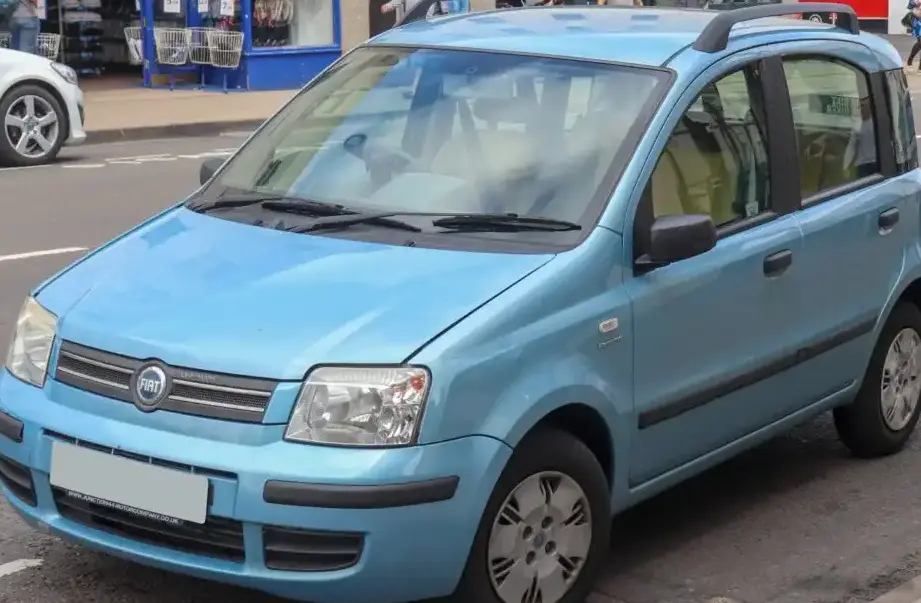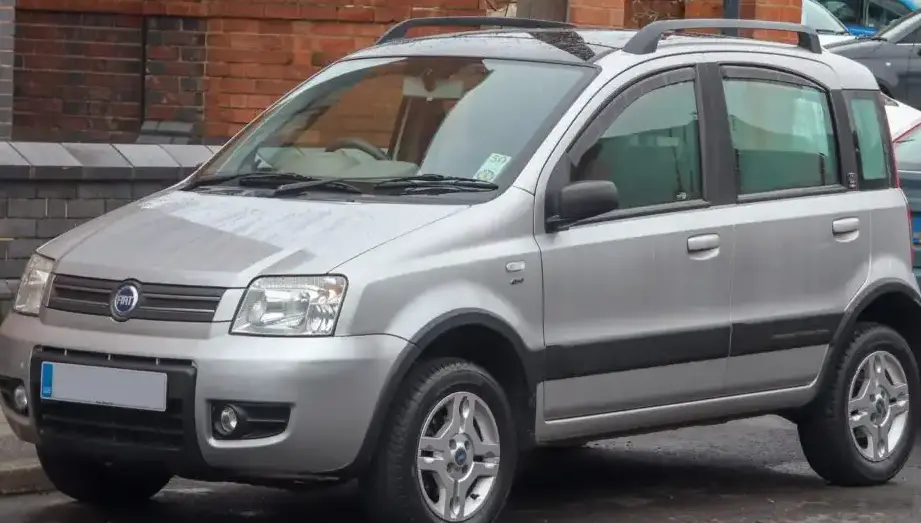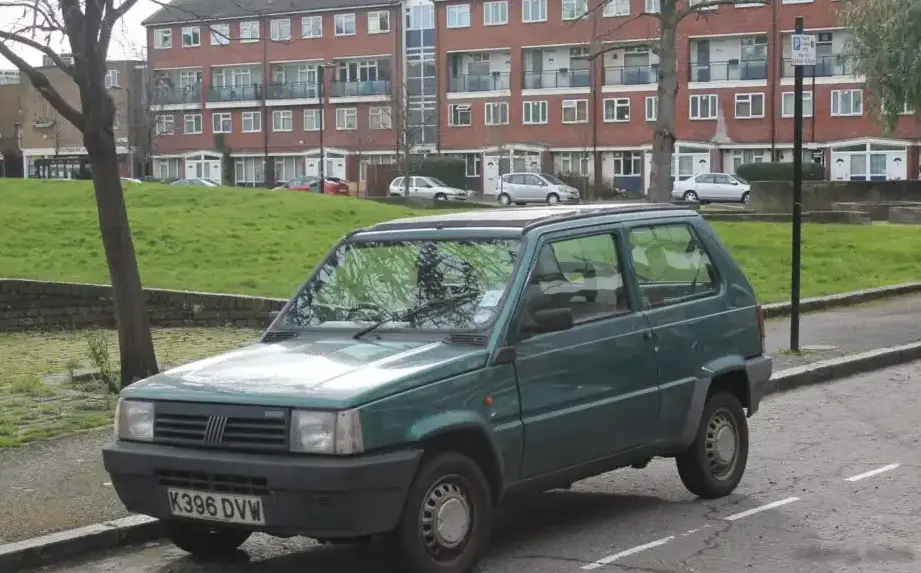
The Fiat Panda 1.1 ie (50 hp) ECVT, produced from July 1991 to March 1995, represents a significant iteration of the iconic Italian city car. This variant, part of the ZAF 141 series and benefitting from the 1991 facelift, aimed to provide an accessible and economical entry point into the Panda range, particularly appealing to drivers seeking ease of use with an automatic transmission. It occupied the lower end of the Panda lineup, positioned below the more powerful 1.0 Fire models and serving as a practical, no-frills transportation solution within the European market. The introduction of the ECVT (Electronically Controlled Variable Transmission) was a notable feature, offering a different driving experience compared to the standard manual transmissions available on other Panda models.
Technical Specifications
| Brand | Fiat |
| Model | Panda |
| Generation | Panda (ZAF 141, facelift 1991) |
| Type (Engine) | 1.1 ie (50 Hp) ECVT |
| Start of production | July, 1991 |
| End of production | March, 1995 |
| Powertrain Architecture | Internal Combustion engine |
| Body type | Hatchback |
| Seats | 5 |
| Doors | 3 |
| Fuel consumption (urban) | 7.7 l/100 km (30.5 US mpg, 36.7 UK mpg, 13 km/l) |
| Fuel consumption (extra urban) | 5 l/100 km (47 US mpg, 56.5 UK mpg, 20 km/l) |
| Fuel Type | Petrol (Gasoline) |
| Acceleration 0 – 100 km/h | 17.5 sec |
| Acceleration 0 – 62 mph | 17.5 sec |
| Acceleration 0 – 60 mph | 16.6 sec |
| Maximum speed | 140 km/h (86.99 mph) |
| Weight-to-power ratio | 14.5 kg/Hp, 69.1 Hp/tonne |
| Weight-to-torque ratio | 8.6 kg/Nm, 116 Nm/tonne |
| Power | 50 Hp @ 5250 rpm |
| Power per litre | 45.1 Hp/l |
| Torque | 84 Nm @ 3000 rpm (61.96 lb.-ft. @ 3000 rpm) |
| Engine layout | Front, Transverse |
| Engine Model/Code | 156 C.046 |
| Engine displacement | 1108 cm3 (67.61 cu. in.) |
| Number of cylinders | 4 |
| Engine configuration | Inline |
| Cylinder Bore | 70 mm (2.76 in.) |
| Piston Stroke | 72 mm (2.83 in.) |
| Compression ratio | 9:1 |
| Number of valves per cylinder | 2 |
| Fuel injection system | Single-point injection |
| Engine aspiration | Naturally aspirated engine |
| Valvetrain | SOHC |
| Engine oil capacity | 3.8 l (4.02 US qt | 3.34 UK qt) |
| Kerb Weight | 724 kg (1596.15 lbs.) |
| Max. weight | 1150 kg (2535.32 lbs.) |
| Max load | 426 kg (939.17 lbs.) |
| Trunk (boot) space – minimum | 272 l (9.61 cu. ft.) |
| Trunk (boot) space – maximum | 1088 l (38.42 cu. ft.) |
| Fuel tank capacity | 40 l (10.57 US gal | 8.8 UK gal) |
| Length | 3410 mm (134.25 in.) |
| Width | 1490 mm (58.66 in.) |
| Height | 1420 mm (55.91 in.) |
| Wheelbase | 2159 mm (85 in.) |
| Front track | 1263 mm (49.72 in.) |
| Rear (Back) track | 1265 mm (49.8 in.) |
| Minimum turning circle | 9.4 m (30.84 ft.) |
| Drivetrain Architecture | The Internal combustion engine (ICE) drives the front wheels of the vehicle. |
| Drive wheel | Front wheel drive |
| Number of gears and type of gearbox | automatic transmission ECVT |
| Front suspension | Coil spring |
| Rear suspension | Coil spring |
| Front brakes | Disc |
| Rear brakes | Drum |
| Assisting systems | ABS (Anti-lock braking system) |
| Steering type | Steering rack and pinion |
| Tires size | 155/65 R13 |
Powertrain & Engine Architecture
The Panda 1.1 ie ECVT is powered by the Fiat 156 C.046 engine, a 1.1-liter (1108 cc) inline-four cylinder unit. This engine utilizes a single-point fuel injection system, a relatively simple setup for the early 1990s, contributing to its affordability and ease of maintenance. The engine features a single overhead camshaft (SOHC) valvetrain with two valves per cylinder. Producing 50 horsepower at 5250 rpm and 84 Nm (62 lb-ft) of torque at 3000 rpm, the engine was designed for efficiency rather than outright performance. The ECVT transmission, supplied by Torotrak, was a key differentiator. It wasn’t a traditional automatic, but rather a continuously variable transmission (CVT) employing a toroidal design. This system used fluid coupling and planetary gears to provide a seamless, stepless gear ratio, aiming to optimize fuel efficiency and provide a smoother driving experience.
Driving Characteristics
The driving experience in the Panda 1.1 ie ECVT is characterized by its relaxed and undemanding nature. The ECVT transmission, while innovative for its time, delivers power in a linear fashion, lacking the distinct gear shifts of a conventional automatic. Acceleration is modest, with a 0-60 mph time of around 16.6 seconds and a top speed of 87 mph. Compared to the manual versions of the 1.1, the ECVT offers increased ease of driving in urban environments, eliminating the need for clutch operation. However, it sacrifices some responsiveness and driver engagement. The ECVT also tends to hold higher engine speeds under acceleration, which can result in a somewhat droning engine note. Compared to the more powerful 1.0 Fire models, the 1.1 ie ECVT feels noticeably slower, but it provides a more economical and comfortable ride for everyday commuting.
Equipment & Trim Levels
The Panda 1.1 ie ECVT was typically equipped with a basic level of standard features, reflecting its position as an entry-level model. Interior appointments were functional and durable, with cloth upholstery and a simple dashboard layout. Standard equipment generally included front disc brakes, rear drum brakes, and basic instrumentation. Optional extras, depending on the market, could include power steering, upgraded interior trim, and a radio. The focus was on providing a practical and affordable vehicle, rather than luxury or extensive features. The trim level was generally consistent across the range, with minor variations based on regional specifications.
Chassis & Braking
The Panda 1.1 ie ECVT utilizes a simple yet effective chassis design. Front suspension consists of coil springs, while the rear employs a coil spring setup. The front brakes are discs, providing adequate stopping power for the vehicle’s weight and performance. The rear brakes are drums, a cost-saving measure common in this class of vehicle. ABS (Anti-lock Braking System) was available as an option, enhancing safety. The relatively lightweight construction of the Panda, with a kerb weight of 724 kg (1596 lbs), contributes to its nimble handling and reasonable fuel economy. Stabilizer bars were not typically fitted to the standard Panda, further emphasizing its focus on affordability.
Market Reception & Comparison
The Fiat Panda 1.1 ie ECVT was generally well-received as a practical and economical city car. Critics praised its ease of use, particularly the ECVT transmission, which was seen as a benefit for drivers unfamiliar with manual gearboxes. However, the lack of performance and the somewhat unusual driving experience of the ECVT were also noted. Compared to other small cars of the era, such as the Renault Twingo and the Citroën AX, the Panda offered a unique combination of affordability, simplicity, and practicality. Fuel economy was a strong point, making it an attractive option for budget-conscious buyers. Reliability was generally good, although the ECVT transmission required specific maintenance procedures.
Legacy
The Fiat Panda 1.1 ie ECVT, while not the most powerful or technologically advanced version of the Panda, holds a significant place in the model’s history. It demonstrated Fiat’s commitment to innovation with the ECVT transmission and provided an accessible entry point into the Panda range. Today, these cars are becoming increasingly collectible, particularly well-maintained examples. The 156 C.046 engine is known for its durability, and the ECVT transmission, while requiring specialized knowledge for repairs, can provide years of reliable service with proper maintenance. The Panda 1.1 ie ECVT remains a testament to the enduring appeal of simple, practical, and affordable motoring.