Technical Specifications
| Brand | Fiat |
| Model | Panda |
| Generation | Panda (ZAF 141, facelift 1991) |
| Type (Engine) | 1000 (37 Hp) |
| Start of Production | July 1991 |
| End of Production | December 1992 |
| Powertrain Architecture | Internal Combustion Engine |
| Body Type | Hatchback |
| Seats | 5 |
| Doors | 3 |
| Fuel Type | Petrol (Gasoline) |
| Power | 37 Hp |
| Engine Model/Code | 156 A2.100 |
| Engine Aspiration | Naturally Aspirated |
| Engine Oil Capacity | 3.8 l (4.02 US qt | 3.34 UK qt) |
| Coolant Capacity | 5 l (5.28 US qt | 4.4 UK qt) |
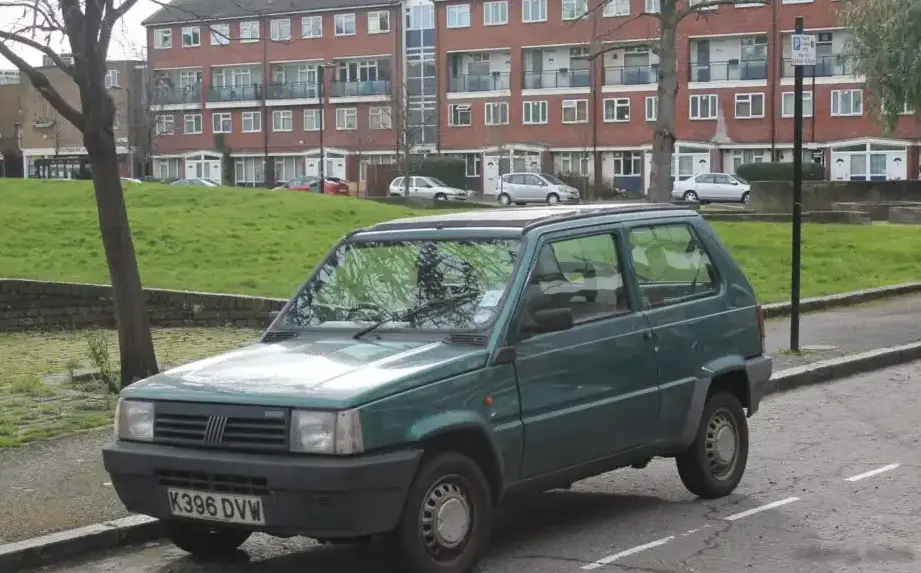
The Fiat Panda (ZAF 141), specifically the facelifted version introduced in July 1991 and produced through December 1992, represents a notable refinement of the original, revolutionary Panda. This iteration, commonly referred to as the “facelift” Panda, sought to modernize the iconic city car while preserving its core principles of affordability, practicality, and user-friendliness. The 1000 variant, equipped with a 37 horsepower engine, occupied the entry-level position within the Panda range during this period, serving as the most accessible option for budget-conscious buyers. It was a common sight on Italian roads and enjoyed moderate success in other European markets.
Powertrain & Engine Architecture
The Panda 1000’s power source is the 156 A2.100 engine, a 999 cc inline-four cylinder petrol engine. This engine is an evolution of the original Fiat 903cc unit, incorporating minor modifications to enhance reliability and meet increasingly stringent emissions regulations. It features a single overhead camshaft (SOHC) valvetrain operating two valves per cylinder. Fuel delivery is managed by a single-barrel Weber carburetor, a relatively simple and cost-effective system for the time. The engine’s modest output of 37 horsepower is achieved at 5,500 rpm, with peak torque of approximately 54 lb-ft at 3,000 rpm. The engine is known for its robust construction and inherent simplicity, making it relatively straightforward to maintain. The transmission paired with the 1000 engine is a four-speed manual gearbox. An automatic transmission was not offered with this engine variant.
Driving Characteristics
The driving experience in the Panda 1000 is characterized by its simplicity and focus on urban maneuverability. With its lightweight construction (around 1,587 lbs), the 1000 variant offers surprisingly nimble handling, particularly in city environments. Acceleration is modest, with a 0-60 mph time estimated around 18-20 seconds. The four-speed gearbox provides adequate spacing for everyday driving, but requires frequent shifting to maintain momentum, especially when ascending hills or overtaking. The engine performs best when kept within its relatively narrow power band, and its lack of refinement is noticeable at higher speeds. Compared to the slightly more powerful 1.2-liter versions of the Panda, the 1000 feels noticeably slower, but it compensates with improved fuel economy and a more forgiving nature for less experienced drivers.
Equipment & Trim Levels
The Panda 1000 was positioned as the base model, and consequently, it featured a fairly spartan level of equipment. Standard features typically included black plastic bumpers, steel wheels with hubcaps, cloth upholstery, and basic instrumentation consisting of a speedometer, fuel gauge, and temperature gauge. Power steering and central locking were not typically offered on this trim level. Optional extras were limited, but could include a sunroof, upgraded upholstery, and a radio. The interior design is functional and utilitarian, prioritizing space and durability over aesthetics. The rear seats can be folded down to increase cargo capacity, further enhancing the Panda’s practicality.
Chassis & Braking
The Panda’s chassis is a simple, yet effective, monocoque construction. Suspension consists of independent front suspension with MacPherson struts and a twist-beam rear axle. This setup provides a comfortable ride quality, particularly on smooth surfaces, but can feel somewhat unsettled on rough roads. The braking system utilizes front disc brakes and rear drum brakes. While adequate for the car’s weight and performance, the brakes lack the stopping power of more modern systems. Steering is manual rack and pinion, providing direct and responsive feel, but requiring more effort at low speeds.
Market Reception & Comparison
The Panda 1000 was well-received in its primary market of Italy, where it was praised for its affordability, practicality, and ease of parking in congested urban areas. Critics acknowledged its modest performance, but recognized that it was not intended to be a sports car. Compared to the 1.2-liter Panda variants, the 1000 offered better fuel economy (around 45-50 mpg) but at the expense of performance. It also proved to be more reliable than some of the more complex and technologically advanced cars of the era. The 1000 was often favored by first-time car buyers, students, and those seeking a simple and economical mode of transportation.
Legacy
The Fiat Panda 1000, and the ZAF 141 facelift in general, holds a significant place in automotive history as a symbol of affordable and practical motoring. The 156 A2.100 engine, while not particularly powerful, proved to be remarkably durable and reliable. Today, well-maintained examples of the Panda 1000 are becoming increasingly sought after by classic car enthusiasts and collectors. Its simplicity and ease of repair make it an appealing option for those who enjoy hands-on maintenance. While not a performance icon, the Panda 1000 represents a charming and functional piece of automotive history, embodying the spirit of accessible transportation. The car’s enduring appeal lies in its honest design and its ability to provide reliable and economical transportation for a wide range of drivers. It remains a testament to the idea that a car doesn’t need to be complex or expensive to be enjoyable and useful.