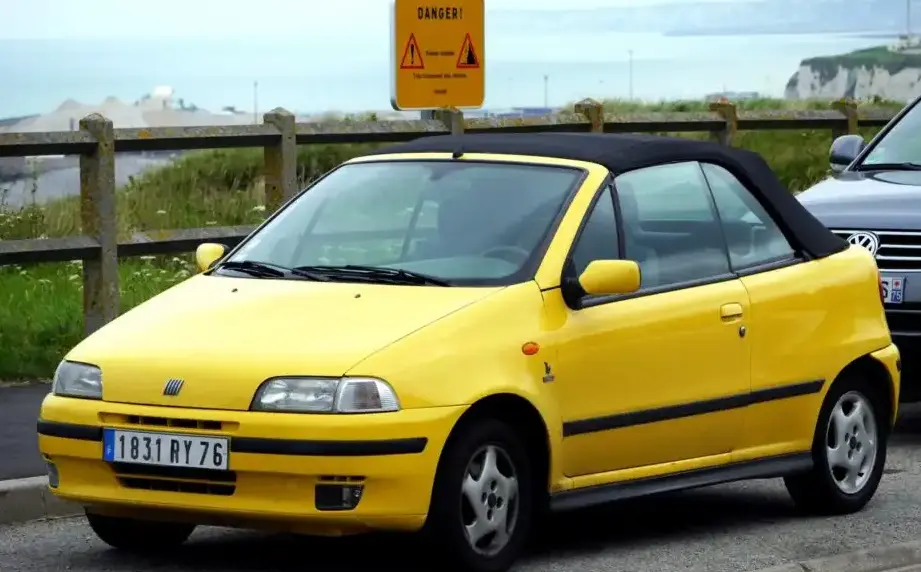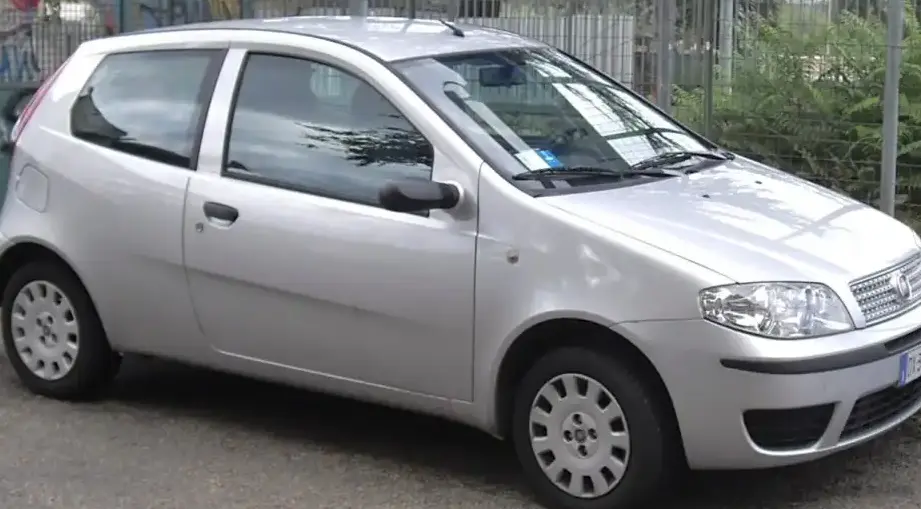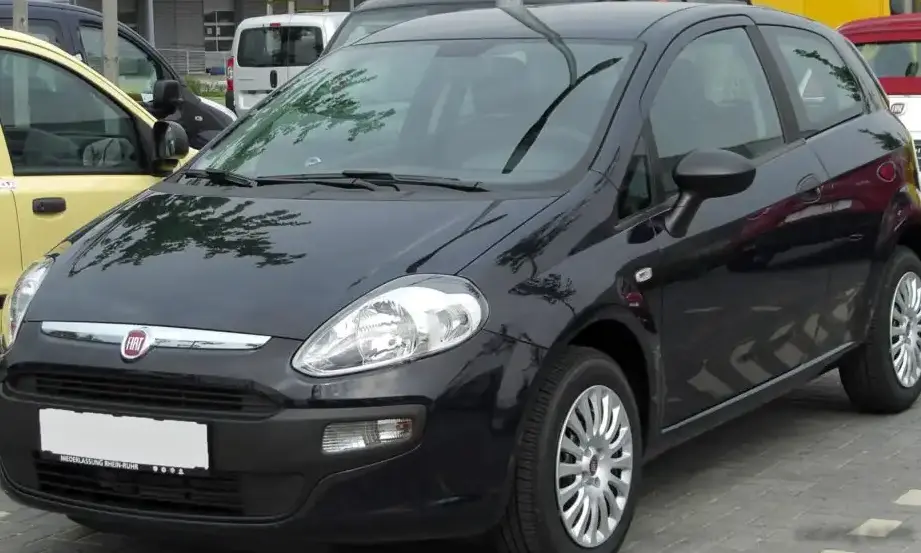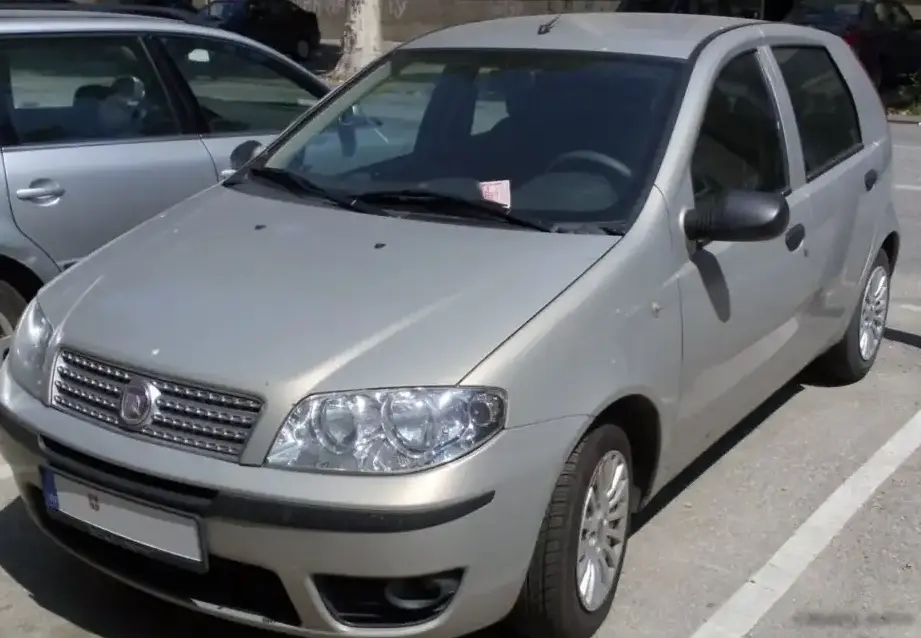
The Fiat Punto Classic 5-door 1.2 (60 hp) represents a continuation of the Punto model line, specifically produced from 2007 to 2010. This variant was positioned as the entry-level offering within the Classic range, designed to provide affordable and practical transportation. The Punto Classic itself was a simplified and cost-reduced version of the second-generation Punto (188), intended to bridge the gap between the outgoing model and the newer Grande Punto. It primarily served markets where affordability was a key purchasing factor, particularly in Southern Europe and emerging economies. This specific 1.2-liter engine and five-speed manual transmission combination aimed to balance fuel efficiency with acceptable usability for everyday driving.
Technical Specifications
| Brand | Fiat |
| Model | Punto |
| Generation | Punto Classic 5d |
| Type (Engine) | 1.2 (60 Hp) |
| Start of production | 2007 |
| End of production | 2010 |
| Powertrain Architecture | Internal Combustion engine |
| Body type | Hatchback |
| Seats | 5 |
| Doors | 5 |
| Fuel consumption (urban) | 7.1 l/100 km (33.1 US mpg) |
| Fuel consumption (extra urban) | 4.8 l/100 km (49 US mpg) |
| Fuel consumption (combined) | 5.6 l/100 km (42 US mpg) |
| Fuel Type | Petrol (Gasoline) |
| Acceleration 0 – 100 km/h | 14.3 sec |
| Acceleration 0 – 62 mph | 14.3 sec |
| Acceleration 0 – 60 mph | 13.6 sec |
| Maximum speed | 155 km/h (96.31 mph) |
| Emission standard | Euro 4 |
| Weight-to-power ratio | 14.8 kg/Hp |
| Weight-to-torque ratio | 8.7 kg/Nm |
| Power | 60 Hp @ 5000 rpm |
| Torque | 102 Nm @ 2500 rpm (75.23 lb.-ft. @ 2500 rpm) |
| Engine layout | Front, Transverse |
| Engine Model/Code | 188A4000 |
| Engine displacement | 1242 cm3 (75.79 cu. in.) |
| Number of cylinders | 4 |
| Engine configuration | Inline |
| Cylinder Bore | 70.8 mm (2.79 in.) |
| Piston Stroke | 78.9 mm (3.11 in.) |
| Compression ratio | 9.8:1 |
| Number of valves per cylinder | 2 |
| Fuel injection system | Multi-port manifold injection |
| Engine aspiration | Naturally aspirated |
| Engine oil capacity | 2.8 l (2.96 US qt | 2.46 UK qt) |
| Coolant capacity | 4.2 l (4.44 US qt | 3.7 UK qt) |
| Kerb Weight | 885 kg (1951.09 lbs.) |
| Max. weight | 1395 kg (3075.45 lbs.) |
| Max load | 510 kg (1124.36 lbs.) |
| Trunk (boot) space – minimum | 297 l (10.49 cu. ft.) |
| Trunk (boot) space – maximum | 1080 l (38.14 cu. ft.) |
| Fuel tank capacity | 47 l (12.42 US gal | 10.34 UK gal) |
| Length | 3865 mm (152.17 in.) |
| Width | 1660 mm (65.35 in.) |
| Height | 1480 mm (58.27 in.) |
| Wheelbase | 2460 mm (96.85 in.) |
| Front track | 1398 mm (55.04 in.) |
| Rear track | 1392 mm (54.8 in.) |
| Drag coefficient (Cd) | 0.32 |
| Minimum turning circle | 10.5 m (34.45 ft.) |
| Drivetrain Architecture | Front wheel drive |
| Number of gears | 5 |
| Gearbox type | Manual transmission |
| Front suspension | Spring Strut |
| Rear suspension | Torsion |
| Front brakes | Ventilated discs |
| Rear brakes | Drum |
| Assisting systems | ABS (Anti-lock braking system) |
| Steering type | Steering rack and pinion |
| Power steering | Electric |
| Tires size | 165/70 R14 |
Powertrain & Engine Architecture
The heart of the Punto Classic 1.2 is the 188A4000 engine, a 1.2-liter inline-four cylinder gasoline engine. This engine is a naturally aspirated unit, meaning it doesn’t utilize a turbocharger or supercharger. It features a single overhead camshaft (SOHC) operating two valves per cylinder. Fuel delivery is managed by a multi-point fuel injection system, providing a balance between efficiency and performance. The engine’s 9.8:1 compression ratio is relatively modest, contributing to its ability to run on readily available fuel grades. The 60 horsepower peak is achieved at 5000 rpm, while the 102 Nm (75.23 lb-ft) of torque is delivered at 2500 rpm. Paired with this engine is a five-speed manual transmission, chosen for its simplicity and cost-effectiveness. This transmission features a conventional shift linkage and is designed for durability rather than sporty performance.
Driving Characteristics
The driving experience in the Punto Classic 1.2 is characterized by its focus on practicality and economy. With only 60 horsepower, acceleration is modest, taking approximately 14.3 seconds to reach 62 mph (100 km/h). The engine feels strained when pushed hard, particularly when fully loaded or climbing hills. The five-speed gearbox is well-matched to the engine’s characteristics, with relatively short gear ratios designed to keep the engine within its optimal operating range. However, this also means that highway cruising requires the engine to work harder, resulting in increased noise and fuel consumption. Compared to higher-spec Punto variants with larger engines (like the 1.4-liter), the 1.2 feels significantly less powerful. The manual transmission provides more driver engagement than an automatic would, but it doesn’t offer the responsiveness of sportier gearboxes.
Equipment & Trim Levels
The Punto Classic 1.2 was typically equipped with a basic level of standard features. Interior appointments were functional rather than luxurious, with durable cloth upholstery and a simple dashboard layout. Power steering was standard, as was an anti-lock braking system (ABS), a notable safety feature for its class. Air conditioning, central locking, and electric front windows were often optional extras, depending on the market and specific trim package. The overall interior design prioritized practicality and ease of use, with clearly labeled controls and ample storage spaces. The exterior styling was relatively understated, with body-colored bumpers and door handles being common features.
Chassis & Braking
The Punto Classic utilizes a relatively simple chassis design. The front suspension consists of MacPherson strut springs, while the rear suspension employs a torsion beam setup. This configuration provides a reasonable balance between ride comfort and handling, although it’s not particularly sporty. The front brakes are ventilated discs, offering adequate stopping power for the vehicle’s weight and performance. However, the rear brakes are drums, which are less effective than disc brakes and can be prone to fading under heavy use. The steering is rack and pinion, providing reasonably precise control, although it lacks the feel of more sophisticated steering systems.
Market Reception & Comparison
The Punto Classic 1.2 was generally well-received as an affordable and reliable city car. Critics praised its fuel efficiency and low running costs, but noted its lack of performance and refinement. Compared to other entry-level hatchbacks of the time, such as the Renault Clio or Peugeot 206, the Punto Classic offered a competitive price point but lacked some of their more advanced features and stylish designs. The 1.2-liter engine provided acceptable fuel economy – around 42 US mpg combined – but the higher-output 1.4-liter engine offered a noticeable improvement in performance with only a slight decrease in fuel efficiency. The manual transmission was preferred by many drivers for its simplicity and control, while an automated manual transmission (Dualogic) was available as an option, but often criticized for its jerky shifts.
Legacy
The Fiat Punto Classic 1.2, while not a performance icon, has proven to be a relatively durable and reliable vehicle. The 188A4000 engine is known for its robustness and relatively simple maintenance requirements. In the used car market, these Puntos are often sought after as inexpensive and practical transportation options. However, potential buyers should be aware of common issues such as corrosion, particularly in regions with harsh winters. Overall, the Punto Classic 1.2 represents a pragmatic and affordable solution for basic transportation needs, and its simplicity continues to appeal to budget-conscious buyers today.