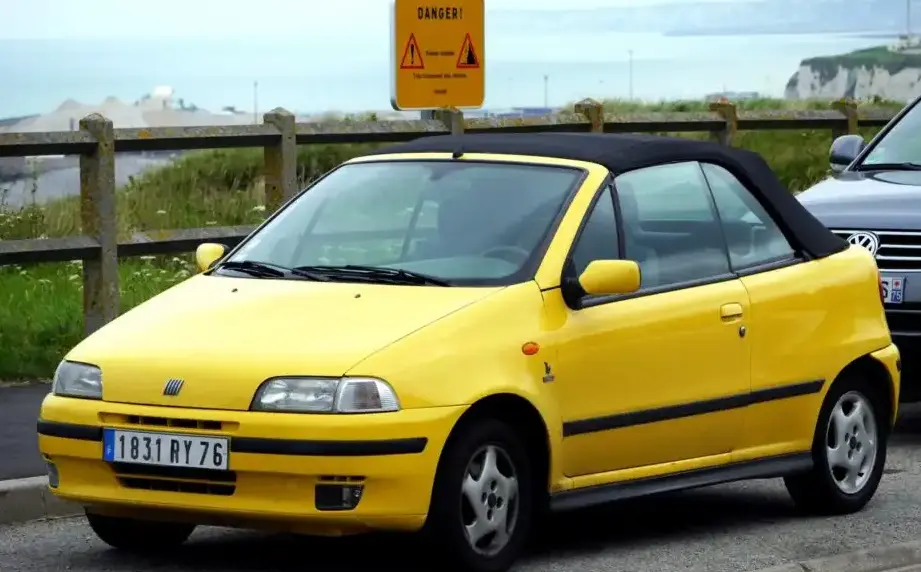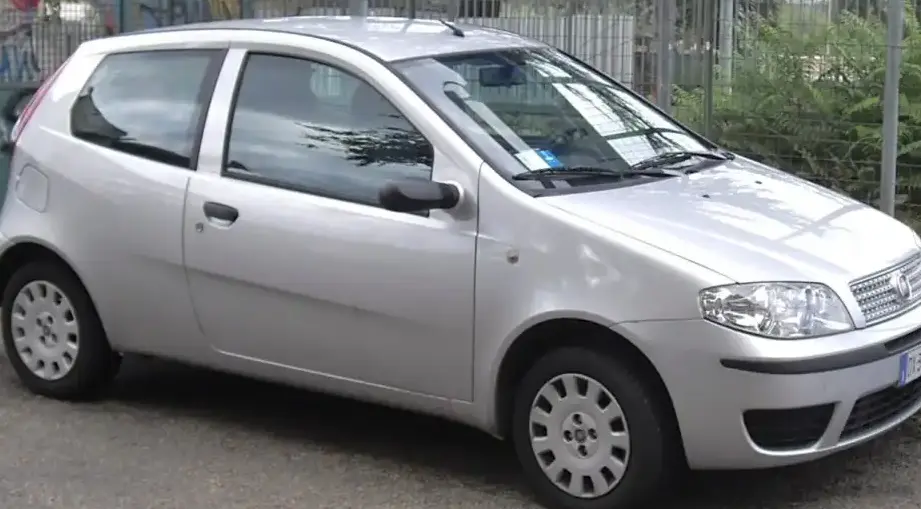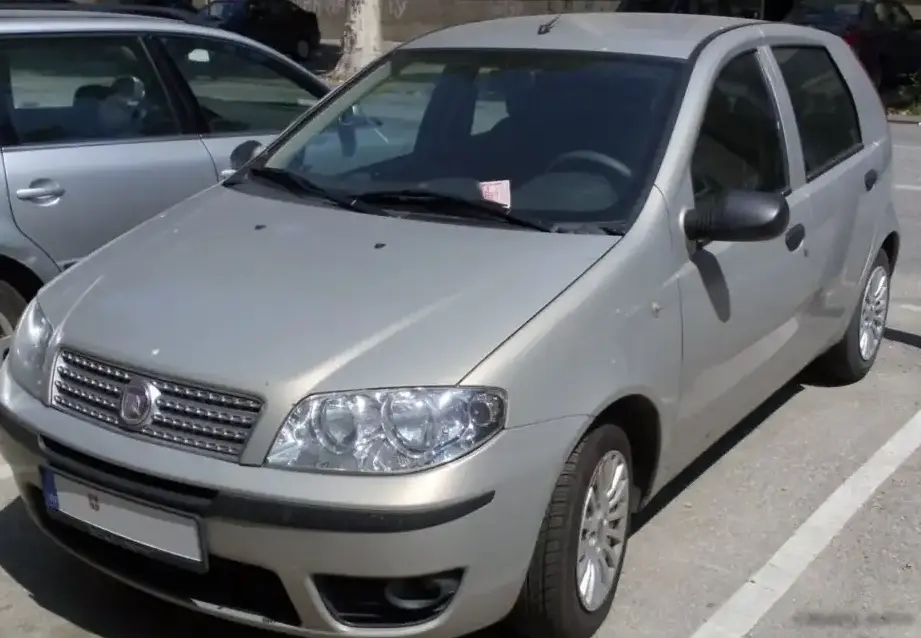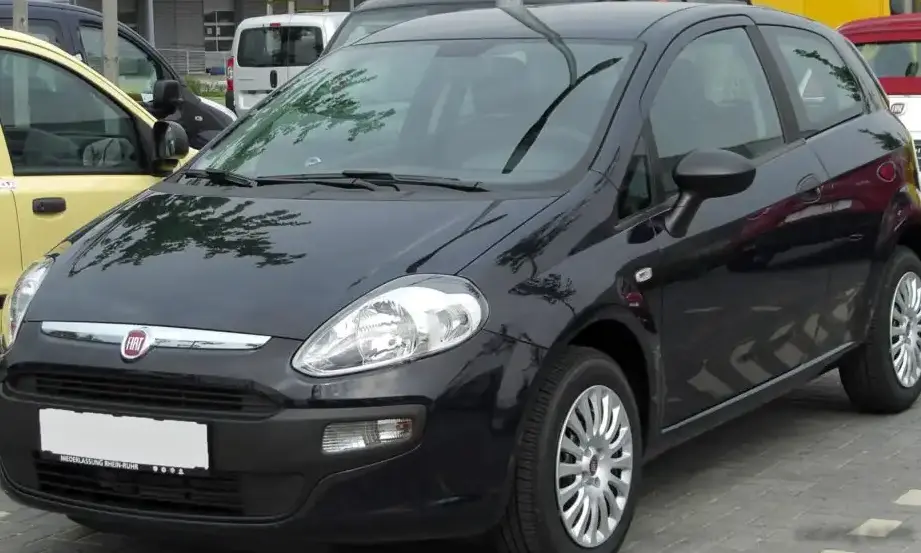
The Fiat Punto Evo 1.3 16V Multijet (95 Hp) Dualogic Start&Stop DPF was a variant of the Punto Evo (199 series) produced between 2009 and 2011. Positioned as a fuel-efficient and technologically advanced option within the Punto Evo range, it aimed to appeal to buyers seeking a blend of practicality, economy, and convenience. This model combined a small-displacement diesel engine with Fiat’s Dualogic automated manual transmission and Start&Stop technology, making it a relatively modern offering in the subcompact hatchback segment.
Technical Specifications
| Brand | Fiat |
| Model | Punto |
| Generation | Punto Evo (199) |
| Type (Engine) | 1.3 16V Multijet (95 Hp) Dualogic Start&Stop DPF |
| Start of production | 2009 |
| End of production | 2011 |
| Powertrain Architecture | Internal Combustion engine |
| Body type | Hatchback |
| Seats | 5 |
| Doors | 3-5 |
| Fuel consumption (urban) | 5 l/100 km (47 US mpg, 56.5 UK mpg, 20 km/l) |
| Fuel consumption (extra urban) | 3.5 l/100 km (67.2 US mpg, 80.7 UK mpg, 28.6 km/l) |
| Fuel consumption (combined) | 4.1 l/100 km (57.4 US mpg, 68.9 UK mpg, 24.4 km/l) |
| CO2 emissions | 107 g/km |
| Fuel Type | Diesel |
| Acceleration 0 – 100 km/h | 11.7 sec |
| Acceleration 0 – 62 mph | 11.7 sec |
| Acceleration 0 – 60 mph | 11.1 sec |
| Maximum speed | 178 km/h (110.6 mph) |
| Emission standard | Euro 5 |
| Weight-to-power ratio | 11.9 kg/Hp, 84.1 Hp/tonne |
| Weight-to-torque ratio | 5.7 kg/Nm, 177 Nm/tonne |
| Power | 95 Hp @ 4000 rpm |
| Power per litre | 76.1 Hp/l |
| Torque | 200 Nm @ 1500 rpm (147.51 lb.-ft. @ 1500 rpm) |
| Engine layout | Front, Transverse |
| Engine Model/Code | 199B1000 |
| Engine displacement | 1248 cm3 (76.16 cu. in.) |
| Number of cylinders | 4 |
| Engine configuration | Inline |
| Cylinder Bore | 69.6 mm (2.74 in.) |
| Piston Stroke | 82 mm (3.23 in.) |
| Compression ratio | 16.8:1 |
| Number of valves per cylinder | 4 |
| Fuel injection system | Diesel Commonrail |
| Engine aspiration | Turbocharger, Intercooler |
| Valvetrain | DOHC |
| Engine oil capacity | 3.2 l (3.38 US qt | 2.82 UK qt) |
| Coolant | 6.7 l (7.08 US qt | 5.9 UK qt) |
| Kerb Weight | 1130 kg (2491.22 lbs.) |
| Max. weight | 1690 kg (3725.81 lbs.) |
| Max load | 560 kg (1234.59 lbs.) |
| Trunk (boot) space – minimum | 275 l (9.71 cu. ft.) |
| Trunk (boot) space – maximum | 1030 l (36.37 cu. ft.) |
| Fuel tank capacity | 45 l (11.89 US gal | 9.9 UK gal) |
| Permitted trailer load with brakes (12%) | 1000 kg (2204.62 lbs.) |
| Permitted trailer load without brakes | 400 kg (881.85 lbs.) |
| Length | 4065 mm (160.04 in.) |
| Width | 1687 mm (66.42 in.) |
| Height | 1490 mm (58.66 in.) |
| Wheelbase | 2510 mm (98.82 in.) |
| Front track | 1473 mm (57.99 in.) |
| Rear (Back) track | 1466 mm (57.72 in.) |
| Drag coefficient (Cd) | 0.34 |
| Minimum turning circle | 10.9 m (35.76 ft.) |
| Drivetrain Architecture | The Internal combustion engine (ICE) drives the front wheels of the vehicle. |
| Drive wheel | Front wheel drive |
| Number of gears and type of gearbox | 6 gears, automatic transmission Dualogic |
| Front suspension | Independent, type McPherson with coil spring and anti-roll bar |
| Rear suspension | Semi-independent, coil spring |
| Front brakes | Ventilated discs |
| Rear brakes | Drum |
| Assisting systems | ABS (Anti-lock braking system) |
| Steering type | Steering rack and pinion |
| Power steering | Electric Steering |
| Tires size | 185/65 R15; 195/55 R16; 205/45 R17 |
| Wheel rims size | 15; 16; 17 |
INTRODUCTION
The Fiat Punto Evo, launched in 2009, represented a significant evolution of the Punto supermini. Built on the Fiat Small Wide Platform (derived from the 1HX0/A3 platform shared with Peugeot and Citroen), the Evo aimed to offer improved refinement, safety, and technology compared to its predecessor. The 1.3 16V Multijet (95 Hp) Dualogic Start&Stop DPF variant was introduced as a key model within the range, targeting buyers prioritizing fuel efficiency and ease of use. It was primarily sold in European markets, where small, economical diesel hatchbacks were highly popular. This trim level sat in the mid-range of the Punto Evo lineup, offering a balance between affordability and features.
Powertrain & Engine Architecture
At the heart of this Punto Evo variant lies the 199B1000 engine, a 1.3-liter inline-four cylinder diesel engine. This engine is a member of Fiat’s Multijet family, known for its common-rail direct injection system and turbocharging. The 16-valve DOHC configuration contributes to improved breathing and efficiency. The engine produces 95 horsepower at 4000 rpm and 200 Nm (147.51 lb.-ft.) of torque at 1500 rpm. The Multijet system utilizes solenoid injectors and a high-pressure fuel pump to deliver precisely metered fuel directly into the combustion chamber. The turbocharger, coupled with an intercooler, enhances power output and torque across a wider rev range.
The Dualogic transmission is a five-speed automated manual gearbox. It’s essentially a conventional manual transmission with electronically controlled actuators that handle clutch operation and gear changes. While offering the convenience of an automatic, it doesn’t provide the smoothness of a traditional torque-converter automatic. The Start&Stop system automatically shuts off the engine when the vehicle comes to a halt (e.g., at traffic lights) and restarts it instantly when the driver depresses the clutch or brake pedal, further improving fuel economy.
Driving Characteristics
The 1.3 Multijet engine, while not exceptionally powerful, provides adequate performance for urban and highway driving. Acceleration from 0-60 mph takes around 11.1 seconds, and the top speed is 178 km/h (110.6 mph). The Dualogic transmission, however, can exhibit some jerkiness during gear changes, particularly at lower speeds. Compared to the manual version of the same engine, the Dualogic offers less driver engagement but greater convenience. Higher-output Punto Evo variants, such as those with the 1.4-liter petrol engine, offered significantly quicker acceleration but at the expense of fuel economy. The gear ratios in the Dualogic transmission are optimized for fuel efficiency rather than outright performance, resulting in a relaxed driving experience.
Equipment & Trim Levels
The 1.3 16V Multijet (95 Hp) Dualogic Start&Stop DPF typically came equipped with features such as air conditioning, power steering, electric front windows, a CD/MP3 stereo, and ABS brakes. Higher trim levels offered options like alloy wheels, fog lights, a trip computer, and remote central locking. Interior upholstery was typically cloth, with a functional and durable design. The dashboard layout was modern for its time, with a clear instrument cluster and logically arranged controls. Optional extras included a panoramic sunroof and a navigation system.
Chassis & Braking
The Punto Evo featured a McPherson strut front suspension and a semi-independent twist-beam rear suspension. This setup provided a reasonable balance between ride comfort and handling. The front brakes were ventilated discs, while the rear brakes were drums. ABS (Anti-lock Braking System) was standard, enhancing braking performance and safety. Stabilizer bars were fitted to both the front and rear axles to reduce body roll during cornering. The suspension tuning was geared towards comfort rather than sporty handling.
Market Reception & Comparison
The Punto Evo 1.3 Multijet Dualogic was generally well-received by automotive critics for its fuel efficiency and low running costs. However, the Dualogic transmission was often criticized for its sometimes-abrupt gear changes. Compared to other Punto Evo trims, the 1.3 Multijet offered the best fuel economy, making it an attractive option for drivers covering high mileages. The 1.4-liter petrol version provided more performance but consumed more fuel. The 1.9-liter diesel variants offered more torque but were more expensive to purchase and maintain.
Legacy
The 1.3 Multijet engine proved to be a reliable and durable unit, and many Punto Evo models equipped with this engine are still on the road today. The Dualogic transmission, however, can be prone to issues if not properly maintained. In the used car market, the 1.3 Multijet Dualogic variant represents a good value proposition for buyers seeking an economical and practical hatchback. Its fuel efficiency and relatively low maintenance costs continue to make it an appealing choice, despite its age. The Punto Evo, as a whole, helped solidify Fiat’s position in the European small car market, and the 1.3 Multijet engine remains a popular choice in other Fiat and Alfa Romeo models.