Technical Specifications
| Brand | Fiat |
| Model | Punto |
| Generation | Punto Evo (199) |
| Type (Engine) | 1.3 16V Multijet (95 Hp) Start&Stop DPF |
| Start of production | 2009 |
| End of production | 2011 |
| Powertrain Architecture | Internal Combustion engine |
| Body type | Hatchback |
| Seats | 5 |
| Doors | 3-5 |
| Fuel consumption (urban) | 5.3 l/100 km (44.4 US mpg, 53.3 UK mpg, 18.9 km/l) |
| Fuel consumption (extra urban) | 3.5 l/100 km (67.2 US mpg, 80.7 UK mpg, 28.6 km/l) |
| Fuel consumption (combined) | 4.2 l/100 km (56 US mpg, 67.3 UK mpg, 23.8 km/l) |
| CO2 emissions | 110 g/km |
| Fuel Type | Diesel |
| Acceleration 0 – 100 km/h | 11.7 sec |
| Acceleration 0 – 62 mph | 11.7 sec |
| Acceleration 0 – 60 mph | 11.1 sec |
| Maximum speed | 178 km/h (110.6 mph) |
| Emission standard | Euro 5 |
| Weight-to-power ratio | 11.9 kg/Hp, 84.1 Hp/tonne |
| Weight-to-torque ratio | 5.7 kg/Nm, 177 Nm/tonne |
| Power | 95 Hp @ 4000 rpm |
| Power per litre | 76.1 Hp/l |
| Torque | 200 Nm @ 1500 rpm (147.51 lb.-ft. @ 1500 rpm) |
| Engine layout | Front, Transverse |
| Engine Model/Code | 199B1000 |
| Engine displacement | 1248 cm3 (76.16 cu. in.) |
| Number of cylinders | 4 |
| Engine configuration | Inline |
| Cylinder Bore | 69.6 mm (2.74 in.) |
| Piston Stroke | 82 mm (3.23 in.) |
| Compression ratio | 16.8:1 |
| Number of valves per cylinder | 4 |
| Fuel injection system | Diesel Commonrail |
| Engine aspiration | Turbocharger, Intercooler |
| Valvetrain | DOHC |
| Engine oil capacity | 3.2 l (3.38 US qt | 2.82 UK qt) |
| Coolant | 6.7 l (7.08 US qt | 5.9 UK qt) |
| Kerb Weight | 1130 kg (2491.22 lbs.) |
| Max. weight | 1690 kg (3725.81 lbs.) |
| Max load | 560 kg (1234.59 lbs.) |
| Trunk (boot) space – minimum | 275 l (9.71 cu. ft.) |
| Trunk (boot) space – maximum | 1030 l (36.37 cu. ft.) |
| Fuel tank capacity | 45 l (11.89 US gal | 9.9 UK gal) |
| Permitted trailer load with brakes (12%) | 1000 kg (2204.62 lbs.) |
| Permitted trailer load without brakes | 400 kg (881.85 lbs.) |
| Length | 4065 mm (160.04 in.) |
| Width | 1687 mm (66.42 in.) |
| Height | 1490 mm (58.66 in.) |
| Wheelbase | 2510 mm (98.82 in.) |
| Front track | 1473 mm (57.99 in.) |
| Rear (Back) track | 1466 mm (57.72 in.) |
| Drag coefficient (Cd) | 0.34 |
| Minimum turning circle | 10.9 m (35.76 ft.) |
| Drivetrain Architecture | Front wheel drive |
| Drive wheel | Front wheel drive |
| Number of gears | 5 gears, manual transmission |
| Front suspension | Independent, type McPherson with coil spring and anti-roll bar |
| Rear suspension | Semi-independent, coil spring |
| Front brakes | Ventilated discs |
| Rear brakes | Drum |
| Assisting systems | ABS (Anti-lock braking system) |
| Steering type | Steering rack and pinion |
| Power steering | Electric Steering |
| Tires size | 185/65 R15; 195/55 R16; 205/45 R17 |
| Wheel rims size | 15; 16; 17 |
Introduction
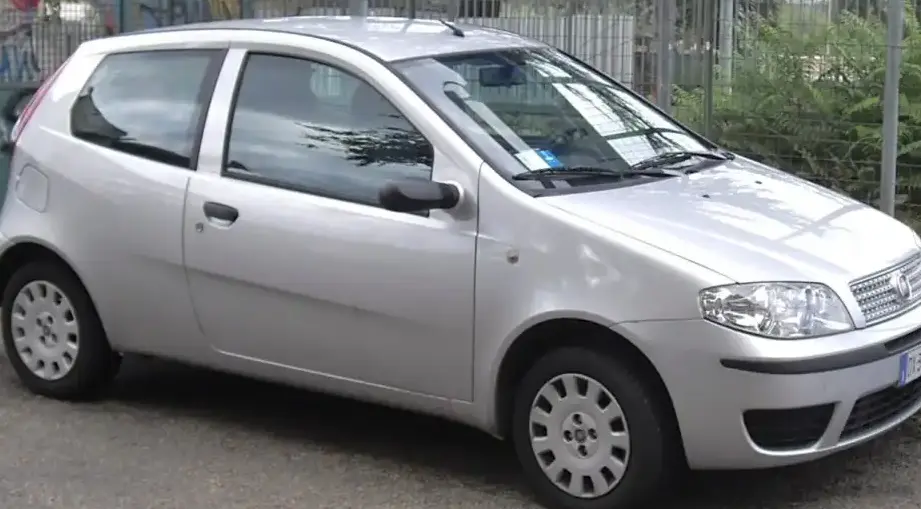
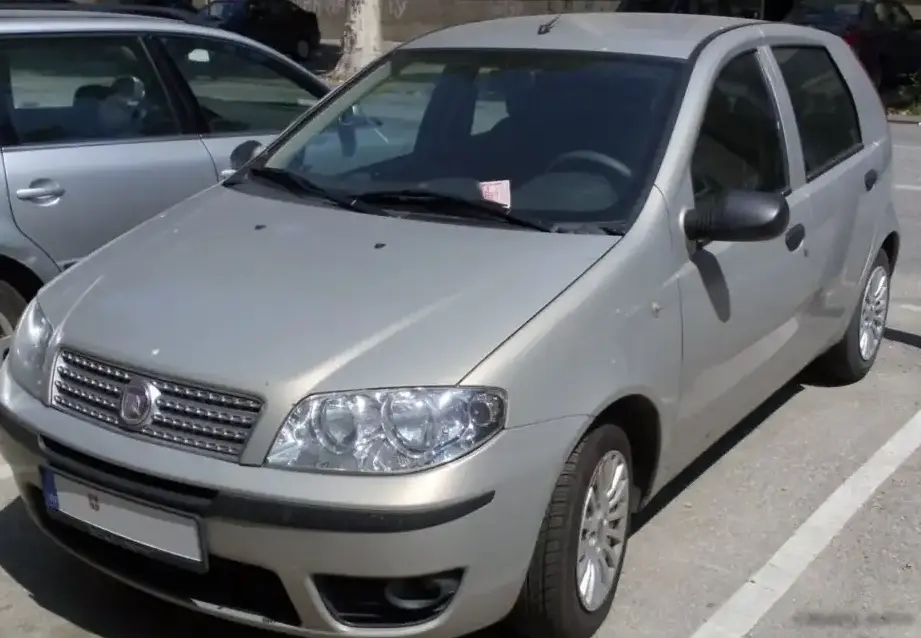
The Fiat Punto Evo 1.3 16V Multijet (95 hp) Start&Stop DPF was a subcompact hatchback produced by Fiat between 2009 and 2011. It represented a substantial refresh of the second-generation Punto, known internally as the 199 series. This update brought with it revised exterior styling, an improved interior with enhanced material quality, and the introduction of more modern engine technologies. The 1.3 Multijet variant, equipped with a five-speed manual transmission, was positioned as an economy-focused offering within the Punto Evo range, appealing to buyers who prioritized fuel efficiency and low running costs. The Punto Evo was primarily marketed in European countries where smaller, fuel-efficient diesel vehicles were particularly popular due to higher fuel prices and stricter emissions regulations.
Powertrain & Engine Architecture
At the core of this Punto Evo trim is the 1.3-liter 16V Multijet diesel engine, identified by the engine code 199B1000. This engine is a four-cylinder, inline configuration, employing a common rail direct injection system coupled with a turbocharger and intercooler. The common rail system, operating at extremely high pressures, allows for precise fuel atomization and optimized combustion, contributing to both power and efficiency. The turbocharger forces more air into the cylinders, boosting power output. The engine features a double overhead camshaft (DOHC) valvetrain, operating four valves per cylinder to enhance breathing and overall performance. The Start&Stop system automatically shuts down the engine when the vehicle is stationary – for example, at a red light – and instantly restarts it when the clutch pedal is depressed, further improving fuel economy. The standard transmission for this variant was a five-speed manual gearbox, offering a balance between fuel efficiency and driver engagement.
Driving Characteristics
The 95 horsepower Multijet engine, paired with the five-speed manual transmission, delivered adequate, though not particularly sporty, performance. Acceleration from 0 to 60 mph took approximately 11.1 seconds, and the vehicle had a top speed of around 110.6 mph. The engine’s 200 Nm (147.51 lb-ft) of torque, readily available from just 1500 rpm, provided good low-end responsiveness, making it well-suited for city driving and overtaking. However, when compared to higher-output Punto Evo models, such as those equipped with the 1.4-liter gasoline engine, this variant felt noticeably slower. The gear ratios were optimized for fuel economy, which could sometimes result in the engine feeling strained at higher speeds. The manual transmission provided a more connected and engaging driving experience compared to the optional Dualogic automated manual transmission.
Equipment & Trim Levels
The 1.3 Multijet 95 hp Start&Stop DPF typically came with a reasonable level of standard equipment. This generally included central locking, power front windows, a basic audio system with MP3 playback capability, and ABS brakes. Air conditioning was frequently offered as an optional extra. The interior upholstery was typically cloth, and the dashboard layout was functional, if somewhat basic. Higher trim levels, such as the Dynamic or Sport, added features like alloy wheels, upgraded audio systems, climate control, and more premium interior materials. Fiat offered a range of customization options, allowing buyers to personalize their Punto Evo to suit their individual preferences.
Chassis & Braking
The Punto Evo utilized a McPherson strut front suspension and a semi-independent torsion beam rear suspension. This configuration provided a comfortable ride quality, making it suitable for everyday driving conditions. The front brakes were ventilated discs, offering good stopping power, while the rear brakes were drums, a cost-saving measure common in this vehicle segment. Electric power steering provided light and easy steering, enhancing maneuverability in urban environments. Stabilizer bars were fitted to both the front and rear axles to minimize body roll during cornering.
Market Reception & Comparison
The Punto Evo 1.3 Multijet was generally well-received by automotive critics for its impressive fuel efficiency and low running costs. It was considered a practical and economical choice for urban commuters and those seeking a small, affordable hatchback. Compared to the gasoline-powered versions of the Punto Evo, the Multijet offered significantly better fuel economy. However, some reviewers noted that the engine could be somewhat noisy and lacked the refinement of some of its competitors. When compared to other diesel-powered small cars, such as the Renault Clio or Peugeot 207, the Punto Evo offered a competitive package in terms of price and fuel economy, though often with a slightly less refined driving experience.
Legacy
The 1.3 Multijet engine proved to be a reliable and durable unit, and a significant number of examples remain in operation today. While diesel engines have faced increased scrutiny in recent years due to emissions concerns, the 1.3 Multijet remains a relatively clean and efficient option, particularly when compared to older diesel technologies. On the used car market, the Punto Evo 1.3 Multijet is often sought after by buyers looking for an affordable and economical vehicle. Maintenance costs are generally reasonable, and parts availability is good. However, potential buyers should be aware of the possibility of diesel particulate filter (DPF) issues, especially if the vehicle has been primarily used for short journeys where the DPF may not fully regenerate.