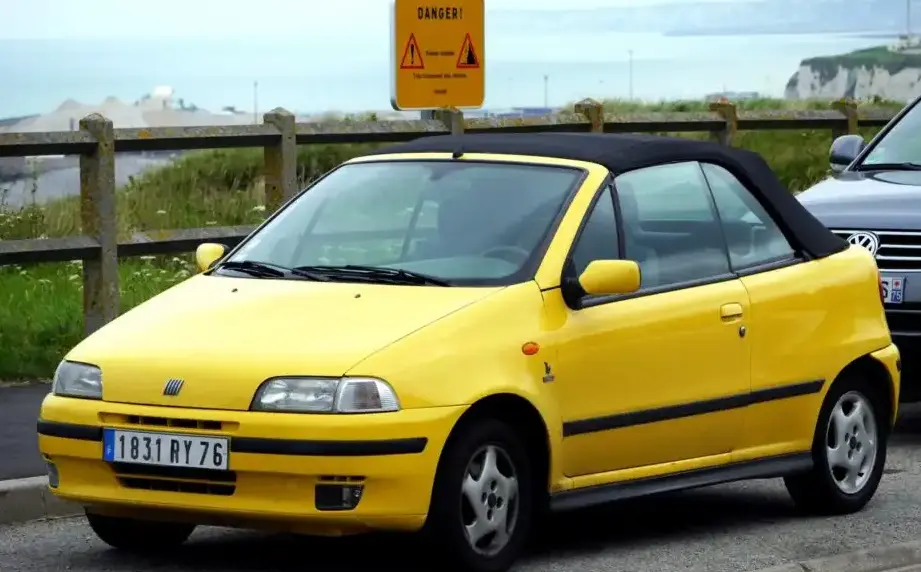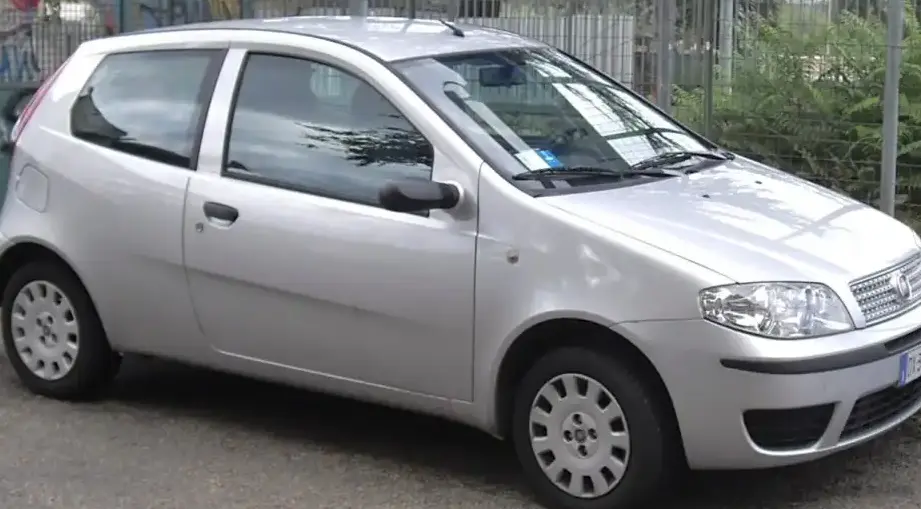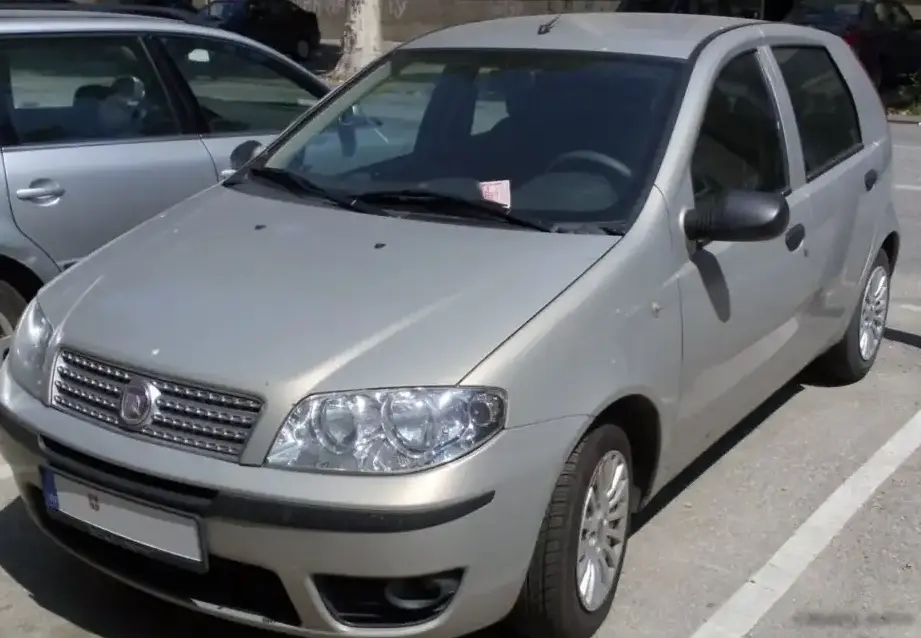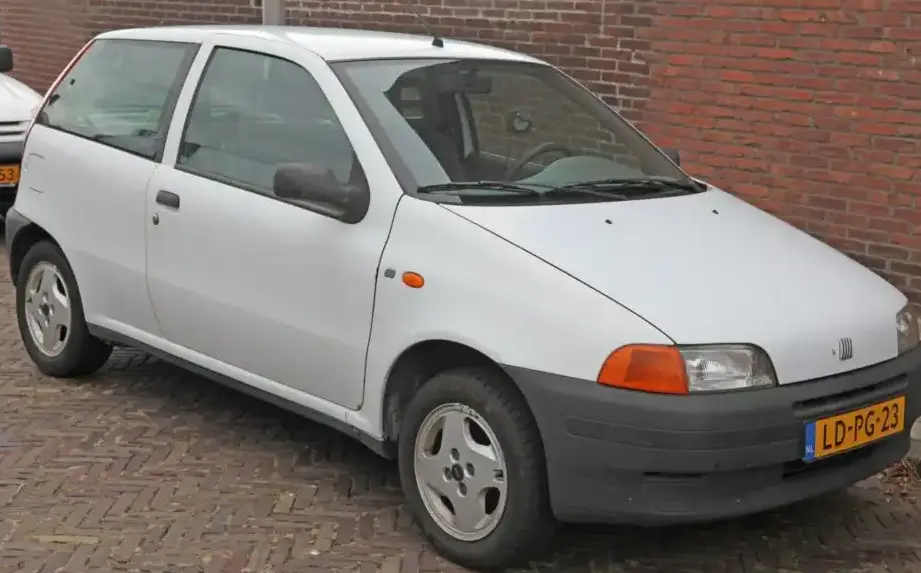
The Fiat Punto Mk1, internally designated as the 176 series, was a supermini produced by the Italian manufacturer Fiat between 1993 and 1999. Replacing the Fiat Uno, the Punto represented a significant step forward in terms of design, safety, and interior space for the brand’s entry-level offering. The 1.1-liter (55 hp) variant, produced from 1993 to 1996, served as the base model within the Punto range, aimed at budget-conscious buyers and those prioritizing fuel efficiency. It was available in both 3-door and 5-door body styles. This version played a crucial role in establishing the Punto as a popular choice in the European small car segment.
Technical Specifications
| Brand | Fiat |
| Model | Punto |
| Generation | Punto I (176) |
| Type (Engine) | 1.1 (55 Hp) |
| Start of production | 1993 |
| End of production | 1996 |
| Powertrain Architecture | Internal Combustion engine |
| Body type | Hatchback |
| Seats | 5 |
| Doors | 3-5 |
| Fuel consumption (urban) | 8 l/100 km (29.4 US mpg) |
| Fuel consumption (extra urban) | 5.5 l/100 km (42.8 US mpg) |
| Fuel consumption (combined) | 6.2 l/100 km (37.9 US mpg) |
| Fuel Type | Petrol (Gasoline) |
| Acceleration 0 – 100 km/h | 17 sec |
| Acceleration 0 – 62 mph | 17 sec |
| Acceleration 0 – 60 mph | 16.2 sec |
| Maximum speed | 155 km/h (96.31 mph) |
| Weight-to-power ratio | 15.3 kg/Hp |
| Weight-to-torque ratio | 9.9 kg/Nm |
| Power | 55 Hp @ 5500 rpm |
| Power per litre | 49.6 Hp/l |
| Torque | 85 Nm @ 3500 rpm (62.69 lb.-ft. @ 3500 rpm) |
| Engine layout | Front, Transverse |
| Engine Model/Code | 176 B2.000 |
| Engine displacement | 1108 cm3 (67.61 cu. in.) |
| Number of cylinders | 4 |
| Engine configuration | Inline |
| Cylinder Bore | 70 mm (2.76 in.) |
| Piston Stroke | 72 mm (2.83 in.) |
| Compression ratio | 9.6:1 |
| Number of valves per cylinder | 2 |
| Fuel injection system | Single-point injection |
| Engine aspiration | Naturally aspirated engine |
| Valvetrain | OHC |
| Engine oil capacity | 3.5 l (3.7 US qt | 3.08 UK qt) |
| Coolant capacity | 4.6 l (4.86 US qt | 4.05 UK qt) |
| Kerb Weight | 842 kg (1856.29 lbs.) |
| Max. weight | 1300 kg (2866.01 lbs.) |
| Max load | 458 kg (1009.72 lbs.) |
| Trunk (boot) space – minimum | 275 l (9.71 cu. ft.) |
| Trunk (boot) space – maximum | 1080 l (38.14 cu. ft.) |
| Fuel tank capacity | 47 l (12.42 US gal | 10.34 UK gal) |
| Length | 3760 mm (148.03 in.) |
| Width | 1625 mm (63.98 in.) |
| Height | 1460 mm (57.48 in.) |
| Wheelbase | 2450 mm (96.46 in.) |
| Front track | 1395 mm (54.92 in.) |
| Rear track | 1377 mm (54.21 in.) |
| Drag coefficient (Cd) | 0.31 |
| Minimum turning circle | 10.2 m (33.46 ft.) |
| Drivetrain Architecture | Front wheel drive |
| Number of gears | 5 gears, manual transmission |
| Front suspension | Wishbone |
| Rear suspension | Trailing arm |
| Front brakes | Disc |
| Rear brakes | Drum |
| Steering type | Steering rack and pinion |
| Tires size | 155/70 R13 |
INTRODUCTION
The Fiat Punto 1.1 (55 hp) was the entry point into the Punto Mk1 range, launched in 1993. Positioned as a practical and economical city car, it aimed to replace the aging Fiat Uno and appeal to a broad customer base. The Punto, designed by Giorgetto Giugiaro, represented a significant leap forward in terms of styling and interior packaging compared to its predecessor. The 1.1-liter engine, coupled with a five-speed manual transmission, was intended to provide adequate performance for urban driving while maximizing fuel efficiency. This variant was particularly popular in markets where fuel costs were high and driving distances were relatively short.
Powertrain & Engine Architecture
The Punto 1.1 utilized the Fiat 176 B2.000 engine, a 1108cc inline-four cylinder petrol engine. This engine featured a single overhead camshaft (OHC) and two valves per cylinder. Fuel delivery was managed by a single-point fuel injection system, a relatively simple and cost-effective technology for the time. The engine produced 55 horsepower at 5500 rpm and 85 Nm (63 lb-ft) of torque at 3500 rpm. The five-speed manual transmission was chosen for its efficiency and affordability. The engine’s design prioritized fuel economy and reliability over outright performance. The relatively low compression ratio of 9.6:1 further contributed to its ability to run on lower octane fuel, common in many European markets.
Driving Characteristics
The Punto 1.1, with its modest 55 horsepower, was not designed for spirited driving. Acceleration from 0 to 60 mph took approximately 16.2 seconds, and top speed was around 96 mph. However, within urban environments, the engine provided sufficient power for everyday driving. The gear ratios were optimized for fuel efficiency, meaning the engine needed to be revved relatively high to achieve optimal acceleration. Compared to the more powerful 1.4 and 1.6-liter versions of the Punto, the 1.1 felt noticeably slower, particularly when fully loaded or tackling inclines. The steering was light and responsive, making it easy to maneuver in tight city streets. The suspension, while basic, provided a reasonably comfortable ride on most road surfaces.
Equipment & Trim Levels
The base-level Punto 1.1 was typically equipped with basic amenities. Standard features included cloth upholstery, a simple dashboard layout, and manual windows and door locks. Power steering was often an optional extra. Safety features were also limited, with only a driver’s airbag being standard in some markets. Optional extras included a radio/cassette player, central locking, and electric front windows. The interior was designed with practicality in mind, offering reasonable space for passengers and luggage, especially considering the car’s small footprint. Trim levels varied slightly depending on the market, but the core focus remained on providing an affordable and functional vehicle.
Chassis & Braking
The Punto Mk1 utilized a front-wheel-drive layout with a relatively simple suspension setup. The front suspension consisted of independent wishbones, while the rear suspension employed a trailing arm configuration. This setup provided a good balance between ride comfort and handling. Braking duties were handled by disc brakes at the front and drum brakes at the rear. The braking system was adequate for the car’s weight and performance, but lacked the sophistication of more advanced systems found in higher-end vehicles. The steering was a rack and pinion system, providing precise and responsive control.
Market Reception & Comparison
The Fiat Punto 1.1 was generally well-received by critics as a practical and affordable city car. Its fuel efficiency was a major selling point, and its compact size made it easy to park and maneuver in urban environments. However, its lack of power was often criticized, particularly when compared to competitors like the Peugeot 205 and Renault Clio. The 1.4-liter Punto offered a noticeable performance improvement, but at a higher price point. In terms of reliability, the 1.1-liter engine proved to be relatively robust, although the single-point fuel injection system could occasionally require maintenance. Overall, the Punto 1.1 represented a good value proposition for budget-conscious buyers.
Legacy
The Fiat Punto Mk1 1.1 remains a relatively common sight on European roads today, testament to its durability and affordability. The 176 B2.000 engine, while not particularly powerful, is known for its reliability and ease of maintenance. Used examples are typically inexpensive to purchase and maintain, making them a popular choice for first-time car owners or those seeking a cheap and cheerful runabout. While not a performance icon, the Punto 1.1 played a significant role in establishing the Punto as a successful model for Fiat, paving the way for subsequent generations of the popular supermini.