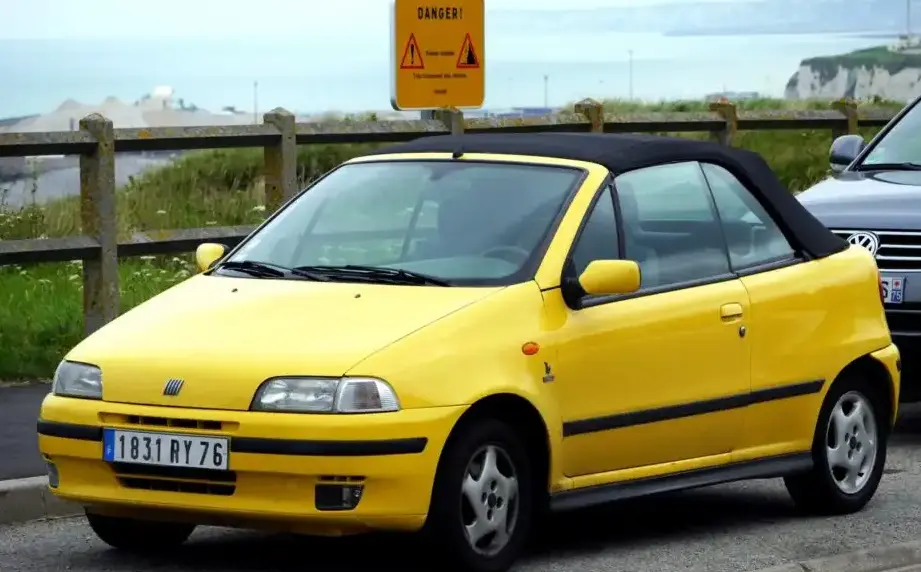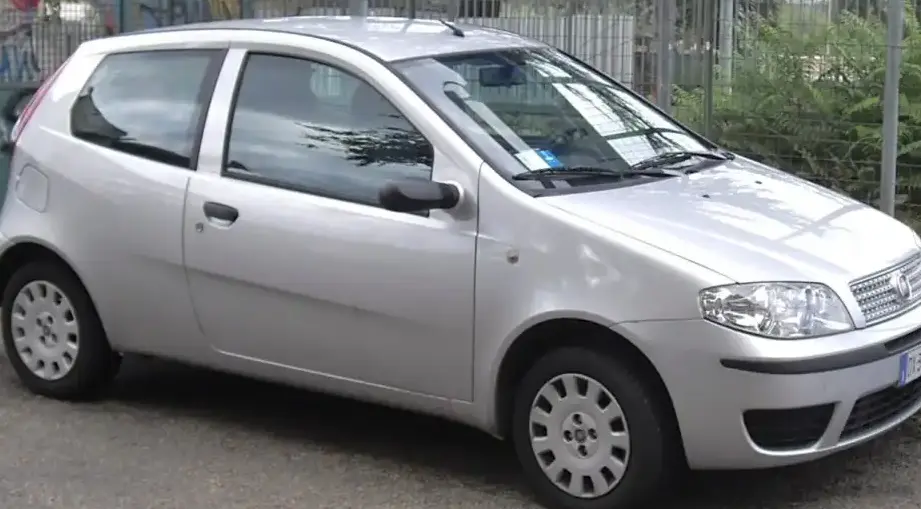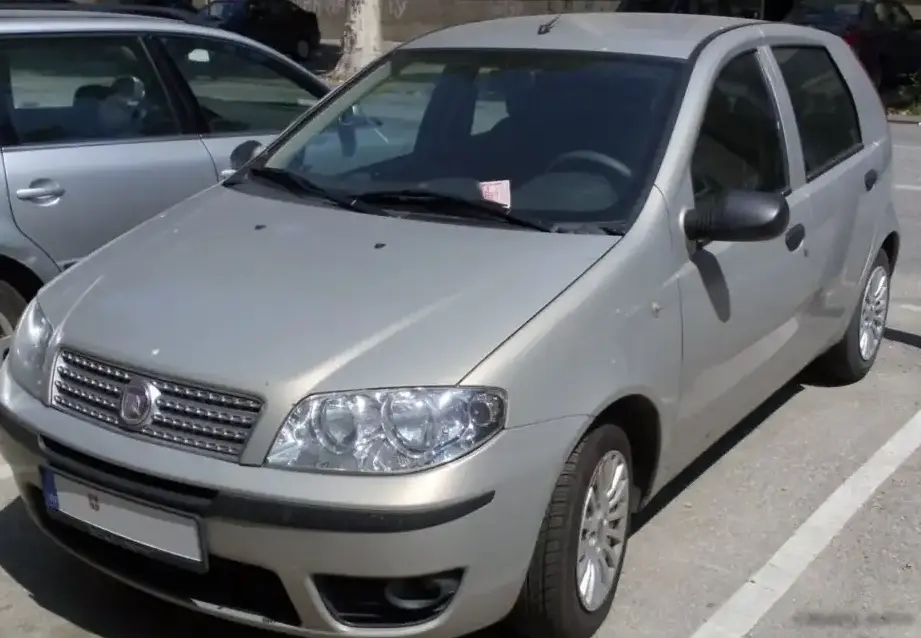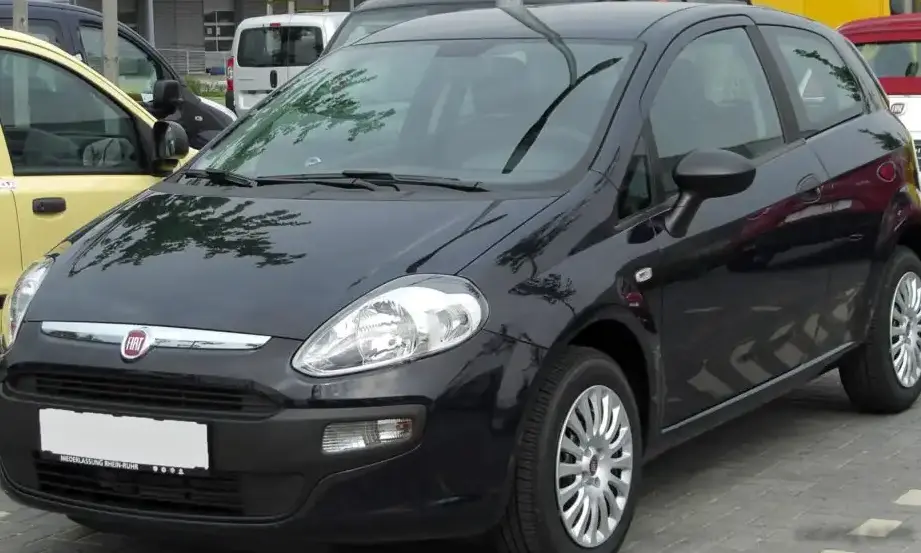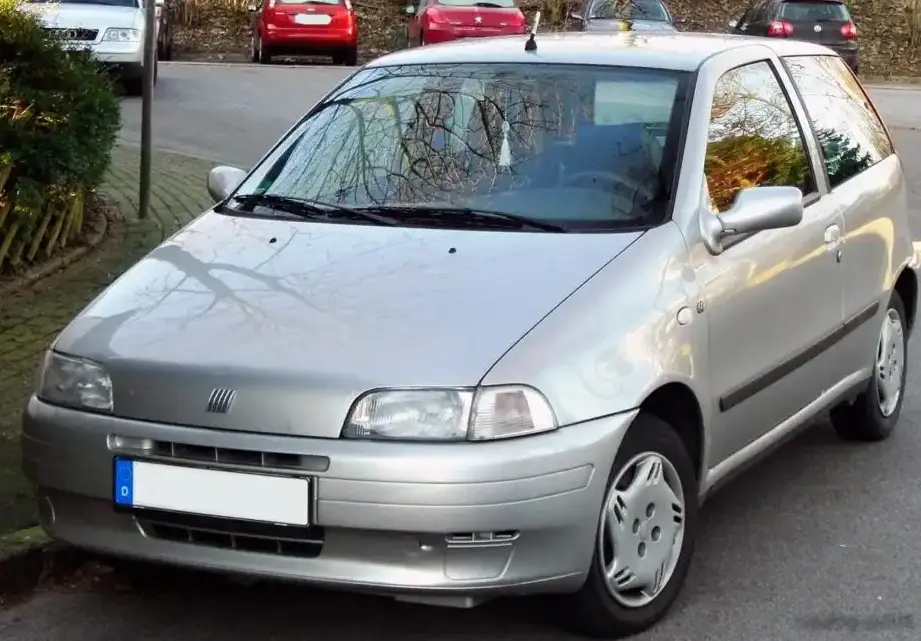
The Fiat Punto I (176 series), particularly the 70 TD 1.7 variant produced from 1997 to 1999, represented a significant offering in the European subcompact car market. This facelifted version of the original Punto, launched in 1993, aimed to provide an economical and practical transportation solution. The 70 TD model, powered by a 1.7-liter turbocharged diesel engine, was positioned as the fuel-efficient choice within the Punto range, appealing to buyers prioritizing low running costs over outright performance. It was available in both 3-door and 5-door body styles, catering to a broad range of customer needs.
Technical Specifications
| Brand | Fiat |
| Model | Punto |
| Generation | Punto I (176, facelift 1997) |
| Type (Engine) | 70 TD 1.7 (70 Hp) |
| Start of production | 1997 |
| End of production | 1999 |
| Powertrain Architecture | Internal Combustion engine |
| Body type | Hatchback |
| Seats | 5 |
| Doors | 3-5 |
| Fuel consumption (urban) | 8.4 l/100 km (28 US mpg, 33.6 UK mpg, 11.9 km/l) |
| Fuel consumption (extra urban) | 4.9 l/100 km (48 US mpg, 57.6 UK mpg, 20.4 km/l) |
| Fuel consumption (combined) | 6.2 l/100 km (37.9 US mpg, 45.6 UK mpg, 16.1 km/l) |
| Fuel Type | Diesel |
| Acceleration 0 – 100 km/h | 14.8 sec |
| Acceleration 0 – 62 mph | 14.8 sec |
| Acceleration 0 – 60 mph | 14.1 sec |
| Maximum speed | 163 km/h (101.28 mph) |
| Weight-to-power ratio | 14.4 kg/Hp, 69.3 Hp/tonne |
| Weight-to-torque ratio | 7.5 kg/Nm, 132.7 Nm/tonne |
| Power | 70 Hp @ 4500 rpm |
| Power per litre | 41.2 Hp/l |
| Torque | 134 Nm @ 2500 rpm (98.83 lb.-ft. @ 2500 rpm) |
| Engine layout | Front, Transverse |
| Engine Model/Code | 176A3000 |
| Engine displacement | 1698 cm3 (103.62 cu. in.) |
| Number of cylinders | 4 |
| Engine configuration | Inline |
| Cylinder Bore | 82.6 mm (3.25 in.) |
| Piston Stroke | 79.2 mm (3.12 in.) |
| Compression ratio | 19:1 |
| Number of valves per cylinder | 2 |
| Fuel injection system | Precombustion chamber injection |
| Engine aspiration | Turbocharger |
| Engine oil capacity | 4.8 l (5.07 US qt | 4.22 UK qt) |
| Coolant capacity | 7.1 l (7.5 US qt | 6.25 UK qt) |
| Kerb Weight | 1010 kg (2226.67 lbs.) |
| Max. weight | 1460 kg (3218.75 lbs.) |
| Max load | 450 kg (992.08 lbs.) |
| Trunk (boot) space – minimum | 275 l (9.71 cu. ft.) |
| Trunk (boot) space – maximum | 1080 l (38.14 cu. ft.) |
| Fuel tank capacity | 47 l (12.42 US gal | 10.34 UK gal) |
| Length | 3760 mm (148.03 in.) |
| Width | 1625 mm (63.98 in.) |
| Height | 1460 mm (57.48 in.) |
| Wheelbase | 2450 mm (96.46 in.) |
| Front track | 1369 mm (53.9 in.) |
| Rear track | 1352 mm (53.23 in.) |
| Drag coefficient (Cd) | 0.31 |
| Minimum turning circle | 10.2 m (33.46 ft.) |
| Drivetrain Architecture | Front wheel drive |
| Number of gears | 5 |
| Gearbox type | Manual transmission |
| Front brakes | Disc |
| Rear brakes | Drum |
| Assisting systems | ABS (Anti-lock braking system) |
| Steering type | Steering rack and pinion |
| Power steering | Hydraulic |
| Tires size | 175/60 R14 |
| Wheel rims size | 14 |
Powertrain & Engine Architecture
The heart of the Punto 70 TD was the 176A3000 engine, a 1.7-liter inline-four cylinder diesel. This engine utilized a precombustion chamber injection system, a common technology for diesel engines of the era. This system involved injecting fuel into a small precombustion chamber within the cylinder head, where it was partially ignited before entering the main combustion chamber. This aided in cold starting and reduced engine noise. The engine was turbocharged, which significantly boosted power output compared to naturally aspirated diesel engines of similar displacement. The turbocharger provided approximately 70 horsepower at 4500 rpm and 134 Nm (98.83 lb-ft) of torque at 2500 rpm. The engine’s relatively high compression ratio of 19:1 was typical for diesel engines, contributing to its thermal efficiency. The 5-speed manual transmission was the only gearbox option available with this engine, prioritizing fuel economy over sporty driving.
Driving Characteristics
The Punto 70 TD offered a practical, if not exhilarating, driving experience. Acceleration was modest, taking around 14.8 seconds to reach 62 mph (100 km/h). However, the engine’s torque delivery made it reasonably capable for everyday driving, particularly in urban environments. The turbocharger provided a noticeable boost in power once spooled up, aiding in overtaking maneuvers. Compared to the more powerful petrol versions of the Punto, the 70 TD prioritized fuel efficiency. The manual transmission, while not particularly sporty, offered precise gear changes. The suspension was tuned for comfort, providing a reasonably smooth ride, although it could feel somewhat unsettled on rough roads. The steering was light and easy to use, making it well-suited for city driving.
Equipment & Trim Levels
The Punto 70 TD was generally equipped with basic, but functional, features. Standard equipment typically included power steering, central locking, and an adjustable steering column. Interior upholstery was typically cloth, and the dashboard featured a simple, straightforward design. Optional extras included air conditioning, electric windows, and a radio/cassette player. The trim level was generally considered entry-level, focusing on providing affordable transportation. Higher trim levels within the Punto range offered more luxurious features, but at a higher price point.
Chassis & Braking
The Punto 70 TD utilized a relatively simple chassis design. The front suspension consisted of MacPherson struts, while the rear suspension employed a twist beam setup. This configuration provided a good balance between comfort and handling. The braking system featured disc brakes on the front wheels and drum brakes on the rear wheels. Anti-lock Braking System (ABS) was available as an option, enhancing safety. The tires were typically 175/60 R14, providing adequate grip for everyday driving conditions.
Market Reception & Comparison
The Punto 70 TD was well-received in the European market as an economical and practical small car. Critics praised its fuel efficiency and low running costs, making it an attractive option for budget-conscious buyers. However, its performance was often criticized as being somewhat lackluster. Compared to the petrol-powered Punto variants, the 70 TD offered significantly better fuel economy but less power and acceleration. It also competed with other small diesel cars, such as the Peugeot 205 and Renault Clio, offering a similar blend of economy and practicality.
Legacy
The Fiat Punto 70 TD, while not a performance icon, proved to be a reliable and durable vehicle. The 176A3000 diesel engine, when properly maintained, could accumulate high mileage. Today, these Puntos are relatively rare, but those that remain are often sought after by enthusiasts looking for a simple, economical, and classic European hatchback. The engine’s robust design and relatively simple mechanics make it relatively easy to maintain, although finding parts can sometimes be a challenge. The Punto 70 TD represents a significant chapter in Fiat’s history, showcasing the company’s commitment to providing affordable and practical transportation solutions.