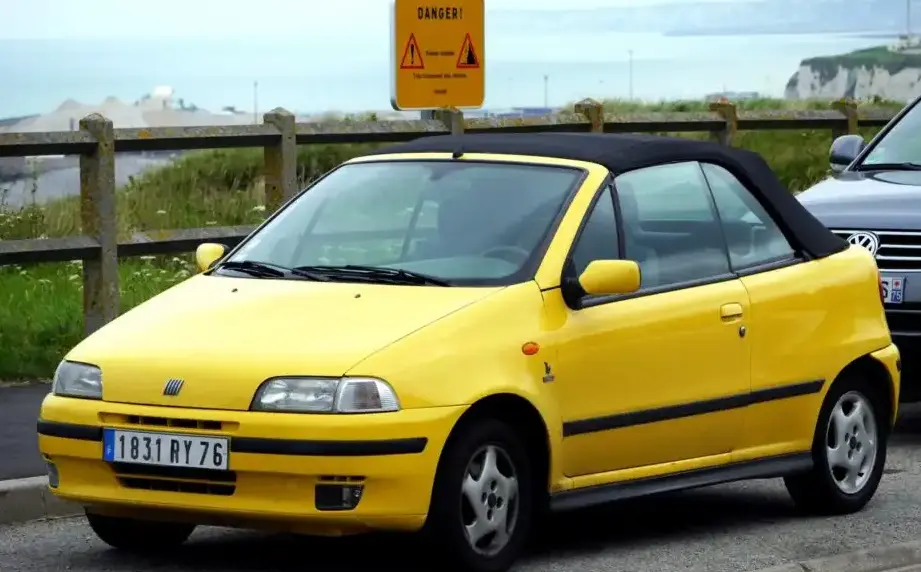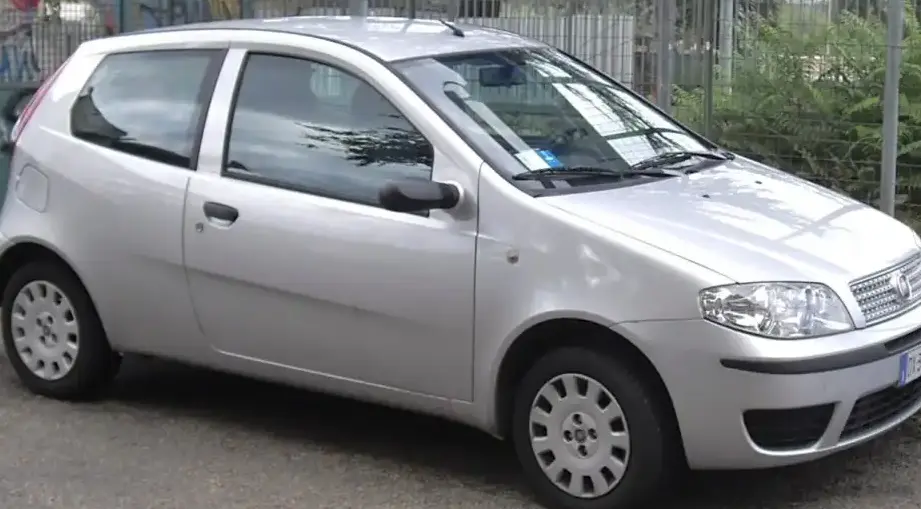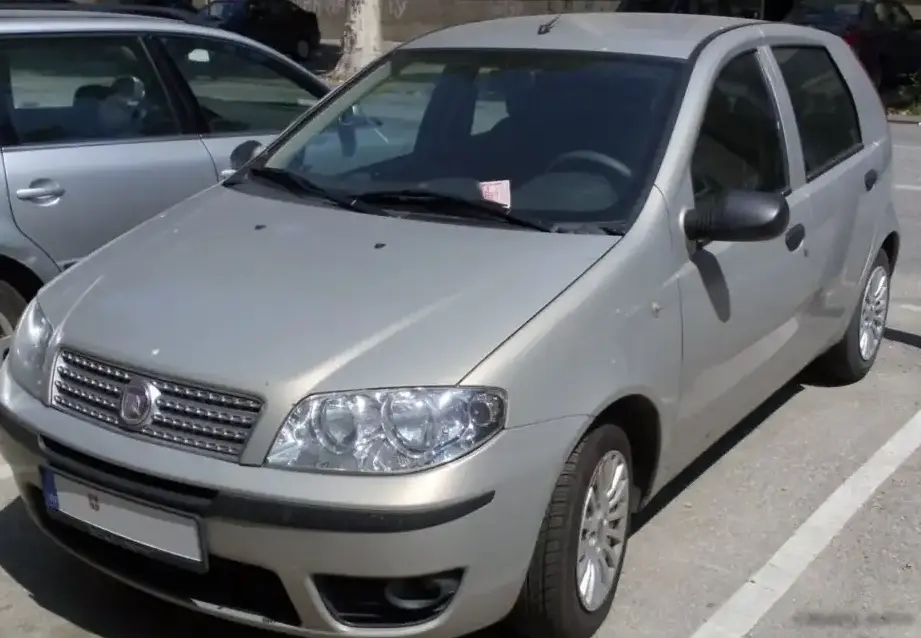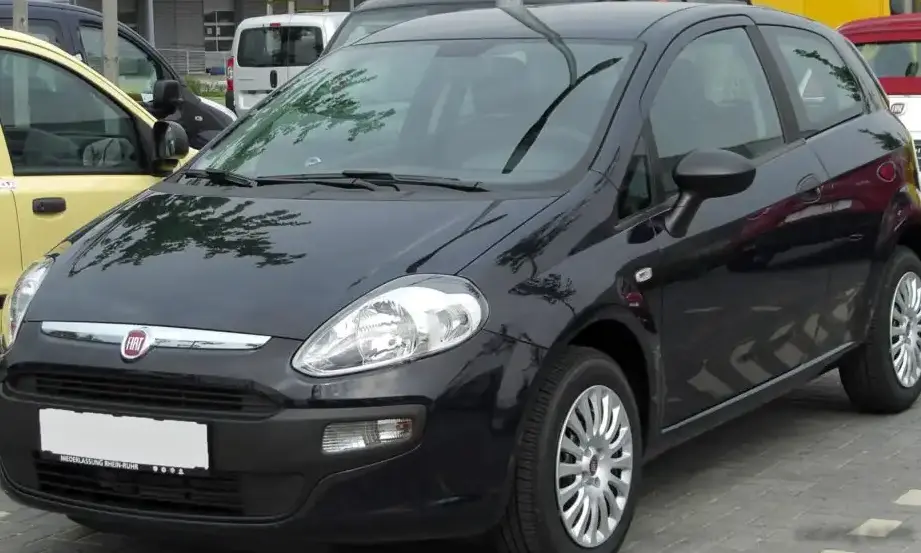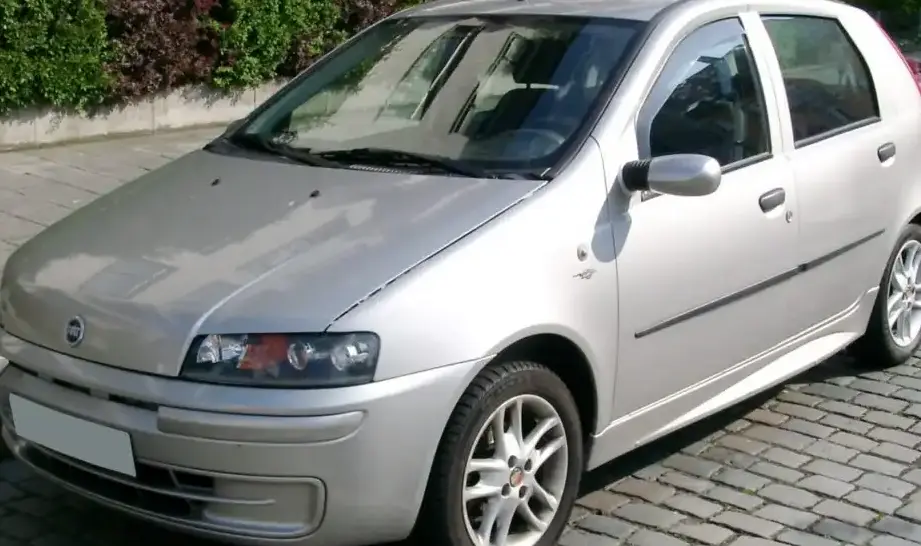
The Fiat Punto II, specifically the 5-door hatchback variant equipped with the 1.2-liter 60 horsepower engine, was a mainstay of the European small car market from 1999 to 2003. Representing the second generation of the Punto, the 188 series aimed to build upon the success of its predecessor by offering a more refined and modern package. This particular engine and trim level served as the entry point into the Punto II range, prioritizing affordability and fuel efficiency over outright performance. It was a common sight on European roads, appealing to first-time car buyers, city dwellers, and those seeking economical transportation.
Technical Specifications
| Brand | Fiat |
| Model | Punto |
| Generation | Punto II (188) 5dr |
| Type (Engine) | 1.2 (60 Hp) |
| Start of production | 1999 |
| End of production | 2003 |
| Powertrain Architecture | Internal Combustion engine |
| Body type | Hatchback |
| Seats | 5 |
| Doors | 5 |
| Fuel consumption (urban) | 7.3 l/100 km (32.2 US mpg) |
| Fuel consumption (extra urban) | 4.8 l/100 km (49 US mpg) |
| Fuel consumption (combined) | 5.7 l/100 km (41.3 US mpg) |
| Fuel Type | Petrol (Gasoline) |
| Acceleration 0 – 100 km/h | 14.3 sec |
| Acceleration 0 – 62 mph | 14.3 sec |
| Acceleration 0 – 60 mph | 13.6 sec |
| Maximum speed | 155 km/h (96.31 mph) |
| Emission standard | Euro 3 |
| Weight-to-power ratio | 14.6 kg/Hp |
| Weight-to-torque ratio | 8.6 kg/Nm |
| Power | 60 Hp @ 5000 rpm |
| Torque | 102 Nm @ 2500 rpm (75.23 lb.-ft. @ 2500 rpm) |
| Engine layout | Front, Transverse |
| Engine Model/Code | 188A4000 |
| Engine displacement | 1242 cm3 (75.79 cu. in.) |
| Number of cylinders | 4 |
| Engine configuration | Inline |
| Cylinder Bore | 70.8 mm (2.79 in.) |
| Piston Stroke | 78.9 mm (3.11 in.) |
| Compression ratio | 9.5:1 |
| Number of valves per cylinder | 2 |
| Fuel injection system | Multi-port manifold injection |
| Engine aspiration | Naturally aspirated |
| Engine oil capacity | 2.8 l (2.96 US qt | 2.46 UK qt) |
| Coolant capacity | 4.2 l (4.44 US qt | 3.7 UK qt) |
| Kerb Weight | 875 kg (1929.04 lbs.) |
| Max. weight | 1385 kg (3053.4 lbs.) |
| Max load | 510 kg (1124.36 lbs.) |
| Trunk (boot) space – minimum | 297 l (10.49 cu. ft.) |
| Trunk (boot) space – maximum | 1080 l (38.14 cu. ft.) |
| Fuel tank capacity | 47 l (12.42 US gal | 10.34 UK gal) |
| Length | 3835 mm (150.98 in.) |
| Width | 1660 mm (65.35 in.) |
| Height | 1480 mm (58.27 in.) |
| Wheelbase | 2460 mm (96.85 in.) |
| Front track | 1398 mm (55.04 in.) |
| Rear track | 1392 mm (54.8 in.) |
| Drag coefficient (Cd) | 0.32 |
| Minimum turning circle | 10.2 m (33.46 ft.) |
| Drivetrain | Front wheel drive |
| Number of gears | 5 |
| Gearbox type | Manual transmission |
| Front suspension | Spring Strut |
| Rear suspension | Coil spring |
| Front brakes | Disc |
| Rear brakes | Drum |
| Assisting systems | ABS (Anti-lock braking system) |
| Steering type | Steering rack and pinion |
| Tires size | 165/70 R14 |
INTRODUCTION
The Fiat Punto II 1.2, produced between 1999 and 2003, was a key model in Fiat’s lineup, designed to compete in the highly competitive European supermini segment. Built on the 188 platform, it represented a significant step forward in terms of design, safety, and interior space compared to the original Punto. This 1.2-liter variant, producing 60 horsepower, was positioned as the entry-level option, aimed at buyers prioritizing economy and practicality. It was a common sight in urban environments and served as a popular choice for new drivers.
Powertrain & Engine Architecture
The heart of this Punto variant is the 188A4000 engine, a 1.2-liter inline-four cylinder petrol engine. This engine, a member of Fiat’s FIRE (Fully Integrated Robotized Engine) family, is known for its simplicity and reliability. It utilizes a single overhead camshaft (SOHC) valvetrain with two valves per cylinder. Fuel delivery is managed by a multi-point fuel injection system, providing adequate, though not exceptional, performance. The engine’s relatively low compression ratio of 9.5:1 contributes to its ability to run on readily available fuel grades. The 60 horsepower output is achieved at 5000 rpm, while peak torque of 102 Nm (75.23 lb-ft) arrives at 2500 rpm. The engine is transversely mounted, driving the front wheels. The standard transmission for this model was a five-speed manual gearbox, although an optional Dualogic automated manual transmission was also available, albeit less common.
Driving Characteristics
The Punto II 1.2’s driving experience is best described as functional and undemanding. With only 60 horsepower on tap, acceleration is leisurely, taking approximately 14.3 seconds to reach 62 mph (100 km/h). The five-speed manual transmission helps to keep the engine in its optimal power band, but overtaking maneuvers require careful planning. The gear ratios are relatively long, prioritizing fuel economy over spirited driving. Compared to higher-output versions of the Punto II, such as the 1.8-liter models, the 1.2 feels significantly less powerful. However, its lighter weight and nimble handling make it enjoyable to drive in urban settings. The steering is light and precise, making parking and maneuvering easy.
Equipment & Trim Levels
The base-level Punto II 1.2 typically came equipped with a modest array of standard features. These included power steering, central locking, front airbags, and an adjustable steering column. Interior upholstery was typically cloth, with a simple and functional dashboard layout. Optional extras included air conditioning, electric windows, and a radio/CD player. Higher trim levels, such as the ELX and Sporting, offered more luxurious appointments, including alloy wheels, upgraded interior trim, and additional safety features.
Chassis & Braking
The Punto II utilized a MacPherson strut suspension setup at the front and a twist-beam axle at the rear. This configuration provided a comfortable ride quality, although it wasn’t particularly sporty. The front brakes were disc brakes, while the rear brakes were drum brakes – a cost-saving measure common in this segment. ABS (Anti-lock Braking System) was standard, enhancing safety in emergency braking situations. The chassis was designed to be lightweight, contributing to the car’s overall fuel efficiency.
Market Reception & Comparison
The Punto II 1.2 was generally well-received by critics as a practical and affordable supermini. Its fuel economy was a major selling point, and its compact size made it ideal for city driving. However, its lack of power was often criticized, particularly when compared to rivals such as the Renault Clio and the Peugeot 206. The 1.8-liter Punto II offered significantly more performance but came at a higher price point. The 1.9-liter JTD diesel variant provided excellent fuel economy and torque but was more expensive to purchase and maintain. The 1.2-liter model appealed to buyers who prioritized economy and practicality over performance.
Legacy
The Fiat Punto II 1.2 remains a relatively common sight on European roads today, testament to its durability and reliability. The FIRE engine is known for its longevity, and with proper maintenance, it can continue to provide years of service. However, age-related issues such as corrosion and wear and tear on suspension components are common. In the used car market, the 1.2-liter Punto II represents an affordable and economical option for those seeking a basic, reliable city car. Its simplicity and low running costs continue to make it an attractive proposition for budget-conscious buyers.