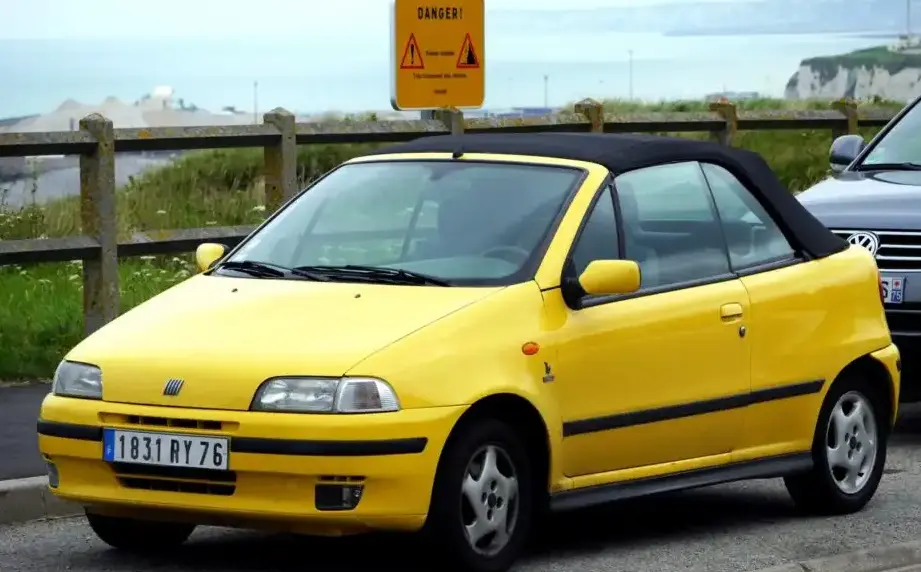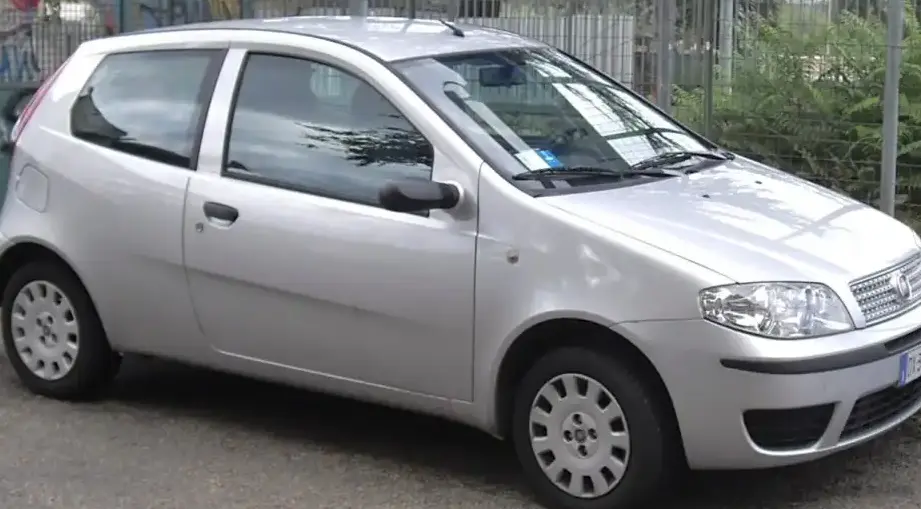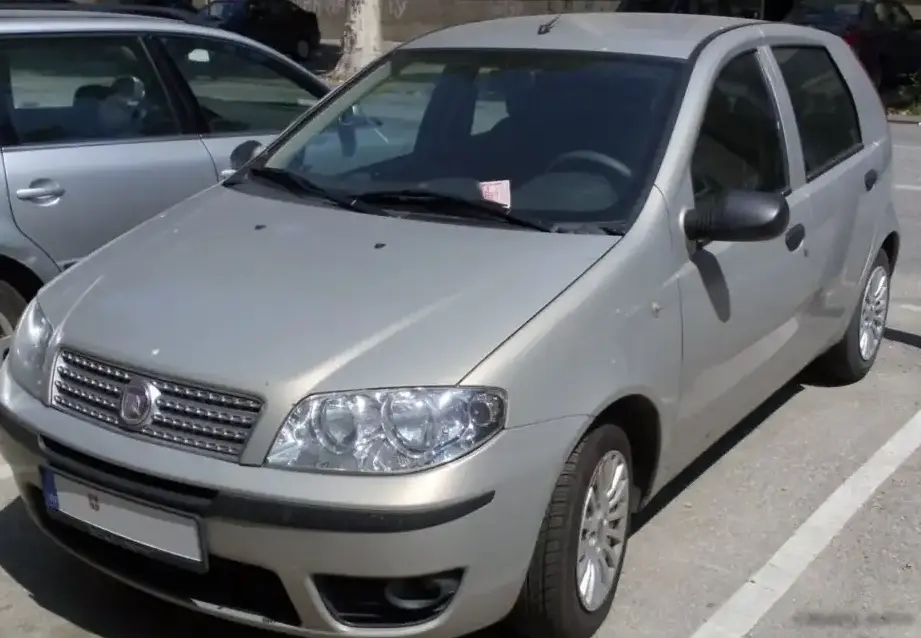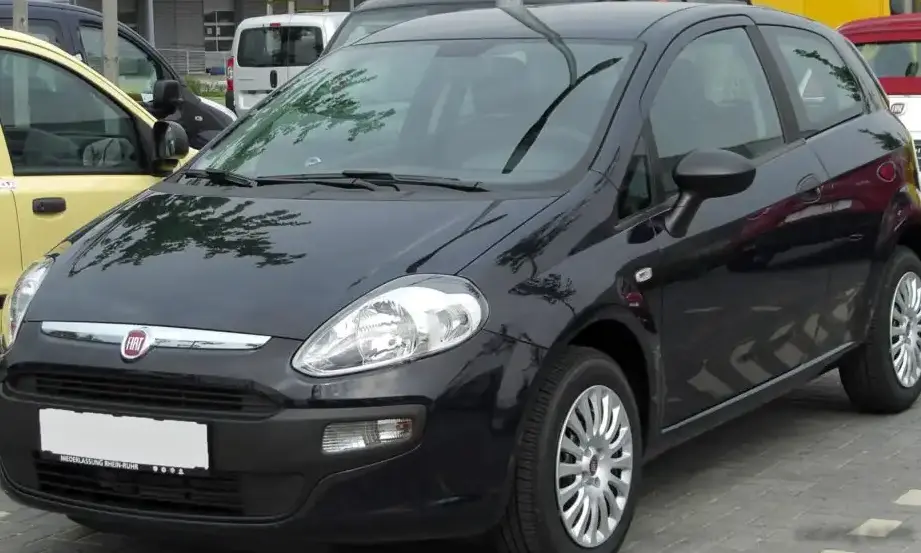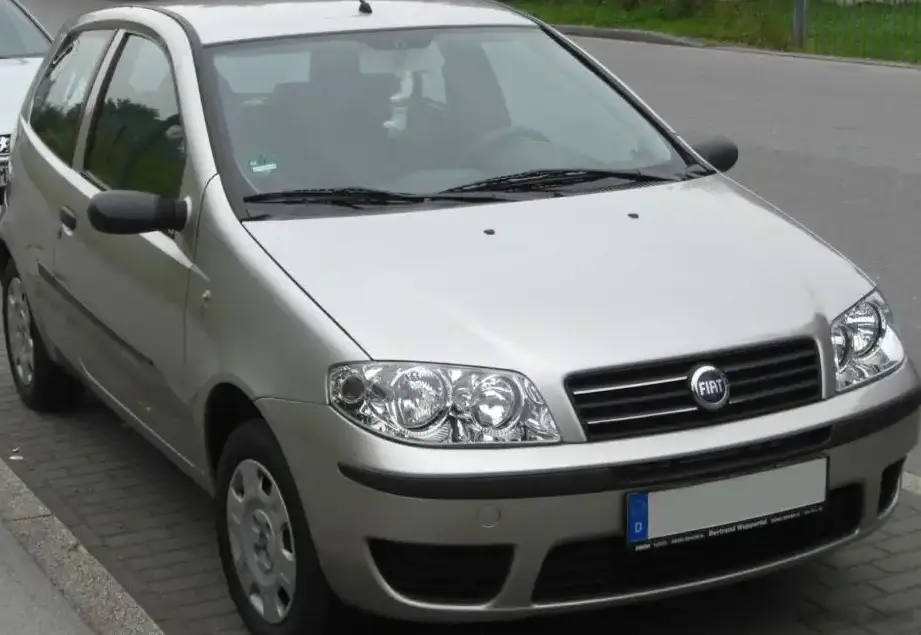
The Fiat Punto II, specifically the 3-door hatchback variant powered by the 1.9 JTD diesel engine producing 85 horsepower, was a significant model within the second generation of the Punto range (codenamed 188). Introduced with the facelift in 2003 and continuing through 2007, this version aimed to provide an economical and practical option for European buyers, particularly those seeking a fuel-efficient city car. It occupied a mid-range position in the Punto II lineup, slotting between the lower-powered 1.2-liter petrol models and the more performance-oriented, albeit less common, sporting variants.
Technical Specifications
| Brand | Fiat |
| Model | Punto |
| Generation | Punto II (188, facelift 2003) 3dr |
| Type (Engine) | 1.9 JTD (85 Hp) |
| Start of production | 2003 |
| End of production | 2007 |
| Powertrain Architecture | Internal Combustion engine |
| Body type | Hatchback |
| Seats | 5 |
| Doors | 3 |
| Fuel consumption (urban) | 6.6 l/100 km (35.6 US mpg, 42.8 UK mpg, 15.2 km/l) |
| Fuel consumption (extra urban) | 4 l/100 km (58.8 US mpg, 70.6 UK mpg, 25 km/l) |
| Fuel consumption (combined) | 4.9 l/100 km (48 US mpg, 57.6 UK mpg, 20.4 km/l) |
| Fuel Type | Diesel |
| Acceleration 0 – 100 km/h | 12.2 sec |
| Acceleration 0 – 62 mph | 12.2 sec |
| Acceleration 0 – 60 mph | 11.6 sec |
| Maximum speed | 173 km/h (107.5 mph) |
| Emission standard | Euro 3 |
| Weight-to-power ratio | 12.6 kg/Hp |
| Weight-to-torque ratio | 5.5 kg/Nm |
| Power | 85 Hp @ 3500 rpm |
| Torque | 196 Nm @ 1500 rpm (144.56 lb.-ft. @ 1500 rpm) |
| Engine layout | Front, Transverse |
| Engine Model/Code | 188 A7.000 |
| Engine displacement | 1910 cm3 (116.56 cu. in.) |
| Number of cylinders | 4 |
| Engine configuration | Inline |
| Cylinder Bore | 82 mm (3.23 in.) |
| Piston Stroke | 90.4 mm (3.56 in.) |
| Compression ratio | 18.45:1 |
| Number of valves per cylinder | 2 |
| Fuel injection system | Diesel Commonrail |
| Engine aspiration | Turbocharger, Intercooler |
| Engine oil capacity | 4.3 l (4.54 US qt, 3.78 UK qt) |
| Coolant capacity | 6.2 l (6.55 US qt, 5.46 UK qt) |
| Kerb Weight | 1075 kg (2369.97 lbs.) |
| Max. weight | 1585 kg (3494.33 lbs.) |
| Max load | 510 kg (1124.36 lbs.) |
| Trunk (boot) space – minimum | 264 l (9.32 cu. ft.) |
| Trunk (boot) space – maximum | 1080 l (38.14 cu. ft.) |
| Fuel tank capacity | 49 l (12.94 US gal, 10.78 UK gal) |
| Length | 3840 mm (151.18 in.) |
| Width | 1660 mm (65.35 in.) |
| Height | 1480 mm (58.27 in.) |
| Wheelbase | 2460 mm (96.85 in.) |
| Front track | 1394 mm (54.88 in.) |
| Rear track | 1388 mm (54.65 in.) |
| Drag coefficient (Cd) | 0.32 |
| Minimum turning circle | 10.5 m (34.45 ft.) |
| Drivetrain Architecture | Front wheel drive |
| Number of gears | 5 |
| Gearbox type | Manual transmission |
| Front suspension | Spring Strut |
| Rear suspension | Torsion |
| Front brakes | Ventilated discs |
| Rear brakes | Drum |
| Assisting systems | ABS (Anti-lock braking system) |
| Steering type | Steering rack and pinion |
| Power steering | Electric |
| Tires size | 185/60 R14 H |
INTRODUCTION
The 2003 facelift of the Fiat Punto II brought with it a refreshed exterior and interior, along with updated engine options. The 1.9 JTD 85 hp 3-door model was a key part of this revised lineup. Built on the 188 platform, shared with other Fiat and Alfa Romeo models of the era, the Punto II aimed to offer a blend of practicality, affordability, and modern features. This particular variant was targeted towards buyers who prioritized fuel economy and low running costs, making it a popular choice for city commuting and shorter journeys.
Powertrain & Engine Architecture
The heart of this Punto variant is the 1.9-liter, four-cylinder diesel engine, designated as the 188A7.000. This engine is a direct injection diesel, utilizing a common rail fuel injection system. Common rail technology allowed for more precise fuel delivery, resulting in improved combustion efficiency, reduced noise, and lower emissions compared to older diesel injection systems. The engine features two valves per cylinder and is turbocharged with an intercooler, boosting power output to 85 horsepower at 3500 rpm and 196 Nm (144.56 lb-ft) of torque at a low 1500 rpm. The engine’s robust bottom end and relatively high compression ratio (18.45:1) contributed to its durability and fuel efficiency. The engine is transversely mounted in the front of the vehicle. The 5-speed manual transmission was the only gearbox option available with this engine, providing a balance between fuel economy and drivability.
Driving Characteristics
The 1.9 JTD 85 hp Punto offered a surprisingly capable driving experience for its class. While not a performance car, the engine’s strong low-end torque made it feel responsive in everyday driving situations. Acceleration to 60 mph took around 11.6 seconds, and it could reach a top speed of 107.5 mph. The 5-speed manual gearbox was well-matched to the engine’s characteristics, allowing for comfortable cruising on the highway. Compared to the lower-powered 1.2-liter petrol versions, the 1.9 JTD provided significantly more pulling power, making it easier to overtake and carry a full load of passengers and luggage. However, it lacked the outright punch of the more powerful Punto sporting models. The steering was light and precise, making it easy to maneuver in tight city streets.
Equipment & Trim Levels
The 1.9 JTD 85 hp 3-door Punto typically came with a reasonable level of standard equipment. This included power steering, central locking, electric front windows, and an adjustable steering column. Interior upholstery was typically cloth, with a functional and durable design. Optional extras included air conditioning, alloy wheels, a radio/CD player, and upgraded interior trim. The 3-door configuration emphasized a slightly sportier aesthetic compared to the 5-door model, appealing to a younger demographic. The dashboard layout was typical of Fiat designs of the era, with a clear and straightforward instrument cluster.
Chassis & Braking
The Punto II utilized a relatively simple chassis design. The front suspension consisted of MacPherson strut coil springs, while the rear suspension employed a torsion beam setup. This configuration provided a good balance between ride comfort and handling. The front brakes were ventilated discs, offering good stopping power, while the rear brakes were drums, a cost-saving measure common in this segment. Anti-lock Braking System (ABS) was standard, enhancing safety. The Punto’s relatively lightweight construction (1075 kg / 2369.97 lbs) contributed to its nimble handling and fuel efficiency.
Market Reception & Comparison
The Fiat Punto II 1.9 JTD 85 hp was generally well-received by automotive critics. It was praised for its fuel economy, strong torque, and practicality. Compared to other diesel-powered hatchbacks in its class, such as the Volkswagen Polo or Ford Fiesta, the Punto offered a competitive price point and a good level of standard equipment. However, some critics noted that the interior quality was not as refined as some of its rivals. The 1.9 JTD offered significantly better fuel economy than the petrol-powered Punto variants, making it a popular choice for high-mileage drivers. The manual transmission was preferred by many drivers for its improved control and fuel efficiency compared to an automatic.
Legacy
The 1.9 JTD engine proved to be a reliable and durable unit, and many examples of the Punto II 1.9 JTD are still on the road today. While maintenance costs can increase with age, the engine’s robust construction and readily available parts supply make it a relatively affordable car to keep running. On the used car market, these Puntos are often sought after by buyers looking for an economical and practical city car. The 1.9 JTD engine’s reputation for fuel efficiency and reliability has cemented its place as a popular choice among budget-conscious car buyers.