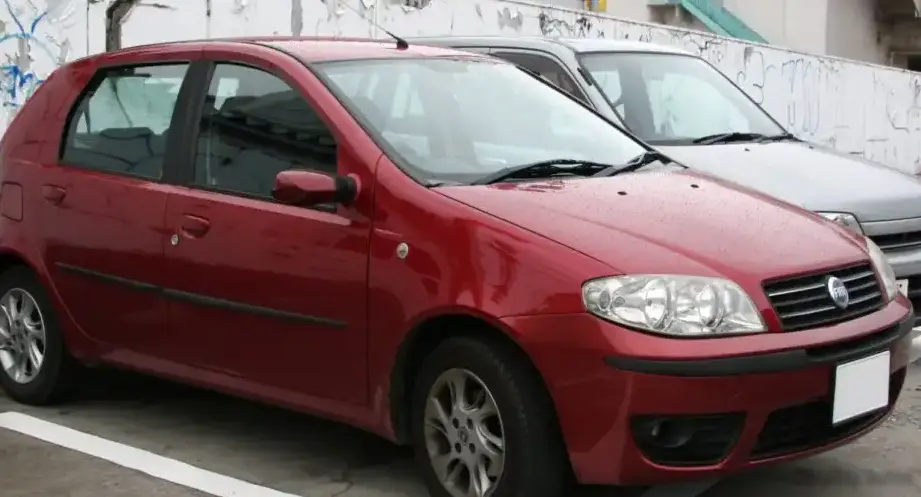
Technical Specifications
| Brand | Fiat |
| Model | Punto |
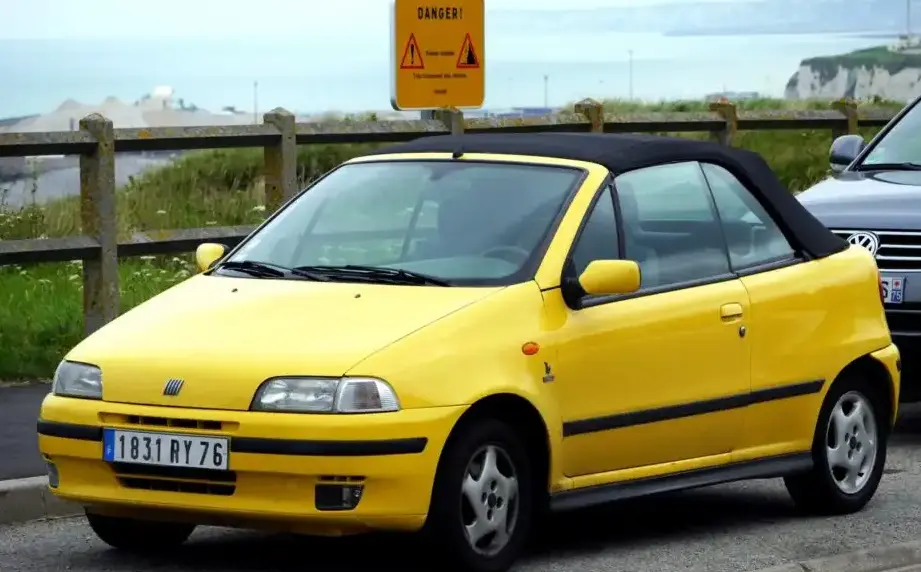
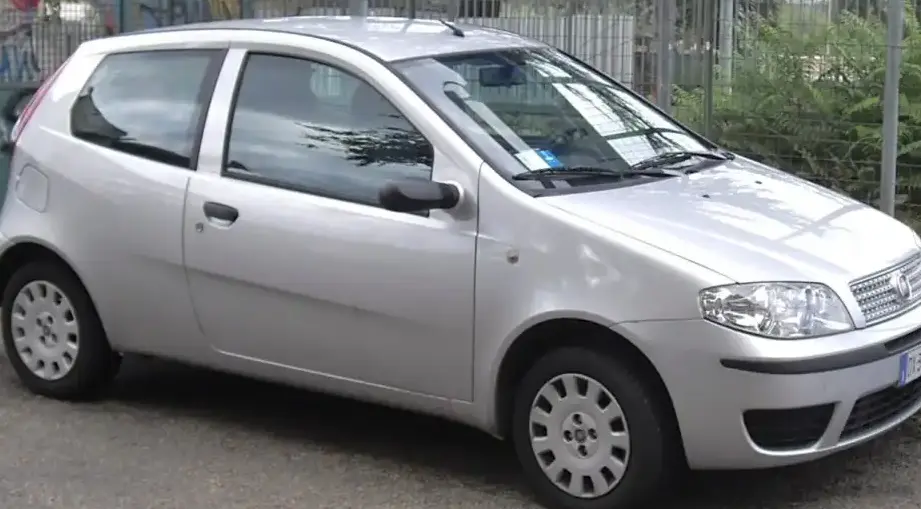
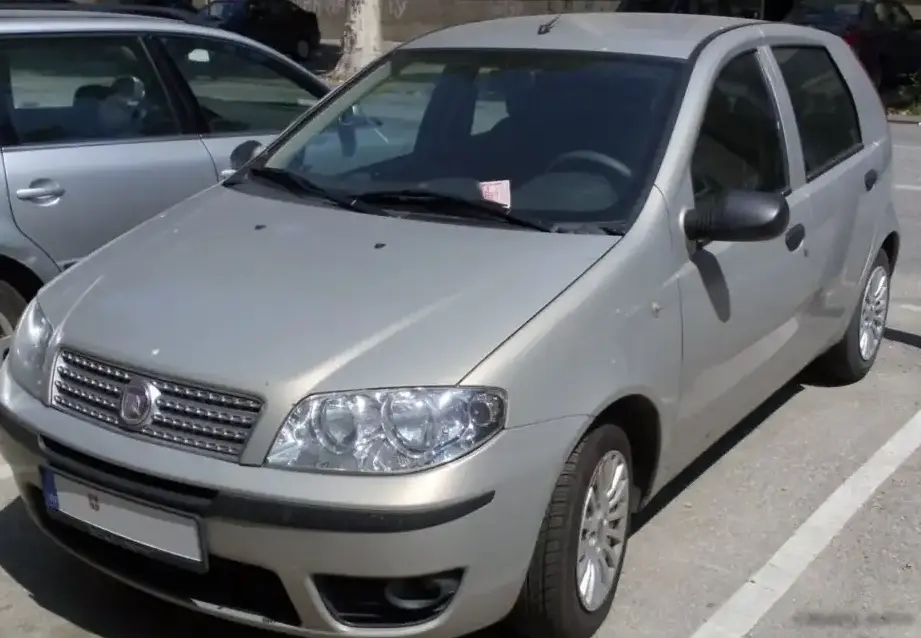
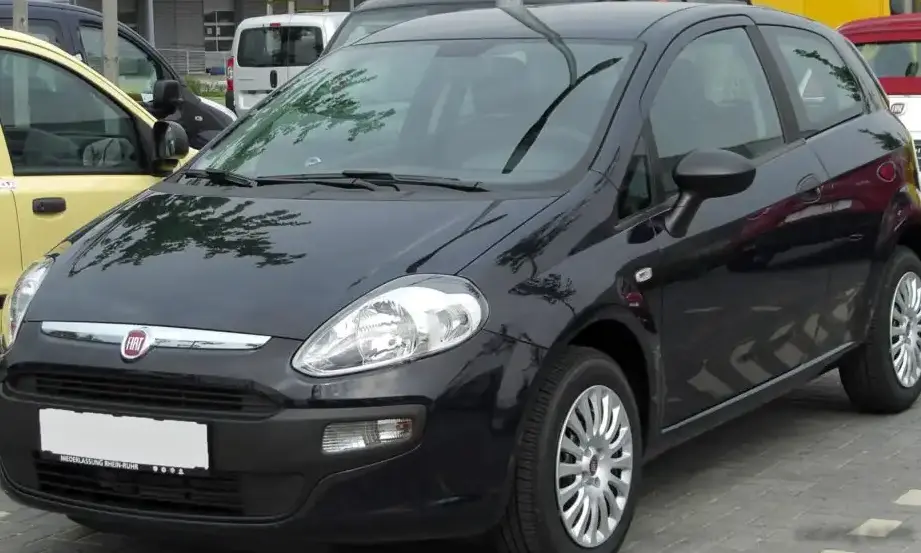
| Generation | Punto II (188, facelift 2003) 5dr |
| Type (Engine) | 1.9 JTD (85 Hp) |
| Start of production | 2003 |
| End of production | 2007 |
| Powertrain Architecture | Internal Combustion engine |
| Body type | Hatchback |
| Seats | 5 |
| Doors | 5 |
| Fuel consumption (urban) | 6.6 l/100 km (35.6 US mpg, 42.8 UK mpg, 15.2 km/l) |
| Fuel consumption (extra urban) | 4 l/100 km (58.8 US mpg, 70.6 UK mpg, 25 km/l) |
| Fuel consumption (combined) | 4.9 l/100 km (48 US mpg, 57.6 UK mpg, 20.4 km/l) |
| Fuel Type | Diesel |
| Acceleration 0 – 100 km/h | 12.2 sec |
| Acceleration 0 – 62 mph | 12.2 sec |
| Acceleration 0 – 60 mph | 11.6 sec |
| Maximum speed | 173 km/h (107.5 mph) |
| Emission standard | Euro 3 |
| Weight-to-power ratio | 12.8 kg/Hp |
| Weight-to-torque ratio | 5.6 kg/Nm |
| Power | 85 Hp @ 3500 rpm |
| Torque | 196 Nm @ 1500 rpm (144.56 lb.-ft. @ 1500 rpm) |
| Engine layout | Front, Transverse |
| Engine Model/Code | 188 A7.000 |
| Engine displacement | 1910 cm3 (116.56 cu. in.) |
| Number of cylinders | 4 |
| Engine configuration | Inline |
| Cylinder Bore | 82 mm (3.23 in.) |
| Piston Stroke | 90.4 mm (3.56 in.) |
| Compression ratio | 18.45:1 |
| Number of valves per cylinder | 2 |
| Fuel injection system | Diesel Commonrail |
| Engine aspiration | Turbocharger, Intercooler |
| Engine oil capacity | 4.3 l (4.54 US qt, 3.78 UK qt) |
| Coolant capacity | 6.2 l (6.55 US qt, 5.46 UK qt) |
| Kerb Weight | 1090 kg (2403.04 lbs.) |
| Max. weight | 1600 kg (3527.4 lbs.) |
| Max load | 510 kg (1124.36 lbs.) |
| Trunk (boot) space – minimum | 297 l (10.49 cu. ft.) |
| Trunk (boot) space – maximum | 1080 l (38.14 cu. ft.) |
| Fuel tank capacity | 49 l (12.94 US gal, 10.78 UK gal) |
| Length | 3865 mm (152.17 in.) |
| Width | 1660 mm (65.35 in.) |
| Height | 1480 mm (58.27 in.) |
| Wheelbase | 2460 mm (96.85 in.) |
| Front track | 1394 mm (54.88 in.) |
| Rear track | 1388 mm (54.65 in.) |
| Drag coefficient (Cd) | 0.32 |
| Minimum turning circle | 10.5 m (34.45 ft.) |
| Drivetrain Architecture | Front wheel drive |
| Number of gears | 5 |
| Gearbox type | Manual transmission |
| Front suspension | Spring Strut |
| Rear suspension | Torsion |
| Front brakes | Ventilated discs |
| Rear brakes | Drum |
| Assisting systems | ABS (Anti-lock braking system) |
| Steering type | Steering rack and pinion |
| Power steering | Electric |
| Tires size | 185/60 R14 |
The 1.9 JTD variant of the Fiat Punto II, introduced with the 2003 facelift, represented a significant step forward in terms of fuel efficiency and torque delivery for the model. Built on the 188 platform, shared with other Fiat and Alfa Romeo models of the era, the Punto II aimed to modernize the supermini segment. The 1.9 JTD engine was a key component of this strategy, offering a compelling alternative to the petrol engines available. This particular trim level was positioned as a practical and economical choice, appealing to buyers prioritizing fuel economy and low running costs over outright performance.
Powertrain & Engine Architecture
The heart of this Punto variant is the 1.9-liter, four-cylinder diesel engine, designated as the 188A7.000. This engine is a direct injection diesel, utilizing a common rail fuel injection system. Common rail technology allowed for precise control of fuel delivery, resulting in improved combustion efficiency, reduced noise, and lower emissions. The engine featured a turbocharger with an intercooler, boosting power output and enhancing torque across a wider rev range. The engine produced 85 horsepower at 3500 rpm and a substantial 196 Nm (144.56 lb-ft) of torque at just 1500 rpm. This torque characteristic made the car surprisingly flexible in everyday driving. The engine also featured a two-valve per cylinder configuration. The 1.9 JTD was paired with a five-speed manual transmission, optimized for fuel efficiency and smooth gear changes.
Driving Characteristics
The 1.9 JTD-powered Punto II offered a distinctly different driving experience compared to its petrol-powered siblings. While not particularly quick – achieving 0-60 mph in around 11.6 seconds – the engine’s strong low-end torque made it feel responsive in urban environments and capable on the highway. The five-speed manual transmission was well-matched to the engine’s characteristics, providing adequate gearing for both city driving and longer journeys. Compared to the 1.2-liter petrol versions, the 1.9 JTD offered significantly more pulling power, making it easier to carry passengers and luggage. However, it lacked the higher-revving enthusiasm of the petrol engines. The steering was light and precise, making it easy to maneuver in tight spaces, and the suspension provided a comfortable ride, although it could feel a little unsettled on rough roads.
Equipment & Trim Levels
The 1.9 JTD variant of the Punto II typically came with a reasonable level of standard equipment. This included central locking, power steering, front airbags, and an adjustable steering column. Interior upholstery was typically cloth, with a functional and durable design. Higher trim levels offered options such as air conditioning, electric windows, and a radio/CD player. The dashboard layout was straightforward and user-friendly, with clearly labeled controls. Optional extras included alloy wheels, metallic paint, and a sunroof.
Chassis & Braking
The Punto II utilized a front-wheel-drive layout with a MacPherson strut suspension at the front and a torsion beam suspension at the rear. The front brakes were ventilated discs, providing good stopping power, while the rear brakes were drums. This configuration was typical for cars in this weight class and price range. ABS (Anti-lock Braking System) was standard, enhancing safety by preventing wheel lock-up during hard braking. The electric power steering provided light and responsive steering feel.
Market Reception & Comparison
The 1.9 JTD Punto II was generally well-received by automotive critics for its fuel efficiency and strong torque output. It was praised as a practical and economical choice for city driving and commuting. Compared to the petrol versions, the 1.9 JTD offered significantly better fuel economy – around 48 US mpg combined – and lower running costs. However, some critics noted that the engine was a little noisy compared to some of its competitors. In terms of reliability, the 1.9 JTD engine proved to be generally robust, although regular maintenance was essential to ensure long-term durability.
Legacy
The 1.9 JTD engine became a popular choice in the Punto II and other Fiat models, known for its reliability and fuel efficiency. Today, these cars can be found on the used car market at affordable prices. While age and mileage can affect their condition, well-maintained examples can still provide reliable and economical transportation. The 1.9 JTD Punto II remains a testament to Fiat’s ability to produce practical and efficient small cars that appeal to a wide range of buyers. The engine’s robust design and readily available parts contribute to its continued presence on the roads.