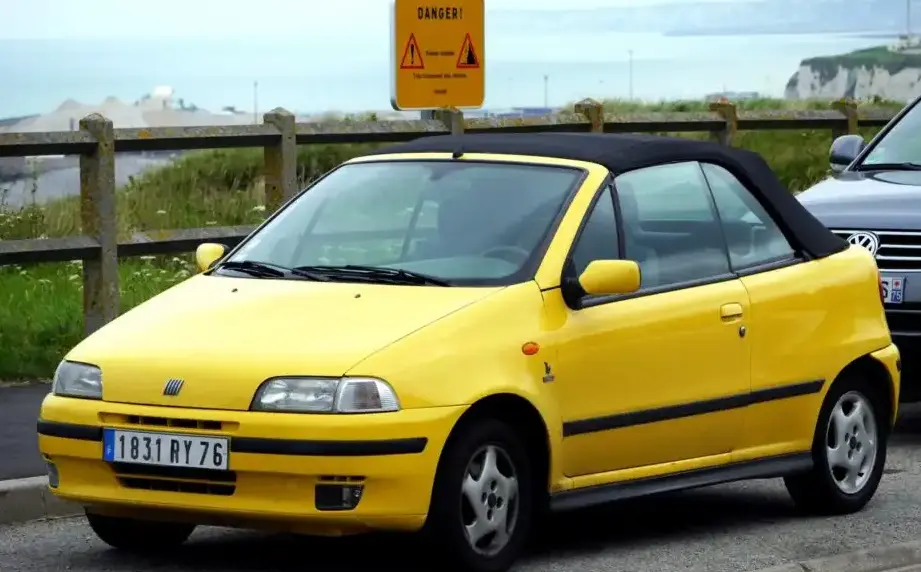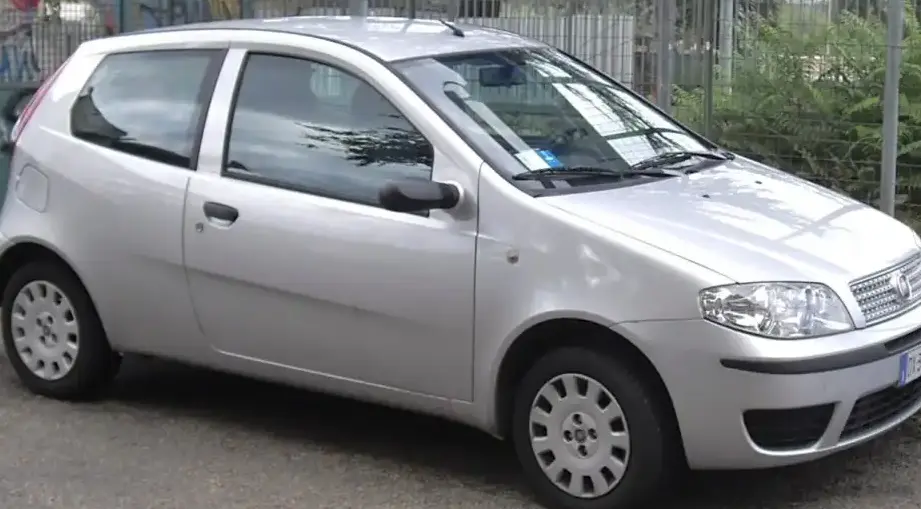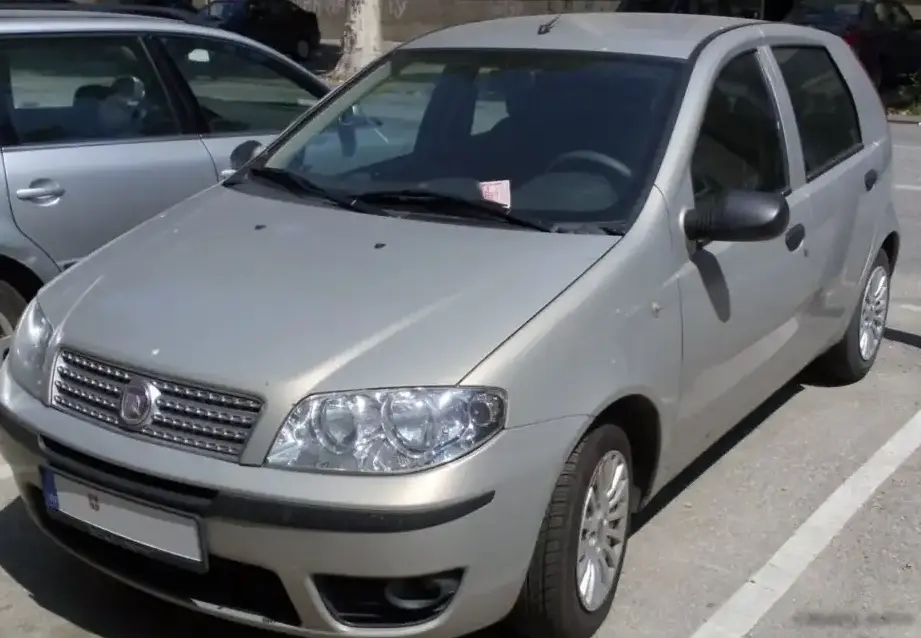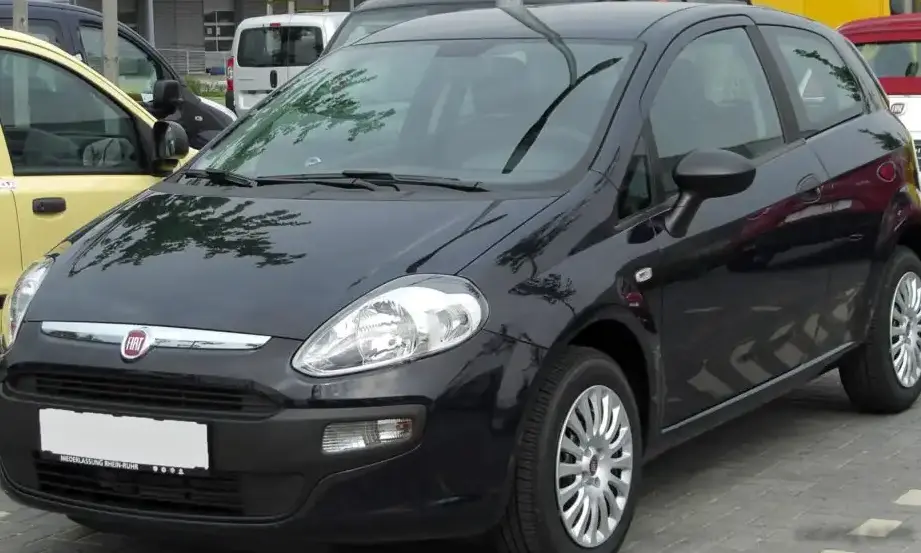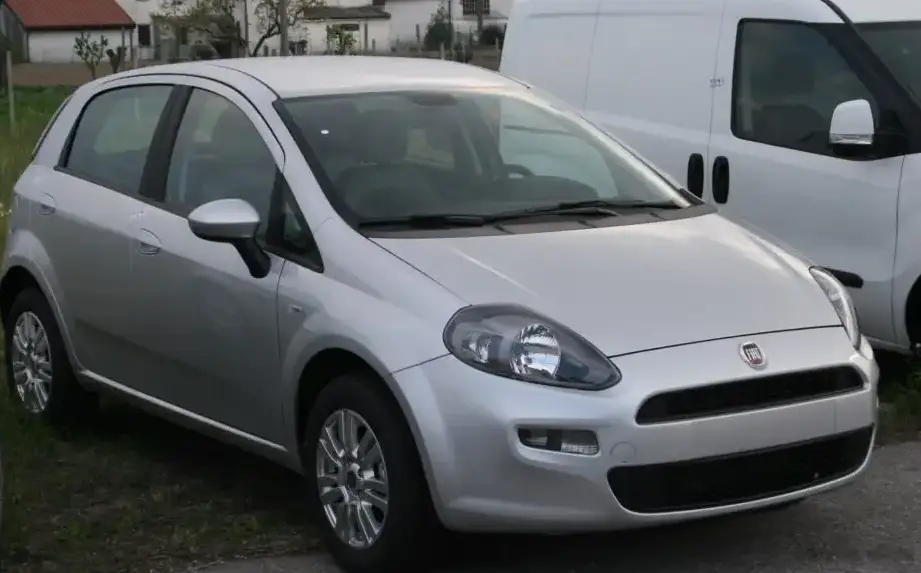
The Fiat Punto III (199) 1.4 8V (77 hp) Natural Power, produced from 2012 to 2018, represents a unique offering within the Punto III range. This variant combined a traditional gasoline engine with the capability to run on Compressed Natural Gas (CNG), aiming to provide a more economical and environmentally friendly option for European drivers. Positioned as a mid-range trim, it offered a balance between affordability and functionality, appealing to buyers seeking lower running costs without sacrificing practicality. The Punto III itself, built on the Fiat Small Wide platform, was a significant model for Fiat, intended to modernize their supermini offering and compete effectively in a crowded market segment.
Technical Specifications
| Brand | Fiat |
| Model | Punto |
| Generation | Punto III (199) |
| Type (Engine) | 1.4 8V (77 Hp) Natural Power |
| Start of production | 2012 |
| End of production | 2018 |
| Powertrain Architecture | Internal Combustion engine |
| Body type | Hatchback |
| Seats | 5 |
| Doors | 3-5 |
| Fuel consumption (economy) – urban | 7.9 l/100 km (29.8 US mpg, 35.8 UK mpg, 12.7 km/l) |
| Fuel consumption (economy) – urban (CNG) | 5.4 kg/100 km |
| Fuel consumption (economy) – extra urban | 5.4 l/100 km (43.6 US mpg, 52.3 UK mpg, 18.5 km/l) |
| Fuel consumption (economy) – extra urban (CNG) | 3.5 kg/100 km |
| Fuel consumption (economy) – combined | 6.3 l/100 km (37.3 US mpg, 44.8 UK mpg, 15.9 km/l) |
| Fuel consumption (economy) – combined (CNG) | 4.2 kg/100 km |
| CO2 emissions | 149 g/km |
| CO2 emissions (CNG) | 115 g/km |
| Fuel Type | Petrol / CNG |
| Acceleration 0 – 100 km/h | 14.9 sec |
| Acceleration 0 – 62 mph | 14.9 sec |
| Acceleration 0 – 100 km/h (CNG) | 16.9 sec |
| Acceleration 0 – 60 mph (Calculated) | 14.2 sec |
| Maximum speed | 162 km/h (100.66 mph) |
| Maximum speed (CNG) | 156 km/h |
| Emission standard | Euro 5 |
| Weight-to-power ratio | 15.2 kg/Hp, 65.8 Hp/tonne |
| Weight-to-torque ratio | 10.2 kg/Nm, 98.3 Nm/tonne |
| Power | 77 Hp @ 6000 rpm |
| Power per litre | 56.3 Hp/l |
| Power (CNG) | 70 Hp @ 6000 rpm |
| Power per litre (CNG) | 51.2 Hp/l |
| Torque | 115 Nm @ 3000 rpm (84.82 lb.-ft. @ 3000 rpm) |
| Torque (CNG) | 104 Nm @ 3000 rpm |
| Engine layout | Front, Transverse |
| Engine Model/Code | 350A1000 |
| Engine displacement | 1368 cm3 (83.48 cu. in.) |
| Number of cylinders | 4 |
| Engine configuration | Inline |
| Cylinder Bore | 72 mm (2.83 in.) |
| Piston Stroke | 84 mm (3.31 in.) |
| Compression ratio | 11:1 |
| Number of valves per cylinder | 2 |
| Fuel injection system | Multi-port manifold injection |
| Engine aspiration | Naturally aspirated |
| Engine oil capacity | 2.6 l (2.75 US qt, 2.29 UK qt) |
| Coolant | 5.3 l (5.6 US qt, 4.66 UK qt) |
| Kerb Weight | 1170 kg (2579.41 lbs.) |
| Max. weight | 1645 kg (3626.6 lbs.) |
| Max load | 475 kg (1047.2 lbs.) |
| Trunk (boot) space – minimum | 200 l (7.06 cu. ft.) |
| Trunk (boot) space – maximum | 955 l (33.73 cu. ft.) |
| Fuel tank capacity | 45 l (11.89 US gal, 9.9 UK gal) |
| CNG cylinder capacity | 13 kg |
| Length | 4065 mm (160.04 in.) |
| Width | 1687 mm (66.42 in.) |
| Height | 1514 mm (59.61 in.) |
| Wheelbase | 2510 mm (98.82 in.) |
| Front track | 1473 mm (57.99 in.) |
| Rear track | 1466 mm (57.72 in.) |
| Drag coefficient (Cd) | 0.34 |
| Minimum turning circle | 10.9 m (35.76 ft.) |
| Drivetrain Architecture | ICE, Front wheel drive |
| Drive wheel | Front wheel drive |
| Number of gears | 5 gears, manual transmission |
| Front suspension | Independent, McPherson with coil spring and anti-roll bar |
| Rear suspension | Semi-independent, coil spring |
| Front brakes | Ventilated discs |
| Rear brakes | Disc |
| Assisting systems | ABS |
| Steering type | Steering rack and pinion |
| Power steering | Electric |
| Tires size | 185/65 R15; 195/55 R16 |
| Wheel rims size | 15; 16 |
Powertrain & Engine Architecture
The heart of the Punto III 1.4 8V Natural Power is the 350A1000 engine, a 1.4-liter inline-four cylinder gasoline engine. This engine utilizes a single overhead camshaft (SOHC) design with two valves per cylinder. Fuel delivery is managed by a multi-point fuel injection system, providing adequate, though not exceptional, combustion control. The engine’s 8-valve configuration, while simpler than more modern designs, contributes to its robustness and relative ease of maintenance. When running on CNG, the engine management system switches to utilize the CNG fuel supply, slightly reducing power output to 70 hp. The CNG system incorporates a pressure regulator and fuel injector dedicated to CNG operation. The five-speed manual transmission was the standard offering for this variant, providing a fairly conventional gear ratio spread designed for fuel efficiency rather than outright performance.
Driving Characteristics
The 1.4 8V Natural Power Punto offered a decidedly economy-focused driving experience. With 77 hp and 115 Nm of torque, acceleration was modest, taking approximately 14.9 seconds to reach 62 mph. The CNG mode further reduced performance, with a 0-62 mph time of 16.9 seconds. The gear ratios were tuned for maximizing fuel economy, meaning the engine often felt strained when accelerating or climbing hills. However, in urban environments, the engine proved adequate for everyday driving. The steering was light and responsive, making it easy to maneuver in tight spaces. The suspension, while comfortable, didn’t offer particularly sporty handling characteristics. Switching to CNG resulted in a slightly smoother, quieter ride, but at the expense of noticeable power loss.
Equipment & Trim Levels
The 1.4 8V Natural Power trim typically included basic features such as power steering, central locking, electric front windows, and an ABS anti-lock braking system. Interior upholstery was generally cloth, with a functional, if somewhat basic, dashboard layout. Optional extras included air conditioning, alloy wheels, and a radio/CD player. The Natural Power variant often featured specific badging to denote its bi-fuel capability. The focus was on providing a practical and affordable vehicle, so luxury features were generally limited.
Chassis & Braking
The Punto III utilized a McPherson strut front suspension and a semi-independent twist beam rear suspension. This setup provided a reasonable balance between comfort and handling, suitable for everyday driving. The front brakes were ventilated discs, offering adequate stopping power, while the rear brakes were solid discs. The relatively lightweight construction of the Punto helped to mitigate the impact of the modest engine output. The electric power steering provided light and easy steering, enhancing maneuverability.
Market Reception & Comparison
The Punto III 1.4 8V Natural Power was generally well-received by consumers looking for an economical and environmentally conscious vehicle. Critics praised its fuel efficiency, particularly when running on CNG, and its relatively low running costs. However, the engine’s lack of power was a common criticism. Compared to other Punto III variants, such as the 1.4 16V or the 1.3 Multijet diesel, the 1.4 8V Natural Power offered less performance but greater flexibility in terms of fuel options. The diesel offered superior fuel economy overall, while the 16V provided a more engaging driving experience. The CNG option appealed to those with access to CNG refueling infrastructure and seeking to reduce their carbon footprint.
Legacy
The Fiat Punto III 1.4 8V Natural Power remains a relatively common sight on European roads today. The 350A1000 engine is known for its reliability, although regular maintenance is crucial, particularly for the CNG system components. The availability of spare parts is generally good, and the relatively simple engine design makes it accessible for DIY repairs. In the used car market, these models are often sought after by buyers looking for an affordable and economical city car. The CNG conversion, while adding complexity, can significantly reduce fuel costs, making it an attractive option for those who prioritize economy over performance.