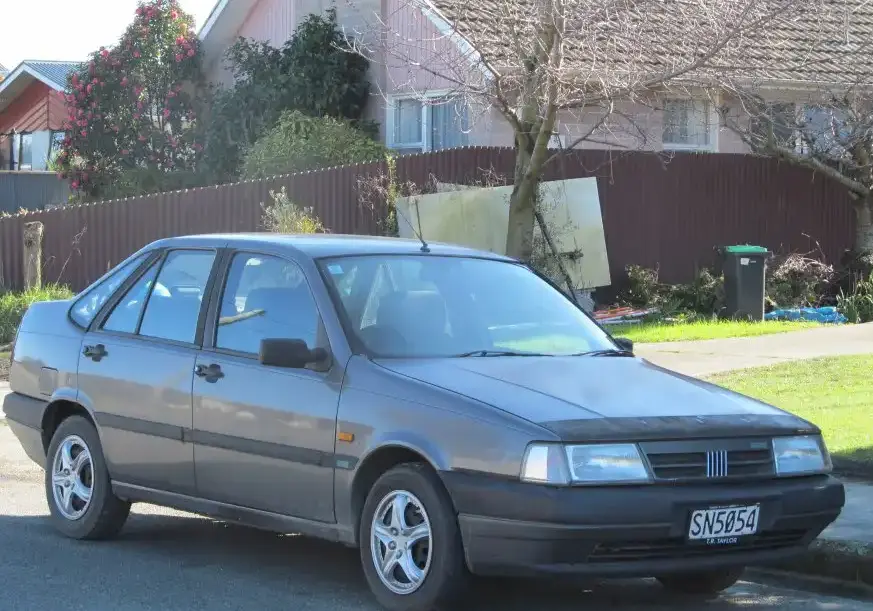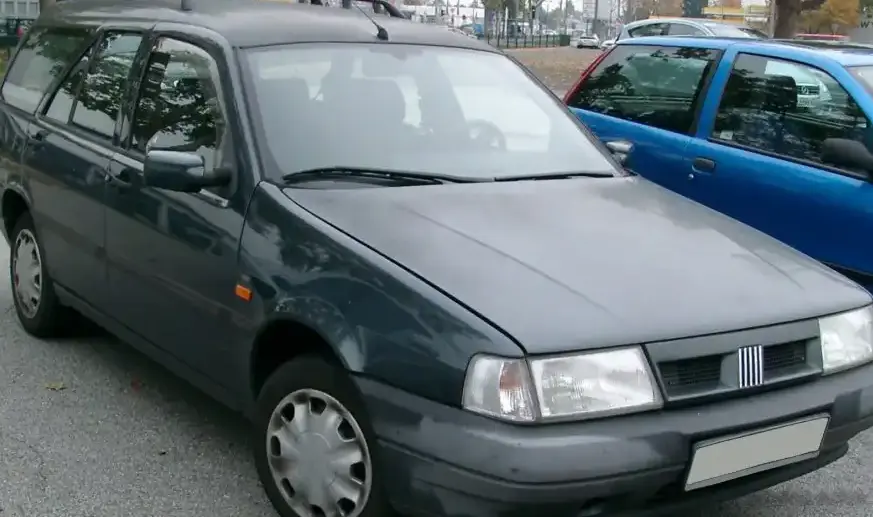
The Fiat Tempra Station Wagon (estate), specifically the 1.9 TD variant produced between 1991 and 1995 (chassis codes 159.AI, 159.BI, 159.CU, 1), represented a practical and economical offering in the European D-segment. Positioned as a family-oriented vehicle, the Tempra SW aimed to provide spaciousness and fuel efficiency, particularly appealing to buyers seeking a versatile vehicle for both daily commuting and longer journeys. It was a key model in Fiat’s lineup during a period of modernization and expansion, building upon the success of the Tipo series it replaced. The 1.9 TD model occupied a middle ground within the Tempra SW range, offering a balance between performance and running costs, sitting below the more powerful gasoline engines and above the base-level diesel options.
Technical Specifications
| Brand | Fiat |
| Model | Tempra |
| Generation | Tempra S.w. (159) |
| Type (Engine) | 1.9 TD (159.AI,159.BI,159.CU,1 (90 Hp) |
| Start of production | 1991 |
| End of production | 1995 |
| Powertrain Architecture | Internal Combustion engine |
| Body type | Station wagon (estate) |
| Seats | 5 |
| Doors | 5 |
| Fuel consumption (combined) | 6.1 l/100 km (38.6 US mpg, 46.3 UK mpg, 16.4 km/l) |
| Fuel Type | Diesel |
| Acceleration 0 – 100 km/h | 14.3 sec |
| Acceleration 0 – 62 mph | 14.3 sec |
| Acceleration 0 – 60 mph | 13.6 sec |
| Maximum speed | 177 km/h (109.98 mph) |
| Weight-to-power ratio | 13.8 kg/Hp, 72.5 Hp/tonne |
| Weight-to-torque ratio | 6.7 kg/Nm, 149.8 Nm/tonne |
| Power | 90 Hp @ 4200 rpm |
| Power per litre | 46.7 Hp/l |
| Torque | 186 Nm @ 2800 rpm (137.19 lb.-ft. @ 2800 rpm) |
| Engine layout | Front, Transverse |
| Engine Model/Code | 160 A6.000 |
| Engine displacement | 1929 cm3 (117.71 cu. in.) |
| Number of cylinders | 4 |
| Engine configuration | Inline |
| Cylinder Bore | 82.6 mm (3.25 in.) |
| Piston Stroke | 90 mm (3.54 in.) |
| Compression ratio | 19.2:1 |
| Number of valves per cylinder | 2 |
| Fuel injection system | Precombustion chamber injection |
| Engine aspiration | Turbocharger |
| Valvetrain | OHC |
| Engine oil capacity | 5 l (5.28 US qt | 4.4 UK qt) |
| Coolant | 8.8 l (9.3 US qt | 7.74 UK qt) |
| Kerb Weight | 1242 kg (2738.14 lbs.) |
| Max. weight | 1840 kg (4056.51 lbs.) |
| Max load | 598 kg (1318.36 lbs.) |
| Trunk (boot) space – minimum | 500 l (17.66 cu. ft.) |
| Trunk (boot) space – maximum | 1025 l (36.2 cu. ft.) |
| Fuel tank capacity | 60 l (15.85 US gal | 13.2 UK gal) |
| Length | 4472 mm (176.06 in.) |
| Width | 1695 mm (66.73 in.) |
| Height | 1500 mm (59.06 in.) |
| Wheelbase | 2540 mm (100 in.) |
| Front track | 1435 mm (56.5 in.) |
| Rear (Back) track | 1415 mm (55.71 in.) |
| Drivetrain Architecture | The Internal combustion engine (ICE) drives the front wheels of the vehicle. |
| Drive wheel | Front wheel drive |
| Number of gears and type of gearbox | 5 gears, manual transmission |
| Front suspension | Wishbone |
| Rear suspension | Coil spring |
| Front brakes | Disc |
| Rear brakes | Disc |
| Assisting systems | ABS (Anti-lock braking system) |
| Steering type | Steering rack and pinion |
| Power steering | Hydraulic Steering |
| Tires size | 185/60 R14 |
Powertrain & Engine Architecture
The heart of the Tempra 1.9 TD SW was the 160 A6.000 engine, a 1929cc inline-four cylinder diesel. This engine utilized a precombustion chamber injection system, a common technology for diesel engines of the era, designed to improve combustion efficiency and reduce noise. The engine was turbocharged, boosting power output to 90 horsepower at 4200 rpm and 186 Nm (137 lb-ft) of torque at 2800 rpm. This configuration provided a reasonable balance of power and fuel economy. The engine featured an overhead camshaft (OHC) valvetrain with two valves per cylinder. The five-speed manual transmission was the standard offering, chosen for its efficiency and cost-effectiveness. While an automatic transmission was available on some Tempra models, it was not typically paired with the 1.9 TD engine due to the torque characteristics and intended market positioning.
Driving Characteristics
The 1.9 TD Tempra SW offered a practical, if not particularly exciting, driving experience. Acceleration was modest, taking around 14.3 seconds to reach 62 mph (100 km/h). However, the engine’s torque delivery provided adequate pulling power for everyday driving and hauling loads. The five-speed manual transmission allowed drivers to keep the engine in its optimal power band. Compared to the gasoline-powered Tempra variants, the 1.9 TD prioritized fuel economy over outright performance. The manual gearbox, while efficient, lacked the refinement of more modern transmissions. The steering was hydraulic, providing reasonable assistance, but lacked the precision found in more contemporary vehicles.
Equipment & Trim Levels
The Tempra 1.9 TD SW typically came with a fairly basic level of equipment, reflecting its position as a value-oriented vehicle. Standard features generally included power steering, central locking, and electrically adjustable front windows. Interior upholstery was typically cloth, with a functional, if somewhat plain, dashboard layout. Optional extras could include air conditioning, a sunroof, and upgraded audio systems. Trim levels varied slightly depending on the market, but generally focused on adding cosmetic enhancements and convenience features rather than significant performance upgrades.
Chassis & Braking
The Tempra SW utilized a front-wheel-drive layout with independent wishbone suspension at the front and a coil spring rear suspension. This setup provided a reasonable compromise between ride comfort and handling. Braking was handled by disc brakes on all four wheels, supplemented by an Anti-lock Braking System (ABS) which was becoming increasingly common during this period. The tires were typically 185/60 R14, providing adequate grip for normal driving conditions. The chassis was designed to prioritize practicality and load-carrying capacity, rather than sporty handling.
Market Reception & Comparison
The Fiat Tempra 1.9 TD SW was generally well-received as a practical and economical family vehicle. Critics praised its spacious interior, large cargo area, and fuel efficiency. However, it was often criticized for its somewhat uninspired styling and modest performance. Compared to other diesel station wagons of the time, such as the Ford Mondeo or Peugeot 405, the Tempra offered a competitive price point and a good level of practicality. The 1.9 TD engine provided better fuel economy than the gasoline alternatives, but at the expense of acceleration. Reliability was generally considered to be good, although maintenance costs could be higher for diesel engines compared to their gasoline counterparts.
Legacy
The Fiat Tempra, and particularly the 1.9 TD SW variant, holds a place in automotive history as a representative of the practical, family-oriented vehicles of the early 1990s. While not a particularly glamorous or high-performance car, it provided a reliable and economical transportation solution for many European families. Today, the Tempra 1.9 TD SW is a relatively rare sight on the roads, but it remains a popular choice among enthusiasts seeking a classic diesel vehicle. The 160 A6.000 engine, while aging, is known for its durability and relatively simple mechanical design, making it a viable option for those willing to undertake maintenance and repairs. Its enduring appeal lies in its practicality, fuel efficiency, and a certain nostalgic charm.