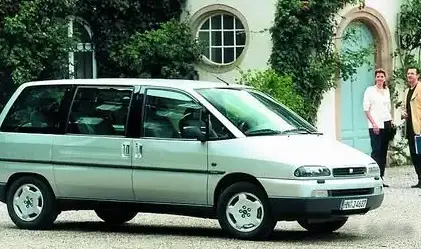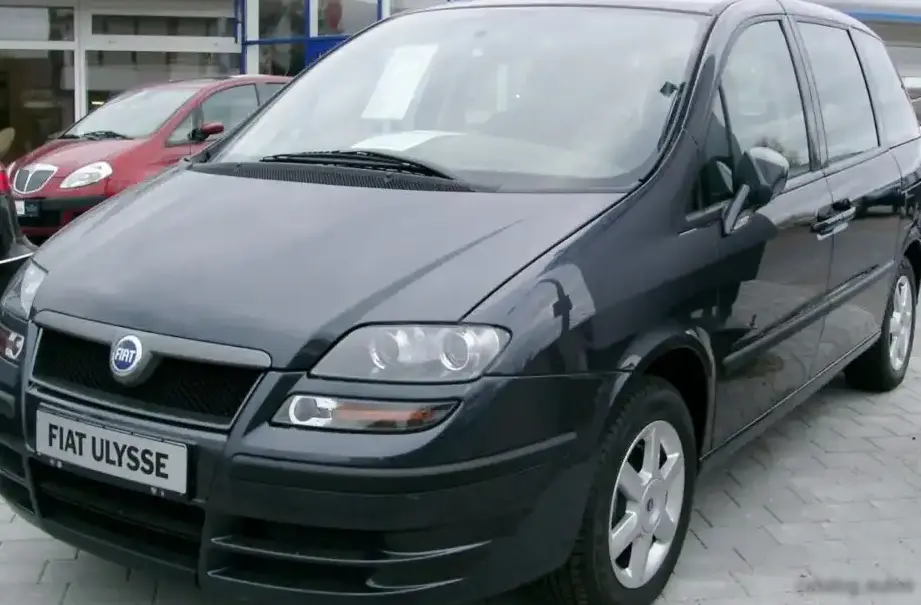
The Fiat Ulysse II, specifically the 2.0 JTD Multijet 16V variant producing 120 horsepower, was a key model in Fiat’s European minivan lineup from 2006 to 2008. Part of the 179 series, this Ulysse generation represented a collaborative effort with PSA Peugeot Citroën, sharing its platform and many components with the Peugeot 807 and Citroën C8. Positioned as a mid-range offering, the 2.0 JTD Multijet aimed to balance fuel efficiency with adequate performance for family transport, appealing to buyers seeking a spacious and practical vehicle. It was primarily sold in the European market, where MPVs (Multi-Purpose Vehicles) were a popular choice for families.
Technical Specifications
| Brand | Fiat |
| Model | Ulysse |
| Generation | Ulysse II (179) |
| Type (Engine) | 2.0 JTD Multijet 16V (120 Hp) |
| Start of production | April, 2006 |
| End of production | January, 2008 |
| Powertrain Architecture | Internal Combustion engine |
| Body type | Minivan, MPV |
| Seats | 5-8 |
| Doors | 5 |
| Fuel consumption (urban) | 8.8 l/100 km (26.7 US mpg, 32.1 UK mpg, 11.4 km/l) |
| Fuel consumption (extra urban) | 5.8 l/100 km (40.6 US mpg, 48.7 UK mpg, 17.2 km/l) |
| Fuel consumption (combined) | 6.9 l/100 km (34.1 US mpg, 40.9 UK mpg, 14.5 km/l) |
| CO2 emissions | 182 g/km |
| Fuel Type | Diesel |
| Acceleration 0 – 100 km/h | 12.9 sec |
| Acceleration 0 – 62 mph | 12.9 sec |
| Acceleration 0 – 60 mph | 12.3 sec |
| Maximum speed | 180 km/h (111.85 mph) |
| Emission standard | Euro 4 |
| Weight-to-power ratio | 13.8 kg/Hp, 72.2 Hp/tonne |
| Weight-to-torque ratio | 5.5 kg/Nm, 180.6 Nm/tonne |
| Power | 120 Hp @ 4000 rpm |
| Power per litre | 60.1 Hp/l |
| Torque | 300 Nm @ 2000 rpm (221.27 lb.-ft. @ 2000 rpm) |
| Engine layout | Front, Transverse |
| Engine Model/Code | RHK |
| Engine displacement | 1997 cm3 (121.86 cu. in.) |
| Number of cylinders | 4 |
| Engine configuration | Inline |
| Cylinder Bore | 85 mm (3.35 in.) |
| Piston Stroke | 88 mm (3.46 in.) |
| Compression ratio | 17.5:1 |
| Number of valves per cylinder | 4 |
| Fuel injection system | Diesel Commonrail |
| Engine aspiration | Turbocharger, Intercooler |
| Valvetrain | DOHC |
| Engine oil capacity | 5.25 l (5.55 US qt | 4.62 UK qt) |
| Coolant capacity | 9 l (9.51 US qt | 7.92 UK qt) |
| Kerb Weight | 1661-1834 kg (3661.88 – 4043.28 lbs.) |
| Max. weight | 2530 kg (5577.7 lbs.) |
| Max load | 696-869 kg (1534.42 – 1915.82 lbs.) |
| Trunk (boot) space – minimum | 183 l (6.46 cu. ft.) |
| Trunk (boot) space – maximum | 2948 l (104.11 cu. ft.) |
| Fuel tank capacity | 80 l (21.13 US gal | 17.6 UK gal) |
| Max. roof load | 100 kg (220.46 lbs.) |
| Permitted trailer load with brakes (12%) | 1820 kg (4012.41 lbs.) |
| Permitted trailer load without brakes | 650 kg (1433 lbs.) |
| Permitted towbar download | 76 kg (167.55 lbs.) |
| Length | 4719 mm (185.79 in.) |
| Width | 1863 mm (73.35 in.) |
| Width including mirrors | 2194 mm (86.38 in.) |
| Height | 1752 mm (68.98 in.) |
| Wheelbase | 2823 mm (111.14 in.) |
| Front track | 1570 mm (61.81 in.) |
| Rear track | 1548 mm (60.94 in.) |
| Front overhang | 1009 mm (39.72 in.) |
| Rear overhang | 887 mm (34.92 in.) |
| Minimum turning circle | 11.6 m (38.06 ft.) |
| Drivetrain | Front wheel drive |
| Number of gears | 6 gears, manual transmission |
| Front suspension | Independent, type McPherson with coil spring and anti-roll bar |
| Rear suspension | Coil spring, Torsion |
| Front brakes | Ventilated discs, 285 mm |
| Rear brakes | Disc, 272 mm |
| Assisting systems | ABS (Anti-lock braking system) |
| Steering type | Steering rack and pinion |
| Power steering | Hydraulic Steering |
| Tires size | 215/65 R15; 215/60 R16 |
| Wheel rims size | 6.5J x 15; 7J x 16 |
Powertrain & Engine Architecture
The heart of the Ulysse 2.0 JTD Multijet was the RHK engine, a 1997cc inline-four cylinder diesel. This engine was a product of Fiat’s JTD (Jet Diesel Technology) series, known for its direct injection and turbocharging. The “Multijet” designation indicated a second-generation common rail direct injection system, allowing for multiple fuel injections per combustion cycle. This refined the combustion process, reducing noise, emissions, and improving fuel economy. The engine featured a double overhead camshaft (DOHC) valvetrain with four valves per cylinder, optimizing gas flow. A turbocharger with an intercooler further enhanced performance by increasing air density. The 6-speed manual transmission was the standard offering, providing a good balance between fuel efficiency and drivability.
Driving Characteristics
The 120 horsepower and 300 Nm (221 lb-ft) of torque delivered by the 2.0 JTD Multijet provided adequate, though not exhilarating, performance for the Ulysse. Acceleration from 0-100 km/h took around 12.9 seconds, making it suitable for relaxed cruising and family transport rather than spirited driving. The six-speed gearbox helped to keep engine speeds reasonable at highway speeds, contributing to fuel efficiency. Compared to the more powerful 2.2 JTD variants, the 2.0 JTD felt noticeably less responsive, particularly when fully loaded with passengers and luggage. However, the lower power output also translated to slightly better fuel economy and reduced stress on the engine components.
Equipment & Trim Levels
The 2.0 JTD Multijet typically came equipped with a reasonable level of standard features. These included air conditioning, power windows, central locking, and an audio system. Higher trim levels offered options such as alloy wheels, rear parking sensors, a sunroof, and upgraded interior upholstery. The interior was designed with practicality in mind, featuring durable materials and a flexible seating arrangement. The Ulysse could be configured with five to eight seats, depending on the chosen layout. Dashboard design was functional, with logically placed controls and a clear instrument cluster.
Chassis & Braking
The Ulysse II utilized a McPherson strut front suspension with coil springs and an anti-roll bar for improved handling and stability. The rear suspension employed a torsion beam setup, which was a cost-effective solution for maintaining ride comfort. Braking duties were handled by ventilated discs at the front and solid discs at the rear. Anti-lock Braking System (ABS) was standard, enhancing safety during emergency braking situations. The steering was a hydraulic rack and pinion system, providing reasonable feedback and ease of use.
Market Reception & Comparison
The Fiat Ulysse 2.0 JTD Multijet was generally well-received by automotive critics as a practical and spacious MPV. Its fuel economy was a strong point, particularly compared to petrol-powered alternatives. However, some reviewers noted that the 120 horsepower engine could feel underpowered when the vehicle was fully loaded. Compared to the Peugeot 807 and Citroën C8, which shared the same platform and engine options, the Ulysse often represented a slightly more affordable entry point. The 2.2 JTD variants offered more performance but came at a higher price and with slightly increased running costs.
Legacy
The Fiat Ulysse II 2.0 JTD Multijet has proven to be a relatively reliable vehicle in the used car market. The 2.0 JTD engine, while not the most powerful, is known for its durability and relatively straightforward maintenance. Common issues include wear and tear on suspension components and potential problems with the turbocharger. However, with regular servicing and preventative maintenance, these engines can continue to provide years of reliable service. Today, the Ulysse II remains a popular choice for families seeking an affordable and spacious MPV, particularly those who prioritize fuel efficiency and practicality over outright performance.