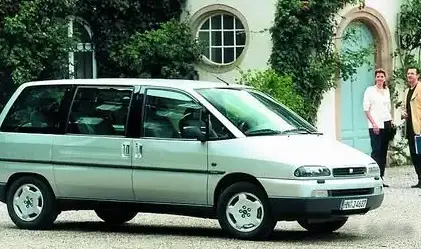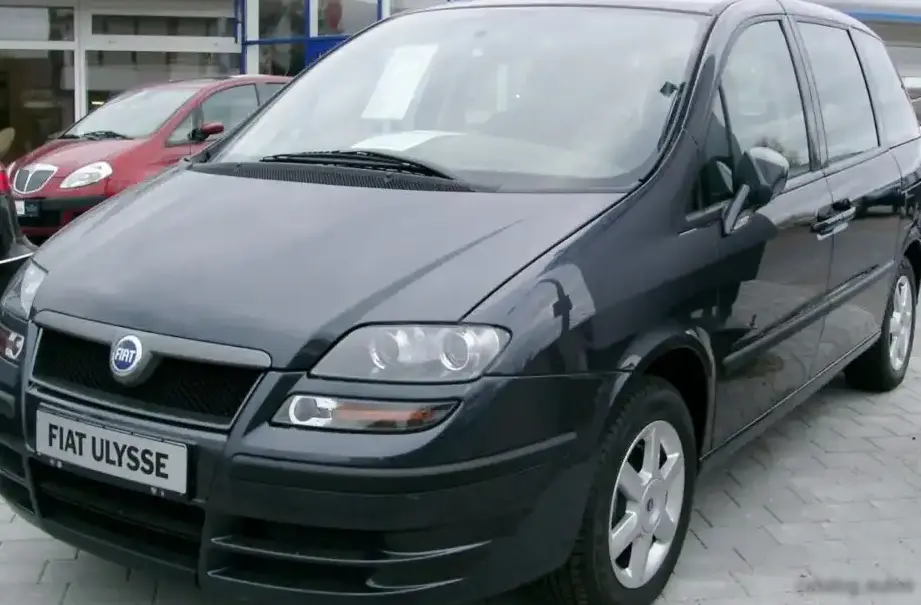
The Fiat Ulysse II, specifically the 2.0 JTD Multijet 16V variant producing 136 horsepower, was a key model in Fiat’s minivan lineup from 2006 to 2008. Part of the 179 series, this Ulysse generation represented a collaborative effort with PSA Peugeot Citroën, sharing its platform and many components with the Peugeot 807 and Citroën C8. Positioned as a mid-range offering within the Ulysse II range, it aimed to balance fuel efficiency, practicality, and a reasonable level of performance for family transport. The Ulysse, in general, was designed to compete in the European MPV (Multi-Purpose Vehicle) segment, offering a spacious and versatile alternative to traditional station wagons and larger SUVs.
Technical Specifications
| Brand | Fiat |
| Model | Ulysse |
| Generation | Ulysse II (179) |
| Type (Engine) | 2.0 JTD Multijet 16V (136 Hp) |
| Start of production | June, 2006 |
| End of production | January, 2008 |
| Powertrain Architecture | Internal Combustion engine |
| Body type | Minivan, MPV |
| Seats | 5-8 |
| Doors | 5 |
| Fuel consumption (urban) | 9 l/100 km (26.1 US mpg, 31.4 UK mpg, 11.1 km/l) |
| Fuel consumption (extra urban) | 6 l/100 km (39.2 US mpg, 47.1 UK mpg, 16.7 km/l) |
| Fuel consumption (combined) | 7.1 l/100 km (33.1 US mpg, 39.8 UK mpg, 14.1 km/l) |
| CO2 emissions | 188 g/km |
| Fuel Type | Diesel |
| Acceleration 0 – 100 km/h | 11.4 sec |
| Acceleration 0 – 62 mph | 11.4 sec |
| Acceleration 0 – 60 mph | 10.8 sec |
| Maximum speed | 190 km/h (118.06 mph) |
| Emission standard | Euro 4 |
| Weight-to-power ratio | 12.2 kg/Hp, 81.9 Hp/tonne |
| Weight-to-torque ratio | 5.2 kg/Nm, 192.7 Nm/tonne |
| Power | 136 Hp @ 4000 rpm |
| Power per litre | 68.1 Hp/l |
| Torque | 320 Nm @ 2000 rpm (236.02 lb.-ft. @ 2000 rpm) |
| Engine layout | Front, Transverse |
| Engine Model/Code | RHR |
| Engine displacement | 1997 cm3 (121.86 cu. in.) |
| Number of cylinders | 4 |
| Engine configuration | Inline |
| Cylinder Bore | 85 mm (3.35 in.) |
| Piston Stroke | 88 mm (3.46 in.) |
| Compression ratio | 17.5:1 |
| Number of valves per cylinder | 4 |
| Fuel injection system | Diesel Commonrail |
| Engine aspiration | Turbocharger, Intercooler |
| Valvetrain | DOHC |
| Engine oil capacity | 5.25 l (5.55 US qt, 4.62 UK qt) |
| Coolant capacity | 9 l (9.51 US qt, 7.92 UK qt) |
| Kerb Weight | 1661-1834 kg (3661.88 – 4043.28 lbs.) |
| Max. weight | 2505 kg (5522.58 lbs.) |
| Max load | 671-844 kg (1479.3 – 1860.7 lbs.) |
| Trunk (boot) space – minimum | 183 l (6.46 cu. ft.) |
| Trunk (boot) space – maximum | 2948 l (104.11 cu. ft.) |
| Fuel tank capacity | 80 l (21.13 US gal, 17.6 UK gal) |
| Max. roof load | 100 kg (220.46 lbs.) |
| Permitted trailer load (braked) | 1850 kg (4078.55 lbs.) |
| Permitted trailer load (unbraked) | 650 kg (1433 lbs.) |
| Permitted towbar download | 76 kg (167.55 lbs.) |
| Length | 4719 mm (185.79 in.) |
| Width | 1863 mm (73.35 in.) |
| Width including mirrors | 2194 mm (86.38 in.) |
| Height | 1752 mm (68.98 in.) |
| Wheelbase | 2823 mm (111.14 in.) |
| Front track | 1570 mm (61.81 in.) |
| Rear track | 1548 mm (60.94 in.) |
| Front overhang | 1009 mm (39.72 in.) |
| Rear overhang | 887 mm (34.92 in.) |
| Turning circle | 11.6 m (38.06 ft.) |
| Drivetrain | Front wheel drive |
| Number of gears | 6 |
| Gearbox type | Manual |
| Front suspension | Independent, McPherson with coil spring and anti-roll bar |
| Rear suspension | Coil spring, Torsion |
| Front brakes | Ventilated discs, 285 mm |
| Rear brakes | Disc, 272 mm |
| Assisting systems | ABS (Anti-lock braking system) |
| Steering type | Steering rack and pinion |
| Power steering | Hydraulic |
| Tires size | 215/65 R15; 215/60 R16 |
| Wheel rims size | 6.5J x 15; 7J x 16 |
Powertrain & Engine Architecture
The heart of this Ulysse variant is the 2.0 JTD Multijet 16V engine, identified by the code RHR. This engine is a four-cylinder, inline diesel engine utilizing common rail direct injection. The Multijet technology, a second-generation common rail system, allowed for multiple fuel injections per combustion cycle, resulting in smoother operation, reduced noise, and improved fuel efficiency. The 16-valve DOHC (Double Overhead Camshaft) configuration further enhanced breathing and contributed to the engine’s power output. A turbocharger with an intercooler was employed to increase air density and boost performance. The engine’s 17.5:1 compression ratio is typical for a diesel engine, maximizing combustion efficiency. The 6-speed manual transmission was the standard offering, providing a good balance between fuel economy and drivability.
Driving Characteristics
The 136 horsepower and 320 Nm (236 lb-ft) of torque delivered by the 2.0 JTD Multijet, coupled with the 6-speed manual gearbox, provided adequate performance for everyday driving and long-distance journeys. While not particularly sporty, the Ulysse II 2.0 JTD offered sufficient power for overtaking maneuvers and maintaining comfortable cruising speeds on highways. The manual transmission allowed for greater driver control compared to the automatic options available on other Ulysse trims. The gear ratios were tuned for fuel efficiency, with a relatively long final drive. Compared to the more powerful 2.2 JTD variants, this engine prioritized economy over outright speed. The 0-60 mph time of around 10.8 seconds reflects this focus.
Equipment & Trim Levels
The 2.0 JTD Multijet 16V typically came equipped with a reasonable level of standard features. These included air conditioning, power windows, central locking, and an audio system. Interior upholstery was generally cloth, with options for upgraded materials available. Dashboard design was functional and straightforward, prioritizing usability over luxury. Optional extras included alloy wheels, parking sensors, a sunroof, and a more advanced audio system with navigation. The trim level often dictated the availability of these options, with higher trims offering more standard equipment.
Chassis & Braking
The Ulysse II utilized a McPherson strut front suspension with a coil spring and anti-roll bar, providing a comfortable ride and predictable handling. The rear suspension employed a coil spring and torsion beam setup, which was cost-effective and space-efficient. Braking duties were handled by ventilated discs at the front and solid discs at the rear. ABS (Anti-lock Braking System) was standard, enhancing safety during emergency braking situations. The hydraulic power steering provided light and easy steering input.
Market Reception & Comparison
The Fiat Ulysse II 2.0 JTD Multijet 16V was generally well-received by critics as a practical and economical MPV. It was praised for its spacious interior, comfortable ride, and relatively low running costs. However, some reviewers noted that the engine could feel strained when fully loaded or driving uphill. Compared to the more powerful engine options, the 2.0 JTD offered better fuel economy, making it an attractive choice for families prioritizing budget-friendliness. The manual transmission was also favored by some drivers for its greater control and engagement.
Legacy
The 2.0 JTD Multijet engine proved to be a reliable and durable unit, and well-maintained examples of the Ulysse II 2.0 JTD continue to be found on the used car market today. While not known for exceptional performance, the engine’s longevity and relatively simple construction make it a relatively affordable vehicle to maintain. Common issues include wear and tear on suspension components and potential problems with the turbocharger, but these are generally manageable with regular servicing. The Ulysse II, in general, remains a popular choice for those seeking a spacious and practical MPV at a reasonable price.