
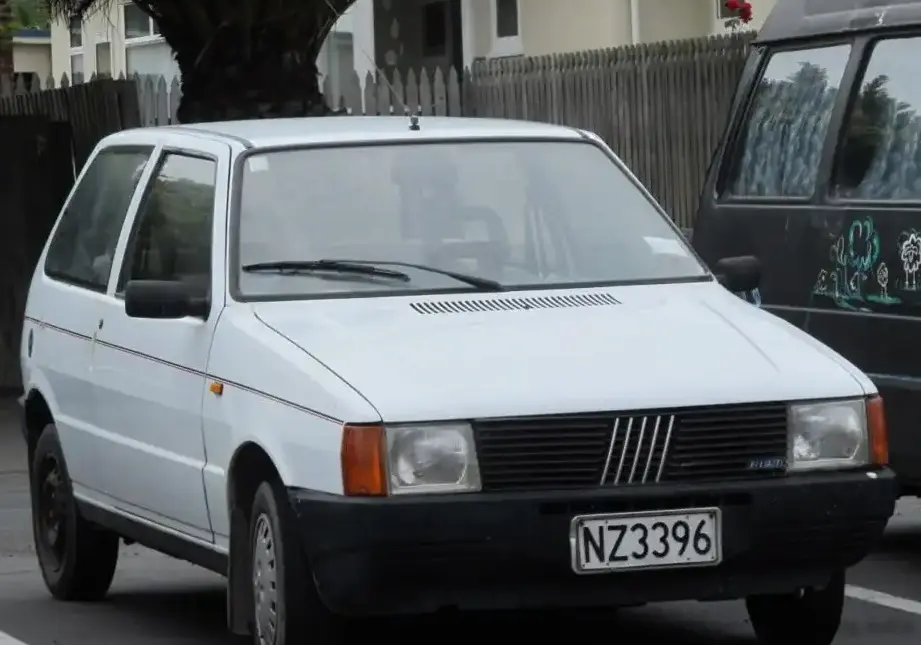
The Fiat Uno 1.3 Super Diesel, produced between 1983 and 1992 as part of the 146A generation, represented a significant entry point into the popular supermini segment for European buyers. Positioned as an economical and practical choice, this variant offered a diesel-powered option within the Uno lineup, prioritizing fuel efficiency over outright performance. It played a crucial role in establishing the Uno as a best-selling vehicle in several European markets, particularly Italy, France, and Spain, where diesel engines were favored for their lower running costs. The 1.3 Super Diesel was typically considered a base or mid-range trim, offering a step up from the most basic models but lacking the sporting pretensions of higher-spec versions.
Technical Specifications
| Brand | Fiat |
| Model | UNO |
| Generation | UNO (146A) |
| Type (Engine) | 1.3 Super Diesel (45 Hp) |
| Start of production | 1983 |
| End of production | 1992 |
| Powertrain Architecture | Internal Combustion engine |
| Body type | Hatchback |
| Doors | 4 |
| Fuel Type | Diesel |
| Power | 45 Hp |
| Power per litre | 34.6 Hp/l |
| Engine layout | Front, Transverse |
| Engine Model/Code | 127 A5.000 |
| Engine displacement | 1300 cm3 |
| Engine displacement (US) | 79.33 cu. in. |
| Engine aspiration | Naturally aspirated engine |
| Engine oil capacity | 4 l |
| Engine oil capacity (US) | 4.23 US qt |
| Engine oil capacity (UK) | 3.52 UK qt |
| Coolant capacity | 8 l |
| Coolant capacity (US) | 8.45 US qt |
| Coolant capacity (UK) | 7.04 UK qt |
| Number of gears | 5 |
| Type of gearbox | Automatic transmission |
Powertrain & Engine Architecture
The heart of the Uno 1.3 Super Diesel was the 127 A5.000 engine, a 1299cc inline-four diesel. This engine was a naturally aspirated, indirect injection diesel, a common configuration for the time. Indirect injection meant the fuel was pre-combustion chamber, rather than directly into the cylinder, resulting in quieter operation but slightly reduced efficiency compared to direct injection systems. The engine featured a simple, robust design, prioritizing reliability and longevity over high performance. It utilized a mechanical fuel injection pump, a characteristic of older diesel engines, and a two-valve per cylinder valvetrain. The 45 horsepower output was achieved at a relatively low engine speed, emphasizing torque delivery for everyday driving. The five-speed automatic transmission was a relatively uncommon option for this class of vehicle in the 1980s, and was sourced from external suppliers. It was designed to provide smooth, if not particularly rapid, gear changes, complementing the engine’s torque-focused power delivery.
Driving Characteristics
The Uno 1.3 Super Diesel with the automatic transmission was not designed for spirited driving. Acceleration was modest, with a 0-60 mph time likely exceeding 15 seconds. However, the engine’s torque characteristics made it surprisingly capable in urban environments and on winding roads. The automatic transmission, while offering convenience, did detract from the engine’s efficiency somewhat, and gear changes were not always the quickest or smoothest by modern standards. The gear ratios were optimized for fuel economy and low-speed drivability, rather than outright performance. Compared to the manual transmission versions of the 1.3 diesel, the automatic offered reduced driver involvement but greater ease of use, particularly in stop-and-go traffic. Higher-spec Uno models, such as those equipped with the 1.5-liter gasoline engine, offered significantly more power and performance, but at the expense of fuel economy.
Equipment & Trim Levels
The “Super” designation indicated a step up in equipment compared to the base Uno models. Standard features typically included cloth upholstery, a basic instrument cluster, and a four-spoke steering wheel. The interior was functional and durable, prioritizing practicality over luxury. Optional extras available on the 1.3 Super Diesel included a radio, upgraded seat fabrics, and occasionally, power windows. The dashboard layout was simple and straightforward, with clearly labeled controls. The exterior trim was relatively basic, with black plastic bumpers and steel wheels often standard. Higher trim levels offered features like body-colored bumpers, alloy wheels, and more luxurious interior appointments.
Chassis & Braking
The Uno 146A featured a front-wheel-drive layout with a MacPherson strut suspension at the front and a twist-beam suspension at the rear. The suspension was tuned for comfort and ride quality, rather than sporty handling. Braking on the 1.3 Super Diesel typically consisted of disc brakes at the front and drum brakes at the rear. The braking system was adequate for the vehicle’s weight and performance, but lacked the stopping power of more modern systems. Stabilizer bars were often omitted on the base models, contributing to a slightly more pronounced body roll in corners. The chassis was relatively lightweight, contributing to the Uno’s overall fuel efficiency.
Market Reception & Comparison
The Fiat Uno 1.3 Super Diesel was generally well-received by critics as an affordable and economical city car. Its fuel efficiency was a major selling point, particularly in Europe where diesel fuel was often cheaper than gasoline. However, the automatic transmission was sometimes criticized for its sluggishness and impact on fuel economy. Compared to other superminis of the time, such as the Renault 5 and the Peugeot 205, the Uno offered a competitive price point and a practical, if somewhat uninspiring, driving experience. The 1.3 diesel engine was known for its reliability, but maintenance costs could be higher than those of gasoline engines due to the complexity of the fuel injection system. The manual transmission versions of the 1.3 diesel were generally preferred by drivers seeking the best possible fuel economy and performance.
Legacy
The Fiat Uno 1.3 Super Diesel, while not a performance icon, remains a fondly remembered vehicle for many European drivers. Its robust engine and simple mechanicals contribute to a relatively good long-term reliability record, and well-maintained examples are still found on the roads today. In the used car market, these Unos are valued for their affordability and low running costs. The 127 A5.000 diesel engine proved to be a durable and dependable unit, and its design influenced subsequent Fiat diesel engines. The Uno itself paved the way for future generations of Fiat small cars, establishing a reputation for practicality, affordability, and fuel efficiency.

